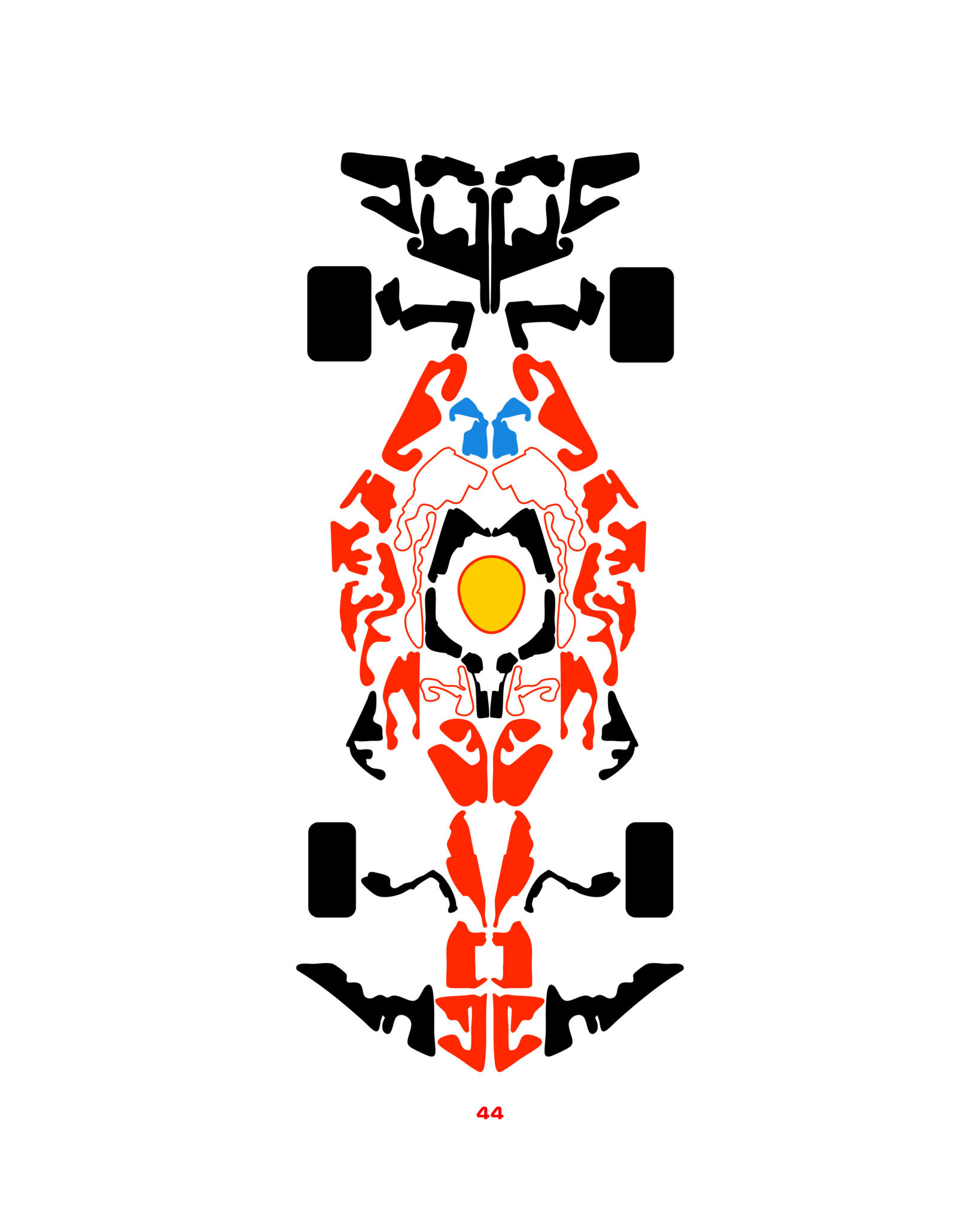
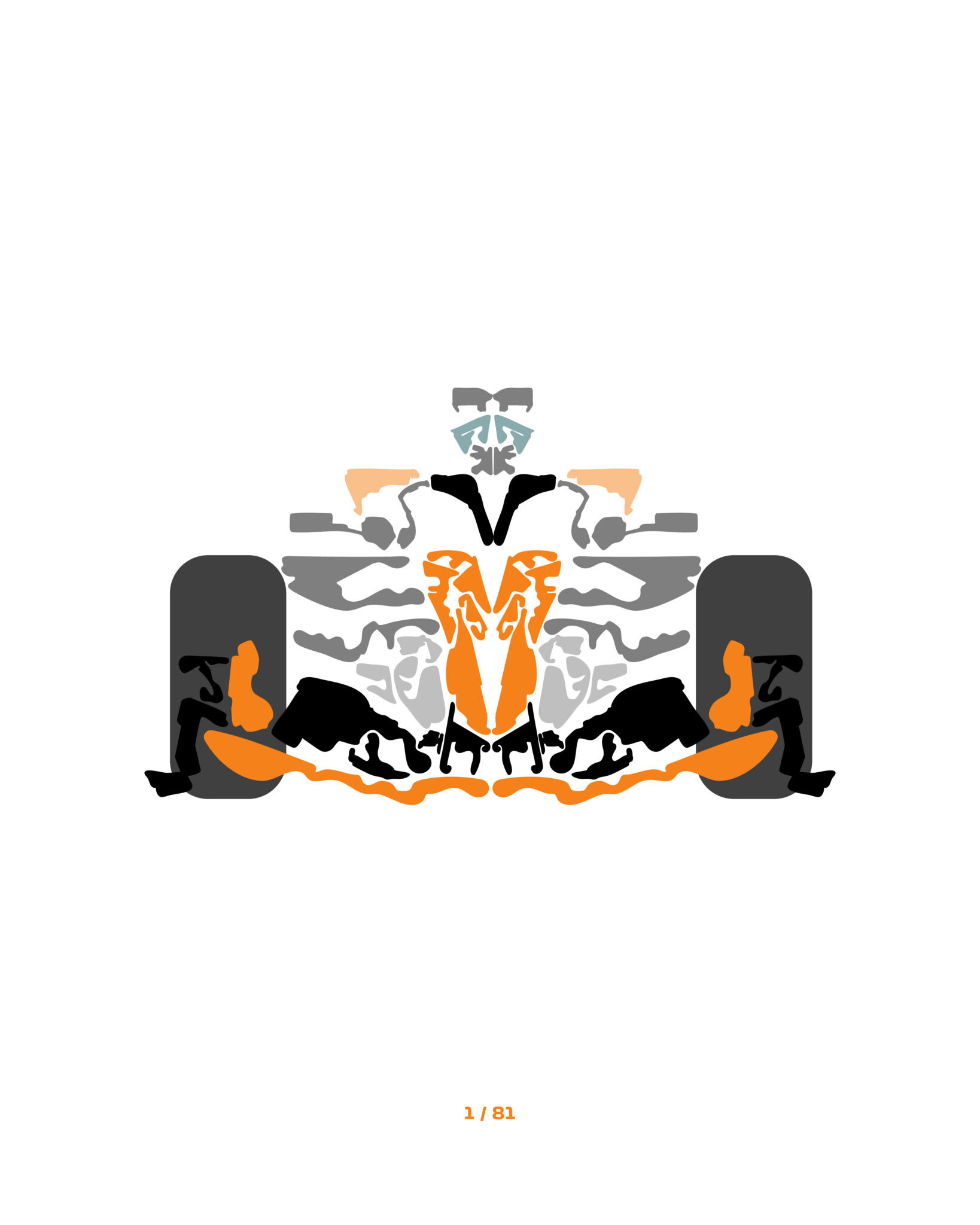
To look at a track and see a car racing around it is one thing, to build that car out of the track is altogether another. Varun Mistry, a 25-year-old Mumbai-based architect, has spent years exploring a parallel practice as a digital illustrator, one that transforms the visual language of his profession into something unexpected. His latest work takes the circuit layouts of Formula 1 racetracks and reassembles them into the anatomy of a race car or helmet, rendered with the obsessive precision of someone who lives in CAD. The results are striking: technical and poetic at once, the kind of images that stop a scroll cold. His Instagram, @mis_try, proved as much when an overhead illustration of Lewis Hamilton’s Ferrari drew nearly 60,000 likes and when McLaren social media applauded (literally) his rendition of their 2026 race car. With the Japanese Grand Prix at Suzuka getting underway this weekend, Crown & Caliber Editor-in-Chief Alexandra Cheney spoke with Mistry, in his very first press interview, about obsession, abstraction, and how creating art keeps him fueled.
Crown & Caliber: You grew up drawing. How did that start?
Varun Mistry: My mom taught me how to draw when I was three or four years old.
C&C: You’re an architect by training. How did the illustration work take shape?
VM: When lockdown hit, I had nothing to do. I love to go out and explore, but that wasn’t an option. I picked up an A5 sketchbook and decided to draw every day. I dated and labeled a sketch for each day. It became a tradition. That evolved to A4, and I sketched everything from my mom’s kitchen to my dad’s desk. The goal was getting myself to make something I liked.
C&C: When did you go from hand sketching to digital?
VM: It happened simultaneously. I converted sketches into digital work, and eventually the sketching became the digital medium. I don’t sketch by hand anymore, and I find myself going more toward digital.
C&C: What happened when the lockdown ended?
VM: The illustrations went from a way of passing the time to something I was making for myself. Now I work on this after I come home from the office and on weekends.
C&C: How did you come up with the idea of using F1 tracks as the raw material for your images?
VM: I’ve always been obsessed with maps and track layouts. I like combining things in unexpected ways to make a different object, and that’s what these pieces are. Abstraction becomes the main thing.
C&C: Why F1 specifically?
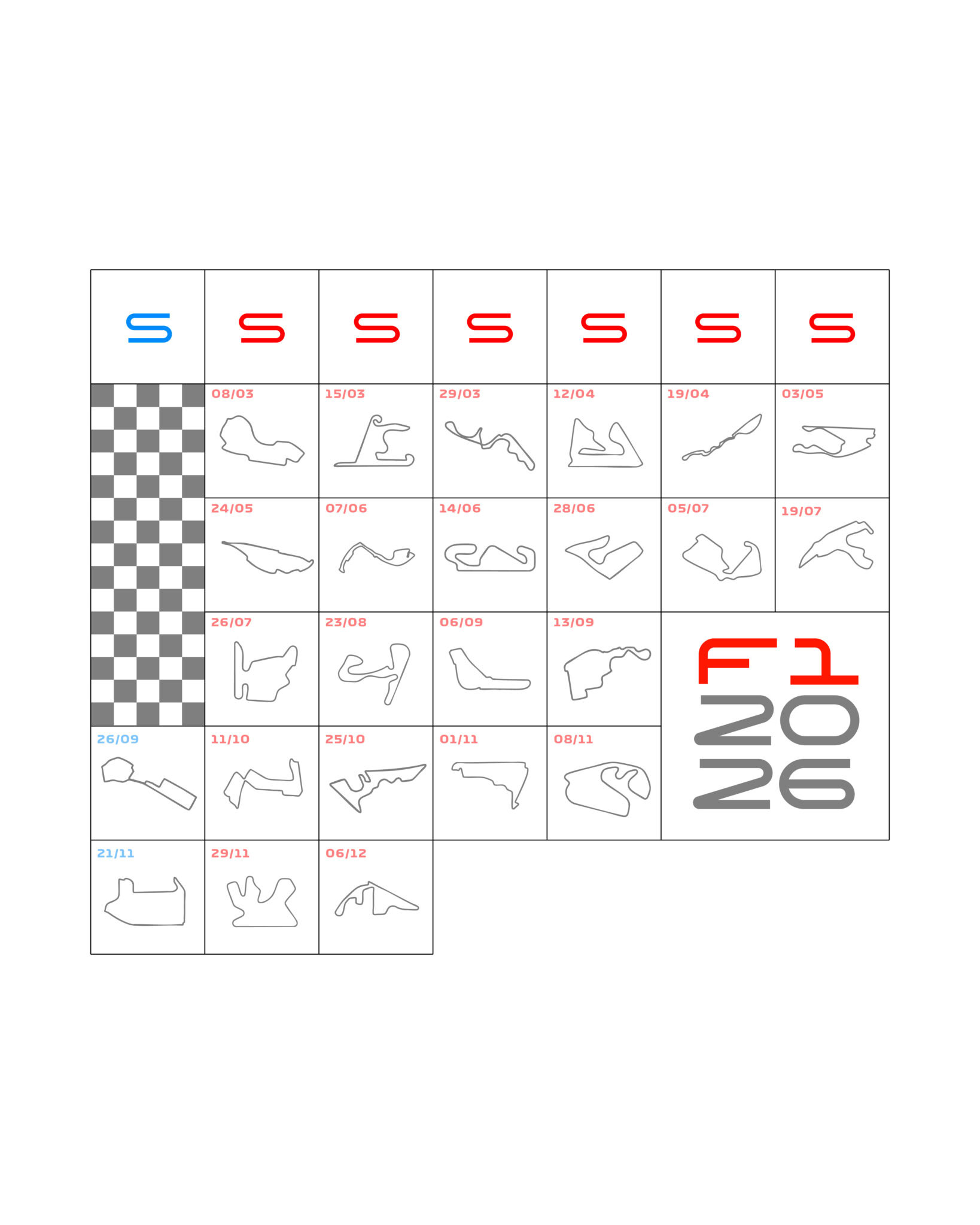
VM: I’ve been a Netflix “Drive to Survive” fan since the beginning. It’s a big thing in India. The F1 work wasn’t my first illustration in this vein either. I actually started by fitting Rubik’s cubes into F1 cars. It’s just line work. That process eventually led me to creating a calendar for F1.
C&C: Walk me through your process.
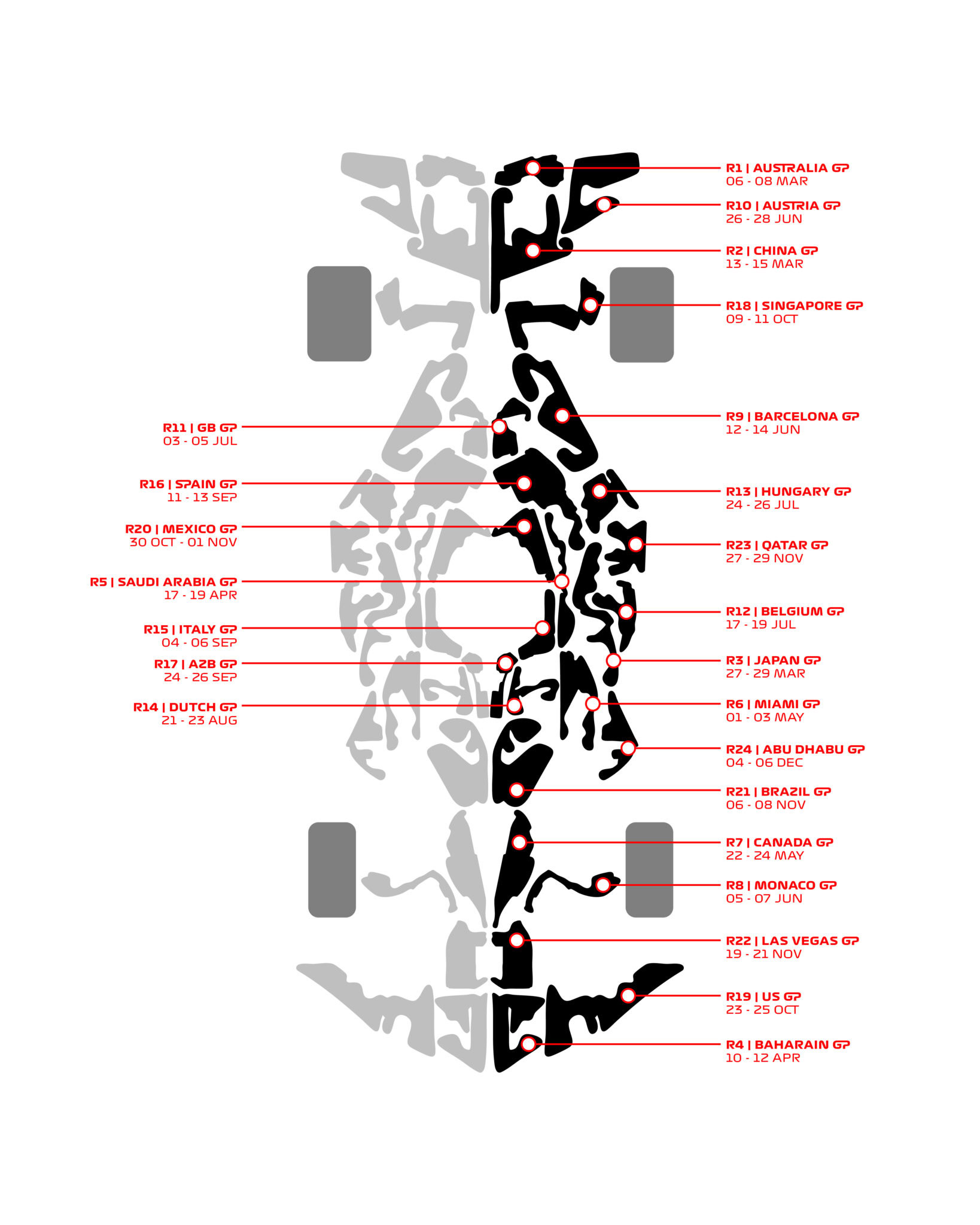
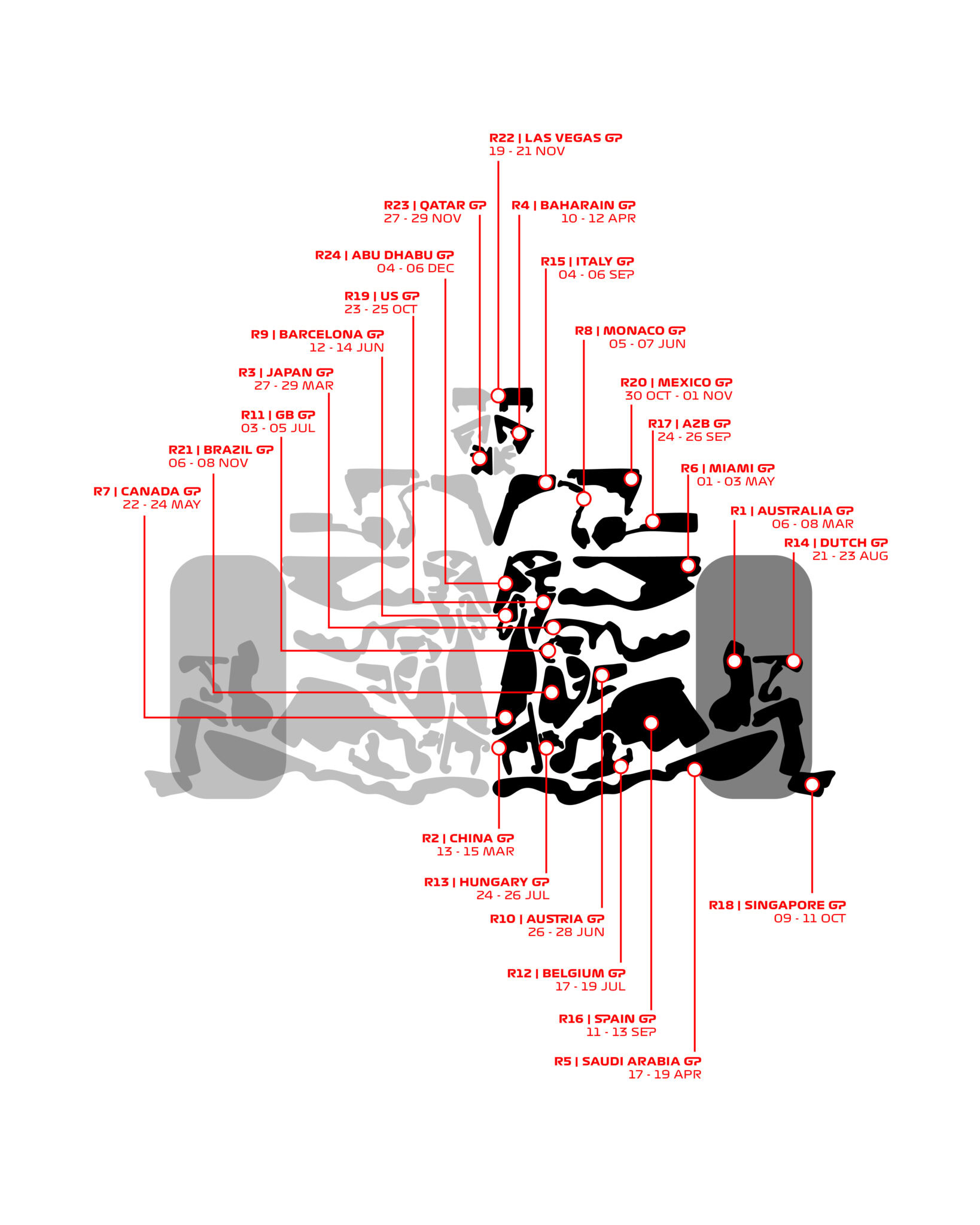
VM: I work in Adobe Illustrator, taking the shapes of the tracks and really working with them. Which track is best for color? Which shot of a racecar has the best shape? The Monaco track works really well as front suspension, for example. Monza is good as a halo.
C&C: Your first post went viral, nearly 60,000 likes on an overhead shot of Lewis Hamilton’s Ferrari. What was that like?
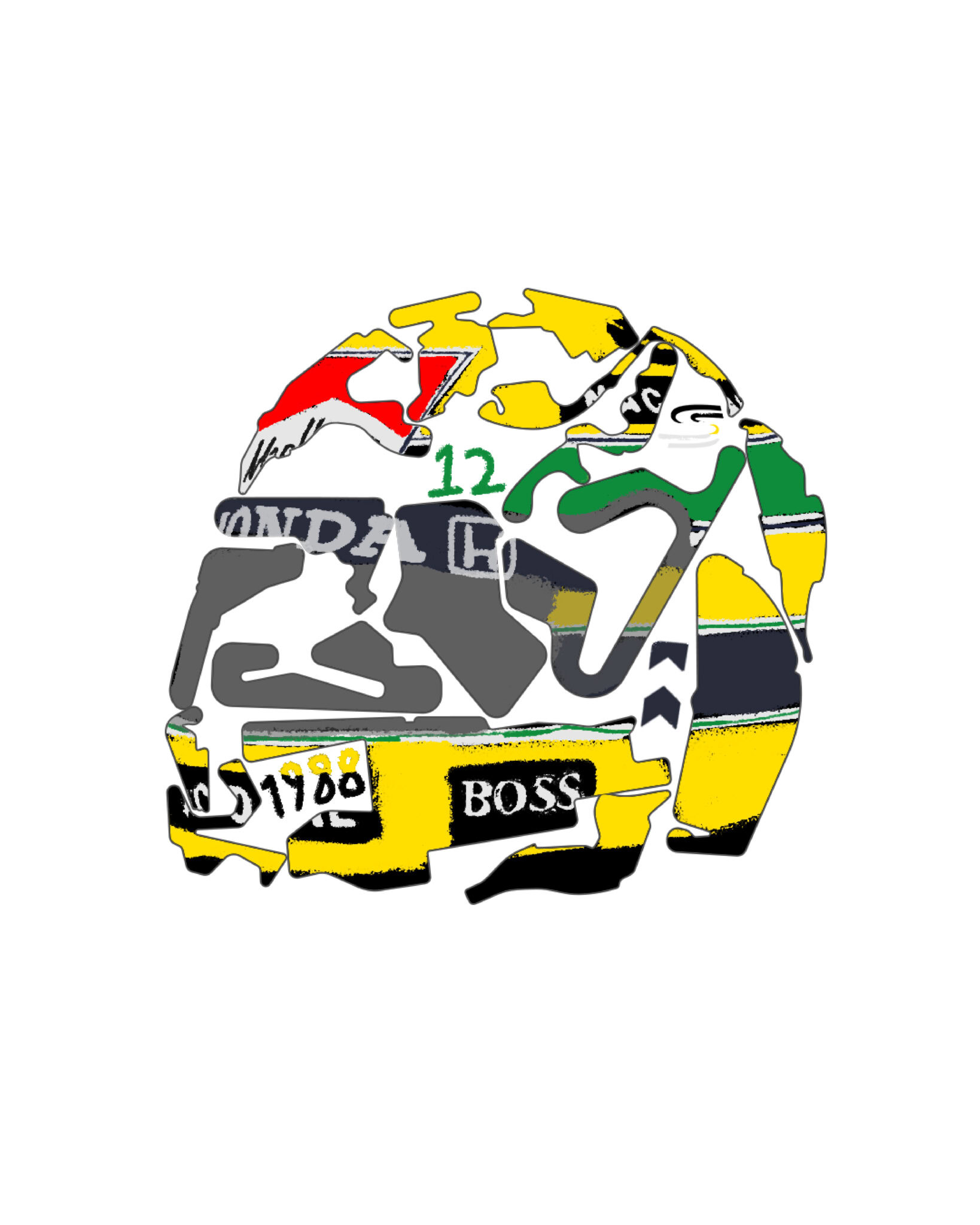
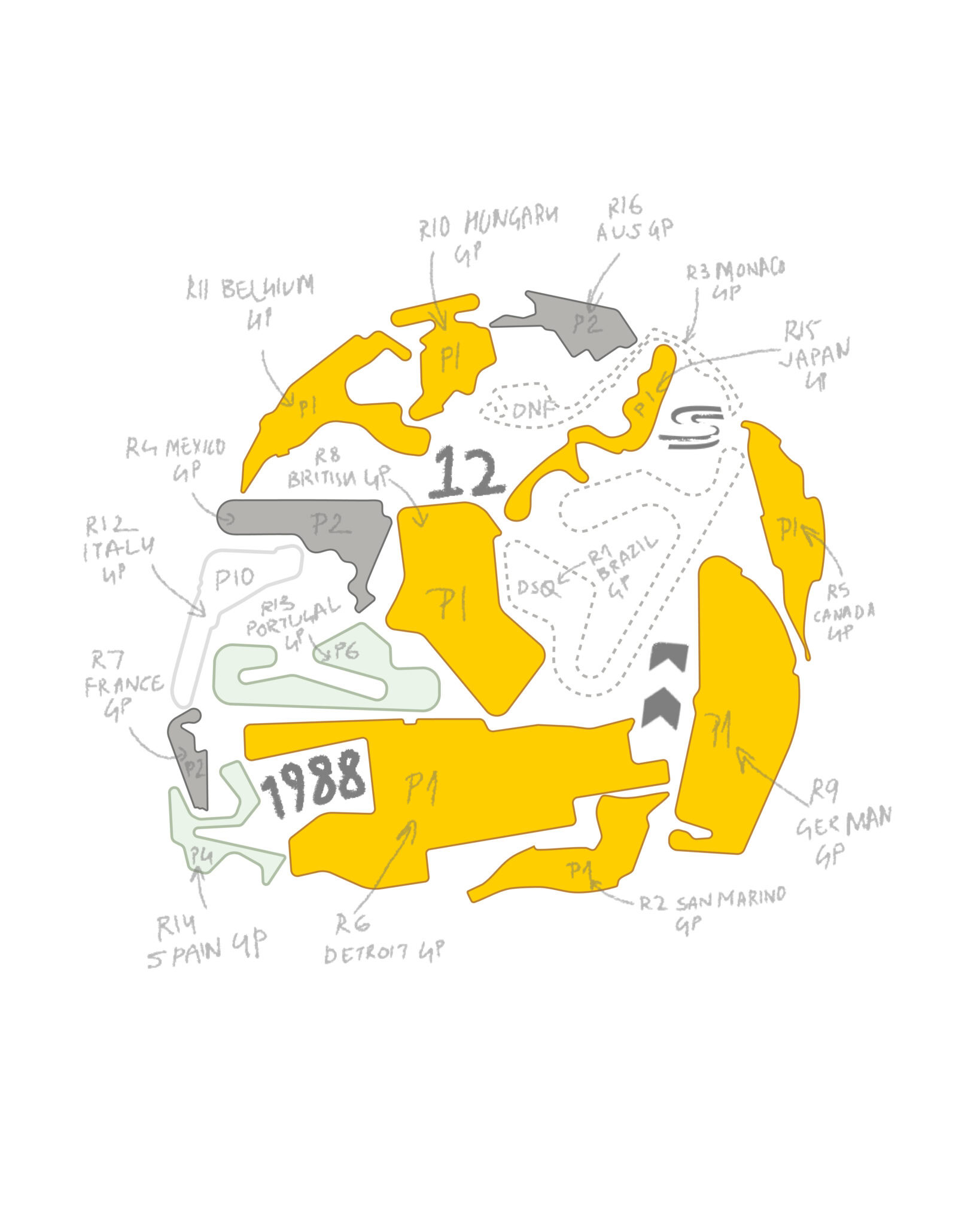
VM: It was amazing. But I don’t want to become repetitive. The 2026 cars look more or less the same, but the first three illustrations are very different from each other visually. One is an aerial view, one a side view, one a front view. The way to assemble them is completely different each time. And I’m using track layouts from each corresponding year, so everything is period correct. For Ayrton Senna’s helmet, for example, I used the 1988 track layouts, which are different from the 2026 versions.
C&C: Are you going to explore other F1 shapes?
VM: I’ve been thinking about the steering wheel. There’s been a massive evolution there, from the circle to the semi-circle, all the buttons. That history interests me.
C&C: Why do you think the work has gained traction?
VM: I break everything down by dimension, by element, by material. That’s exactly what I do in my job as an architect in AutoCAD. The two practices aren’t that different.
C&C: What’s the hardest part?
VM: I’ve gotten track names and layouts wrong. When I did Fernando Alonso, I had the wrong Silverstone layout. It’s difficult when you’re working from a silhouette to identify which version is which. I’ve built up a large library now to avoid that.
C&C: Are you going to make yoru work available for purchase?
VM: I’ve been doing this as an artist on the side for five or six years, and I feel accepted by the world and by this community. That means a lot. In the short term I’m thinking of releasing high-resolution digital versions. I’m open to doing prints as well. And I have to say, when McLaren commented on my McLaren post (they clapped 👏), I jumped out of my skin.
C&C: Where do you see the work going from here?
VM: I don’t want to stick to one style or subject. I love going out and exploring the city, finding inspiration. In Mumbai there’s always something happening. For me, the best thing is just to drive around and see what moves me.
This interview has been edited for length and clarity