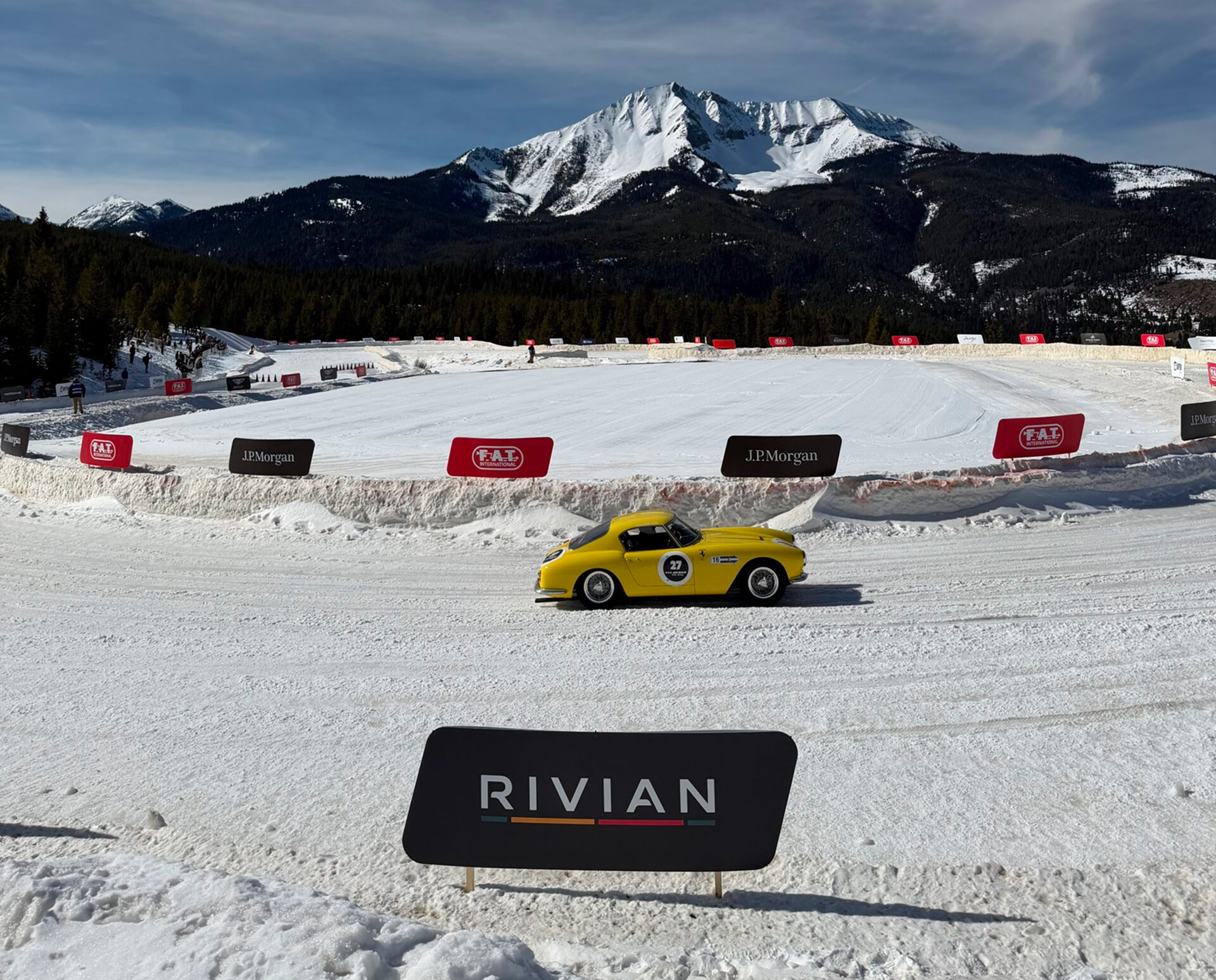
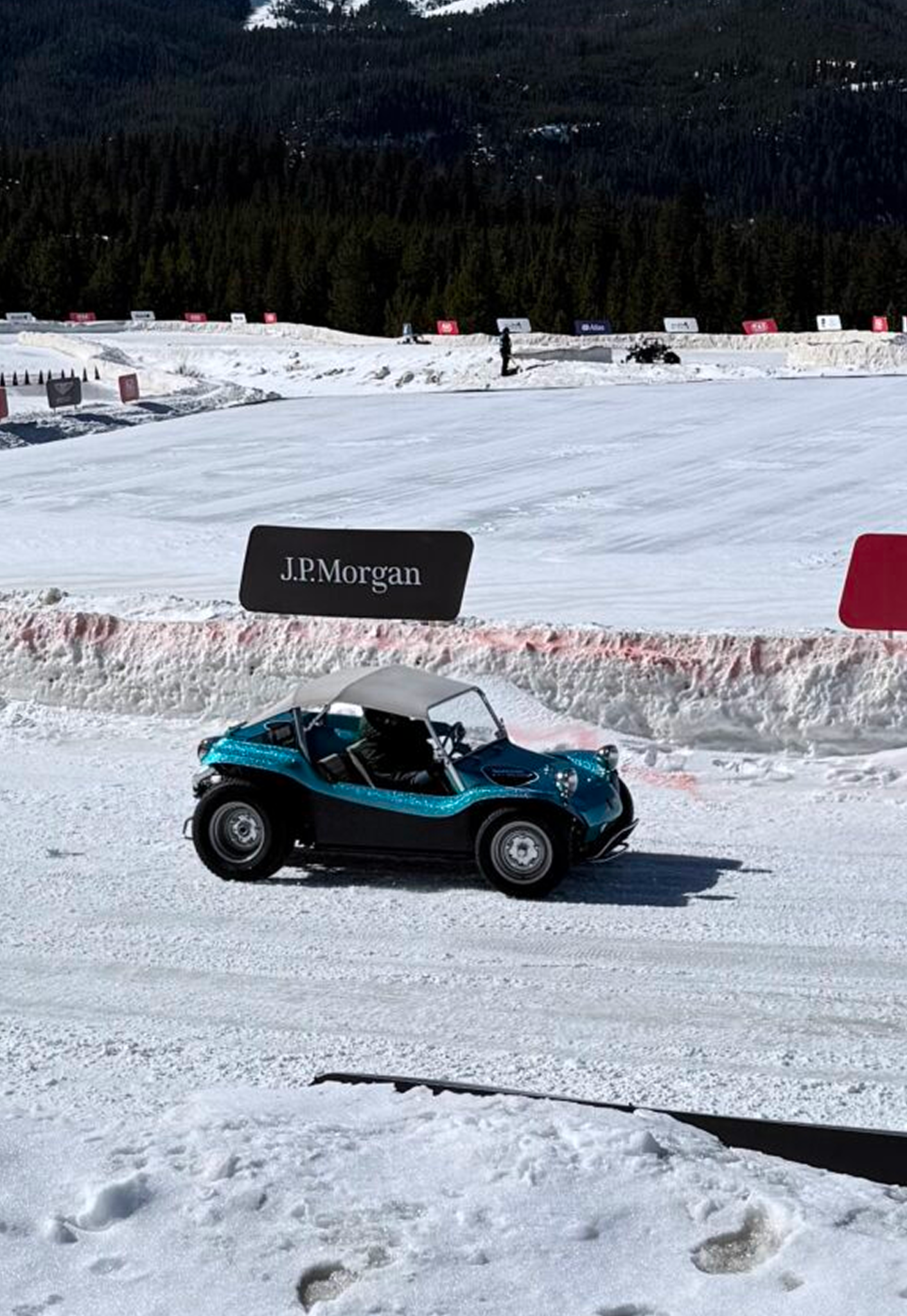
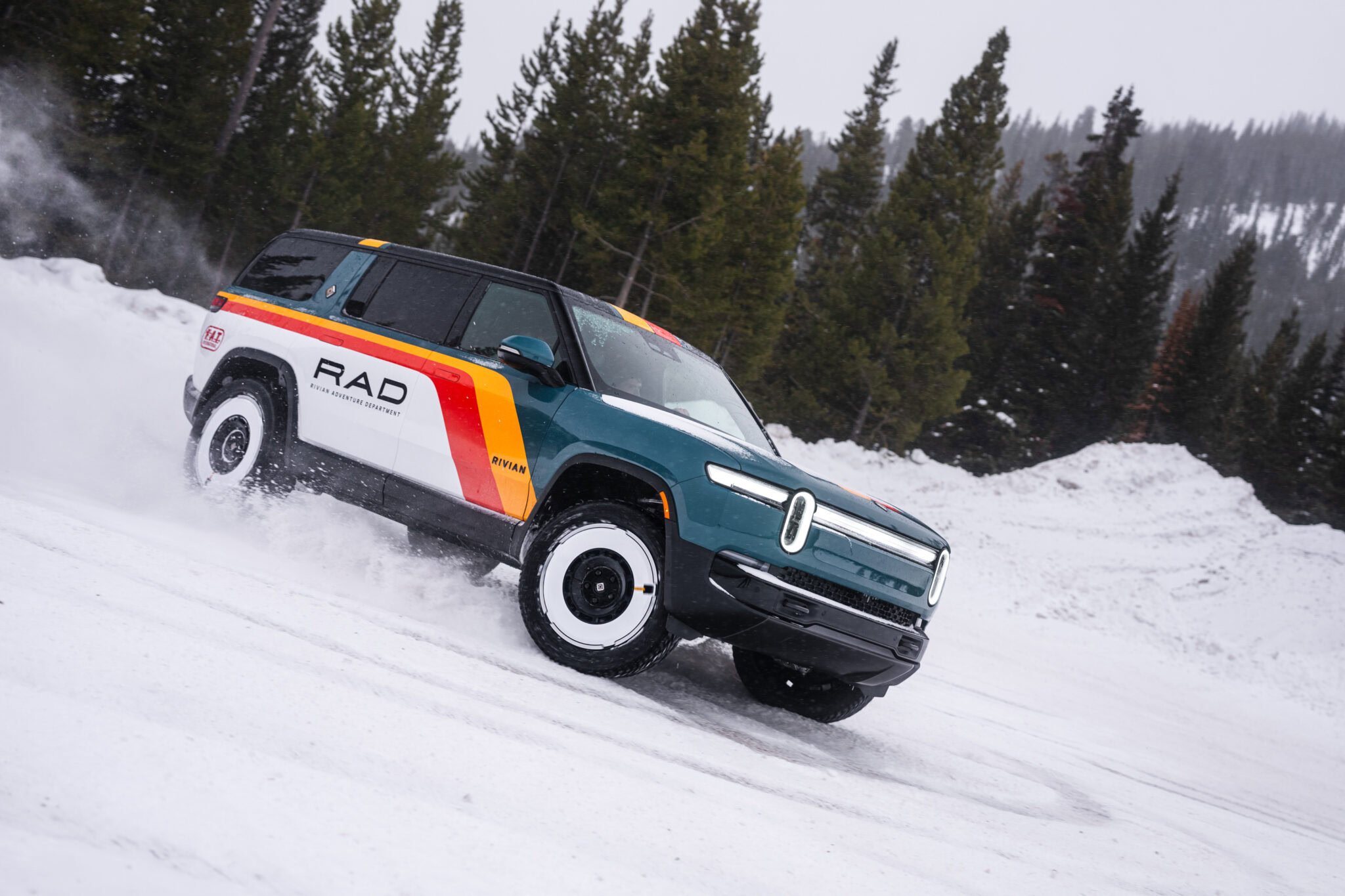
At the end of February, a stretch of Montana’s Moonlight Basin was flooded, frozen, and groomed into the track for the FAT Ice Race. The soundscape swung from combustion engines ricocheting off snowpack and studded tires clawing for grip to the near-silence of a 7,000-pound Rivian sliding in controlled drifts. At altitude, it felt less like a race weekend and more like a winter convocation of car culture: part motorsport, part design showcase, part fashion moment.
Ferdi Porsche—architect turned racing team owner—has built his career around gatherings that sit outside traditional circuits. As the grandson and namesake of Ferdinand “Ferry” Porsche, founder of the storied German automaker, his immersion in car culture came early. He attended automotive events with his parents, (his father serves as chairman of the company’s supervisory board), and three siblings. Raised in Munich, Porsche spent holidays in Zell am See, the Austrian resort town known for ski seasons, the first ice race in 1952, and postcard summers along Lake Zell. It was also there, on winding Alpine roads, that he learned to drive in a vintage Volkswagen Beetle—a fitting first car, given Ferdinand Porsche’s central role in engineering the model’s original design more than eighty years ago.
Crown & Caliber’s editor-in-chief Alexandra Cheney sat down with Porsche in Big Sky to talk about building a motorsport culture brand, keeping racing playful, and why FAT is designed to feel like a movement.

Crown & Caliber: Originally FAT, or Français Allemand Transit, was a French German logistics company. In the 1980s and 1990s, F.A.T. International became a sponsor of Porsche’s endurance racing efforts. You’ve purchased the brand name; describe FAT International in its current state.
Ferdi Porsche: It’s kind of rebellious, but it’s also open to everybody and approachable. And it’s always fun. When I did the first Ice Race in 2019 in Austria, it kind of laid the foundation for everything we did with FAT even though I didn’t have FAT back then. Only when Covid hit was the moment where I had some time to breathe and figure out where I wanted to take this thing that I started with Ice Race. It’s about fun, approachability, an open paddock, being young. It’s about adding culture to motorsport.
C&C: What does an open paddock mean to you?
FP: Everybody can basically go in there.
C&C: General admission tickets were $245 for a single day and around $400 for the weekend. VIP tickets were $1,944 a single day and $3,762 for the weekend. Tickets were required to attend, so it’s not open to the public.
FP: In my ideal scenario, it would be open to the public. But that was my 24-year-old self. My 32-year-old self knows that everything is expensive, you have to ask for tickets.

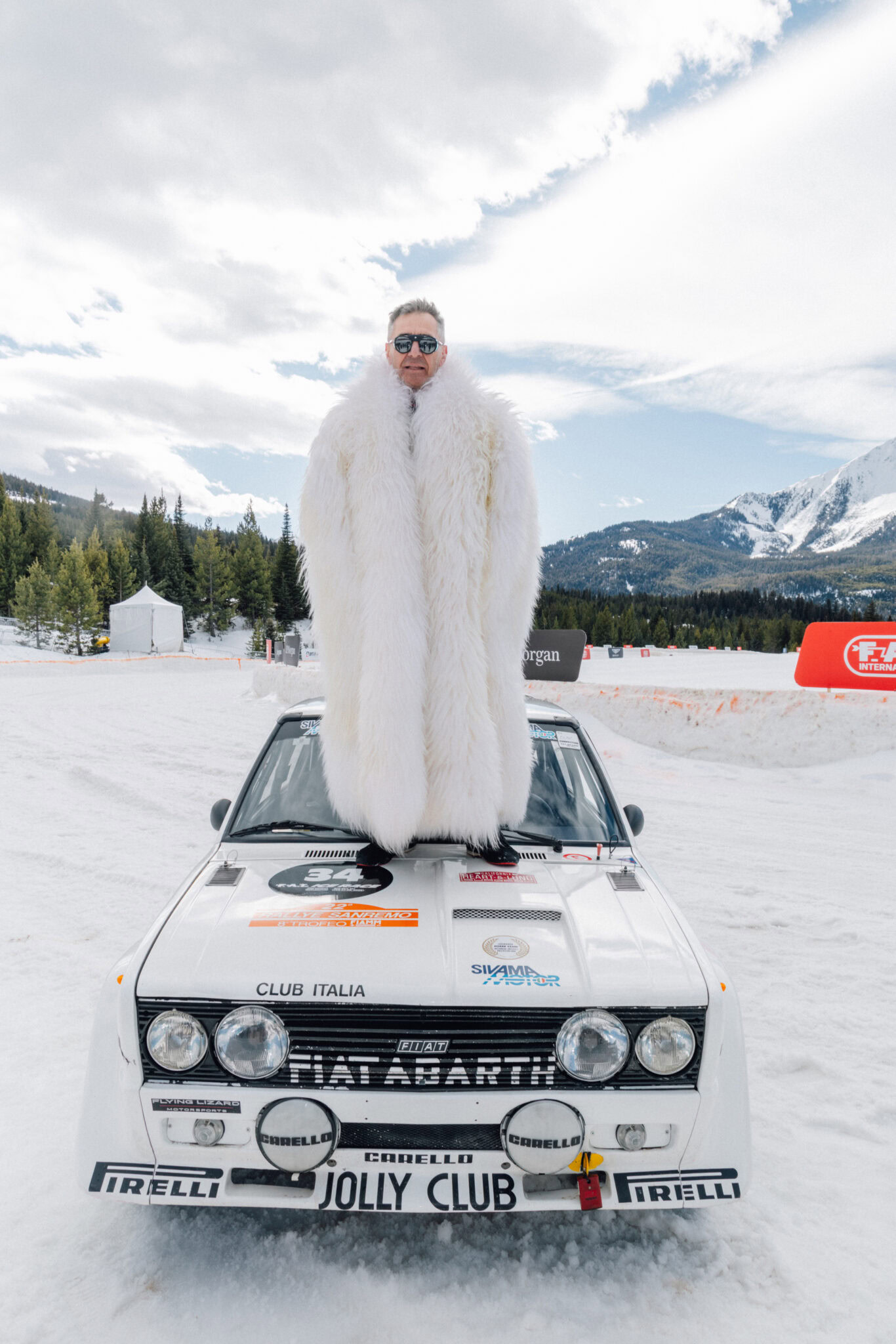
C&C: In 2019, 140 drivers entered and 10,000 people attended the inaugural GP Ice Race in Zell am See, Austria. This year marked your second time racing in America—and your first FAT Ice Race in Big Sky, Montana. How many tickets did you sell?
FP: 2,500 now I think
C&C: And how many brands participated?
FP: I don’t know, 100%. We have Nissan, Toyota, Porsche, Rivian, Bentley, Ruf, Singer. We have a bunch. That’s also kind of the idea, right? Many people always ask me why it’s not just Porsche, and I think it just makes it more authentic and more of a real deal. FAT should never be a one brand thing, right? Motorsport isn’t.
C&C: An ice race is an ice race until it isn’t an ice race, because sometimes the ice doesn’t cooperate, which has happened before. What do you do in those situations? How do you adapt?
FP: That has happened before. Maybe first and foremost, a FAT race is still a FAT race if you have ice in there or not. How would we adapt here? I think a FAT race essentially is an open paddock, stadium feeling, all different cars, fun over speed — that’s kind of what makes a FAT race. An ice race is nice. What do I do if I have no ice? Either you race in the mud, or you just have a lot of beer and be sad about it. That just happens. Outdoor events come with a lot of hassle, but it’s also the beauty; you can never really plan them. It has to work, and if it doesn’t, it doesn’t and then there’s next year.
C&C: What does it take for FAT International to sponsor a car?
FP: It has to match. It has to be a good story. We have become much more focused when it comes to our racing team. We have karting league now and our own FAT racing. It has become, how do we make this a meritocratic sport where like talent wins, and the fastest kid in the FAT Karting League gets a seat in our own race team? How do we develop that? Then, all the cars that we sponsor, they’re supposed show the halo of motorsport, and still be somewhat eye opening. And they always have to be in classes that we find cool. But that can be Rally3, like we have now with one of our alumni in karting with Charlie Tuthill, or, on the highest level, the Porsche 963 that we had in two years ago.


C&C: You’re the grandson, and namesake, of Ferdinand “Ferry” Porsche. How do you balance your legacy with what you’re building?
FP: I think when I was still in school, you want to fit in, right? When you’re a young teenager, you want to be like everyone else. Obviously, this heritage of my family comes with upsides and downsides. There are learnings; things that they did not so well and a lot of things that they did like very well. I want to take inspiration from that. But at the same time, I always want to be my own person. My parents sent me to a regular public school in Munich. And I think that everybody’s the same at 12-years-old, and so the last name doesn’t do anything, right? You kind of have to be your own personality. The family thing is more of a of an inspo and something to learn from more than it is pressure now.
C&C: In previous years FAT International partnered with Porsche Design to create watches for the races. Why no watch for this race?
FP: We are not super repetitive in everything that we do. We want to do surprises every now and then. We can’t do a watch all the time: we did four watches already. The watch part is cool. But it doesn’t need a watch every time. I’m a big watch guy, obviously I love watches. I love the mechanical ness of them. I love that especially if there’s things only people know that are kind of into watches that I find cool. If you have a secret club, in a sense, that you can only like spot yourself if you know the same thing, which is similar to FAT, right? If now people spot each other wearing FAT in the streets, they ideally, know they’re into the same thing. So that’s what I like.
C&C: You’ve got some FAT Racing expansion news
FP: What’s really new is the whole FAT racing. The karting league kind of fell into our laps by coincidence. Making motorsport events more fun, we had already checked that box. But if you want to build a community around this thing called FAT, build a lifestyle brand, I think it’s very important that you have some sort of depth. The FAT Karting League, I think, gives the whole thing a lot of credibility and depth. Plus, it gives the people that stand around our races and have a beer a reason to feel good about themselves. We’re literally building a race team. How cool is that? We have our own F4 car now. In the coming years, we’ll build a F4, F3, F2. I’m very hyped about that. I’m also very hyped to tell the story of all these kids, because I think that’s going to be a very interesting story to follow.

C&C: The FAT Karting League is for kids ages five to 17
FP: Yes, and we just had the world finals in the December, and the winner, like the four winners, got invited to a shootout, and we just picked our first FAT racing driver. That person will be debuting in British F4 in April.
C&C: As an architect, you clearly have an eye and point of view. How do you turn that onto FAT to create a brand, and in your words, a vibe?
FP: We take care of things that people don’t take care of now anymore, like graphics. Nobody cares about [expletive] graphics anymore. And we care about graphics. We care about photos and the fact that they’re not always digital and don’t need to be very clear and clean and super high res. They can be somewhat [expletive]. Sometimes they tell more of a story. And I think that maybe gives 80s vibes. Obviously, the fact that FAT was born in the late 70s, early 80s. A lot of the inspo that we take in everything is from that era. But it is because this era was on the verge of being digital, but still somewhat real. Growing up in the early 2000s, 90s, people still know this era. I feel like it’s cool to show the younger generation that quality matters, and not just like being fast and chasing some trend.
C&C: You’re driving, chatting, doing a little MC’ing and presenting awards. What’s the highlight of the weekend for you?
FP: I don’t really like talking so much all the time with so many different people, because I find it somewhat exhausting. Jokes aside, I obviously enjoy talking to everybody, because everybody made an effort to come. But what I really love the most is lying in bed when it’s all done, and being happy that it worked, and happy that everything looked cool and kind of taking a moment to be a little proud of myself.
This interview has been edited for length and clarity.