In the world of luxury yachting, two hulls are fast becoming better than one.
What’s driving that shift is the power catamaran: a vessel that offers ballroom-size interior and exterior spaces, twin hulls that run fast and fuel-efficiently, rock-steady stability, and a rapidly expanding range of hybrid and all-electric power options. Collectively, those attributes are converting buyers who once wouldn’t have considered anything but a monohull.
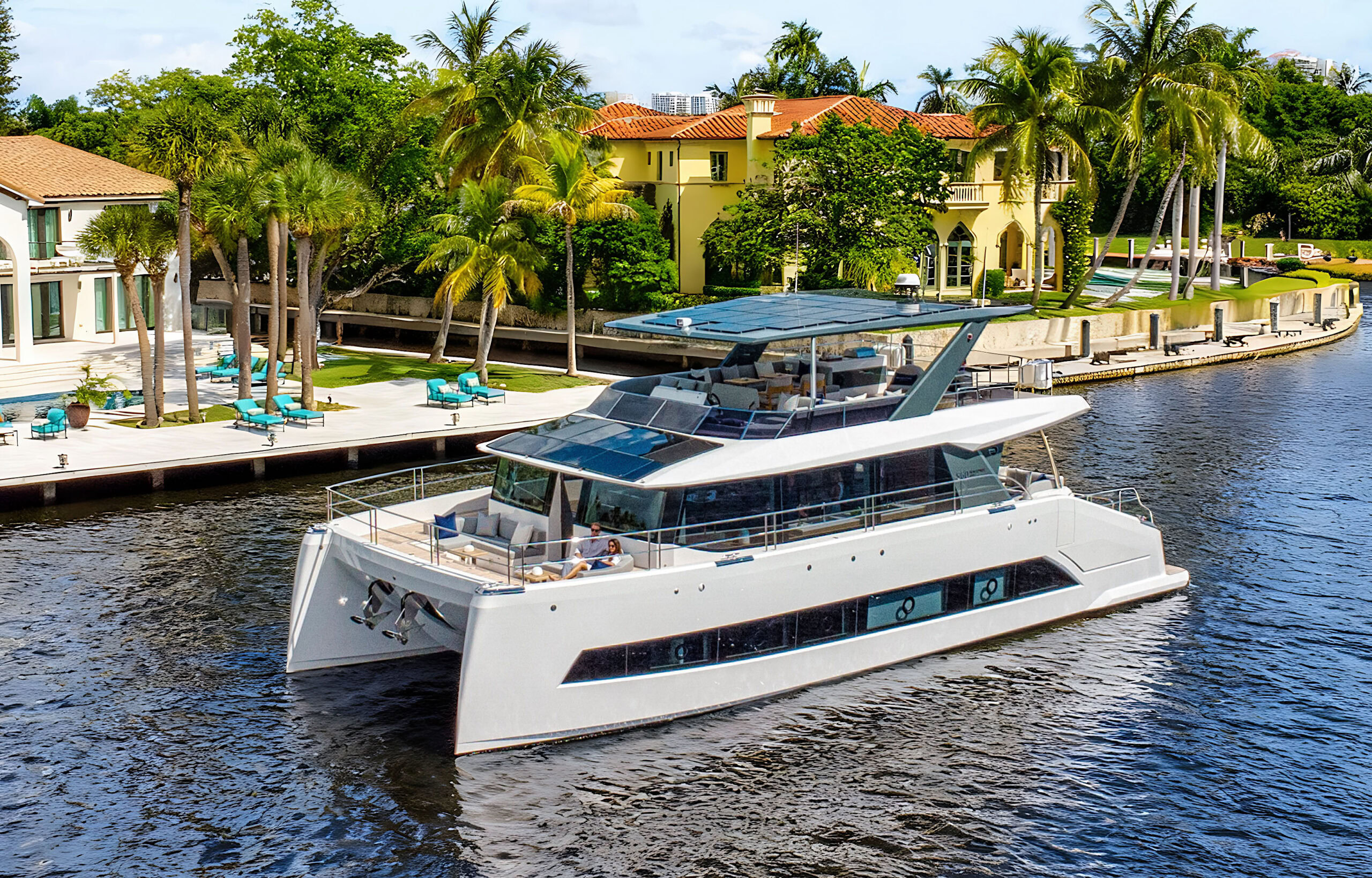
Among those leading the transition is Florida-based Aquila Yachts, which has quickly grown into the world’s foremost power catamaran brand. Its current 14-model lineup ranges from a 28-foot center console to an opulent 70-footer with six cabins and deck space for a party of 40.
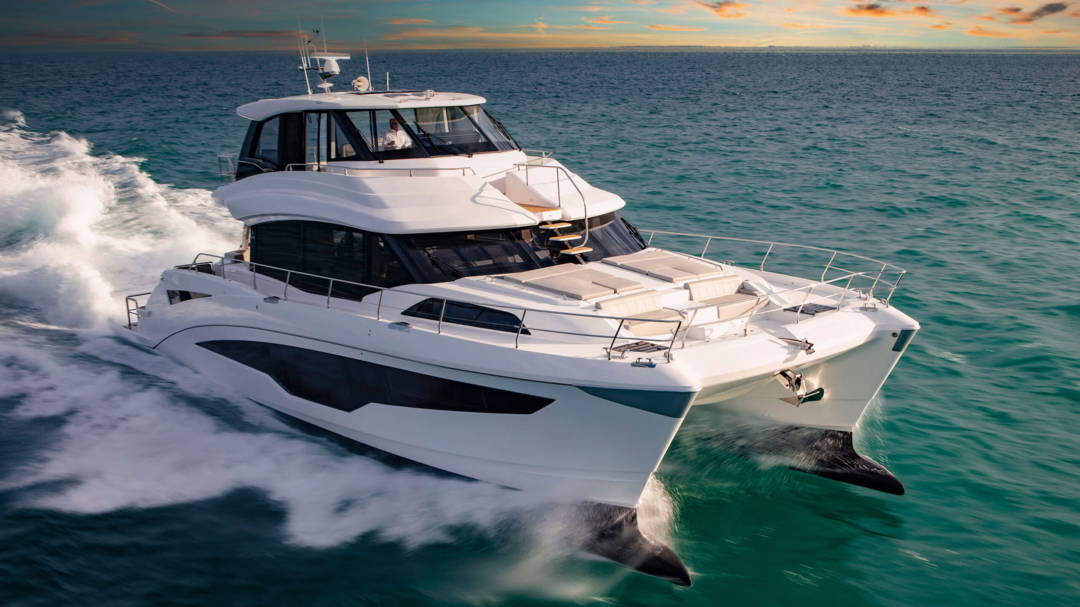
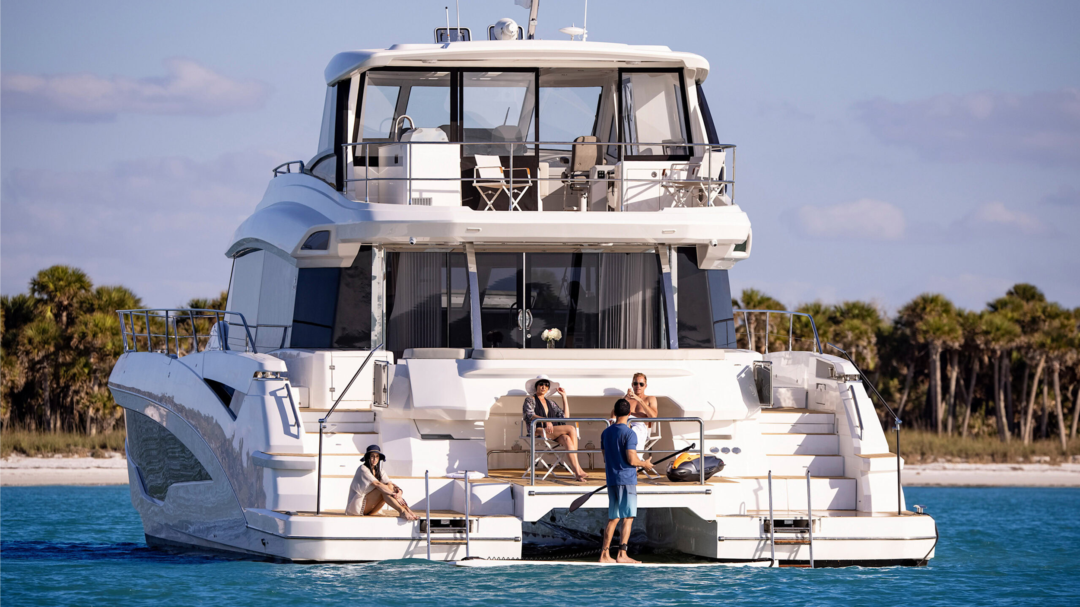
“Part of the appeal is that the designs of power catamarans have changed exponentially over the past decade,” Alain Raas, Aquila’s Global Brand Director told Crown & Caliber. “Before, they were boxy and not very attractive. Now, there’s more of a focus on style and European flair, which is attracting new buyers.”
The numbers bear out Raas’s case for scale. The newest power cats offer 20-to-25 per cent more interior volume compared to a monohull of similar length. “That means in something like an Aquila 50 Yacht, priced from roughly $1.6 million, you’d have to move-up to a 70-foot monohull to have the same amount of space,” he said.
No powercat builder knows more about space than Poland’s Sunreef Yachts. The yard’s recently unveiled, roughly $22 million, 119-foot Ultima 111 arrives with a vast 37-foot beam, cabins for 10, and internal dimensions more akin to a sprawling Manhattan penthouse than anything found at sea.
Sunreef’s bold, head-turning designs have attracted the attention of tennis legend Rafa Nadal, who swapped his 76-foot Italian-built MCY 76 monohull for a custom 80 Sunreef Power he christened “Great White.” Formula 1 racer Fernando Alonso is also a fan, commissioning an electric 60 Sunreef Power Eco, with its hull and superstructure covered in energy-providing solar panels.
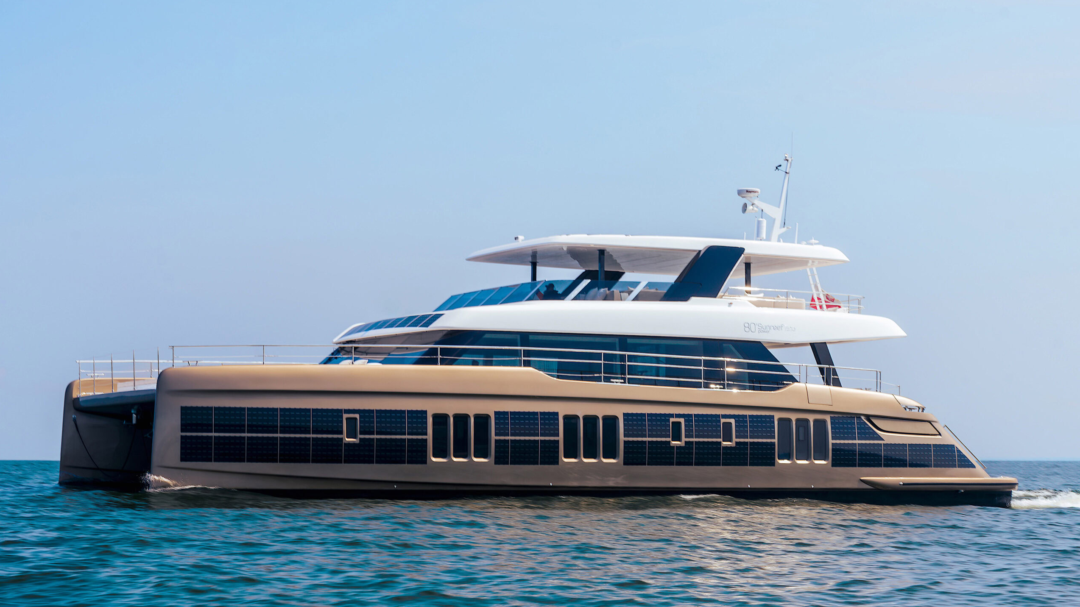
“More and more monohull owners are looking for increased space, longer cruising capability and higher levels of customization,” explained Sunreef founder and president, Francis Lapp, adding, “multihulls are extremely well-suited to meeting these expectations.”
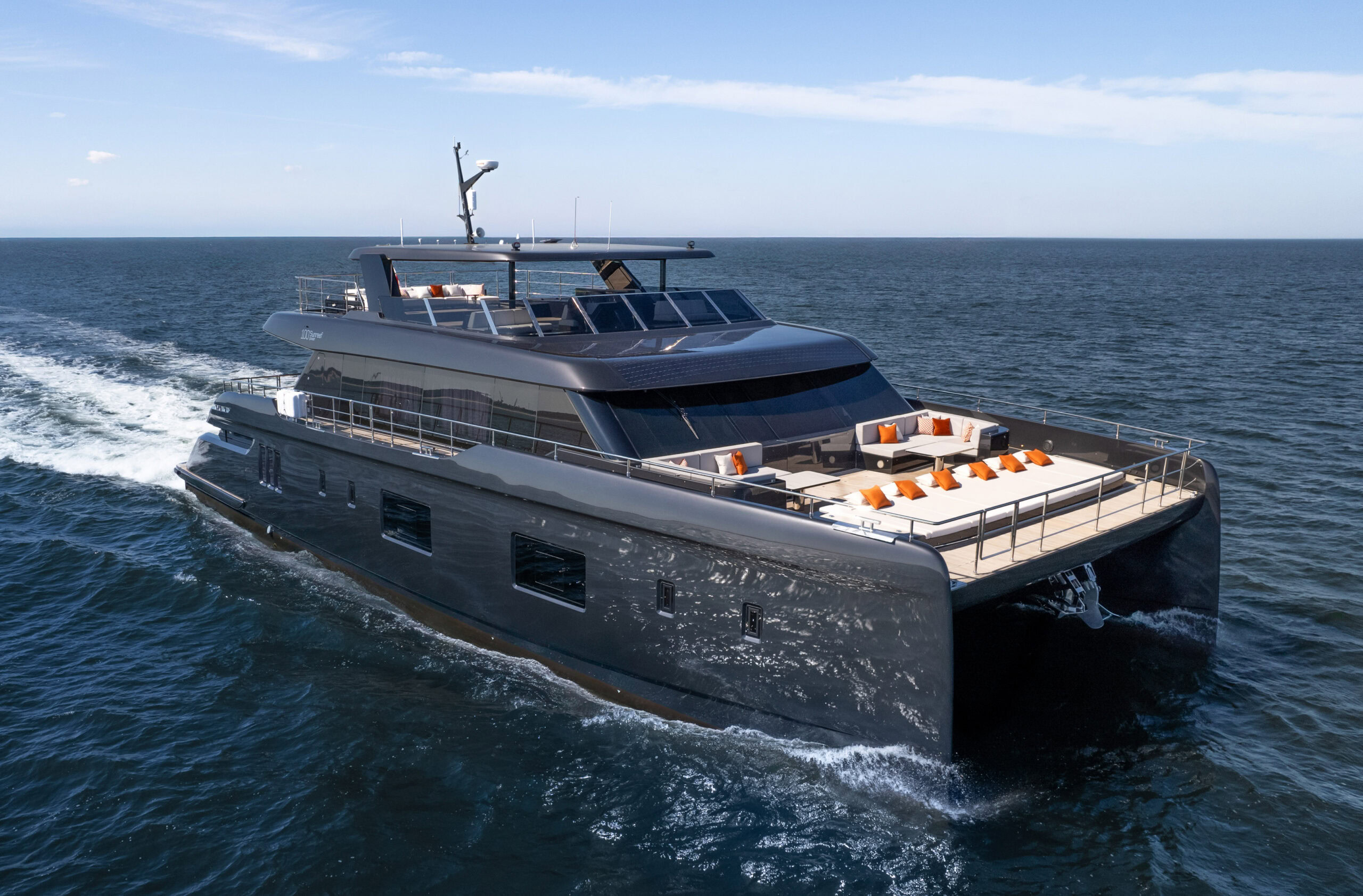
Sunreef is also staking its future on green propulsion. The yard recently delivered the 100 Sunreef Power Eco, its first all-electric 100-footer, fittingly named “Double Happiness.” Powered by four 180kW electric motors and a 990 kWh battery bank charged by wall-to-wall solar panels, Lapp says the yacht delivers silent, emission-free and reduced-cost cruising.
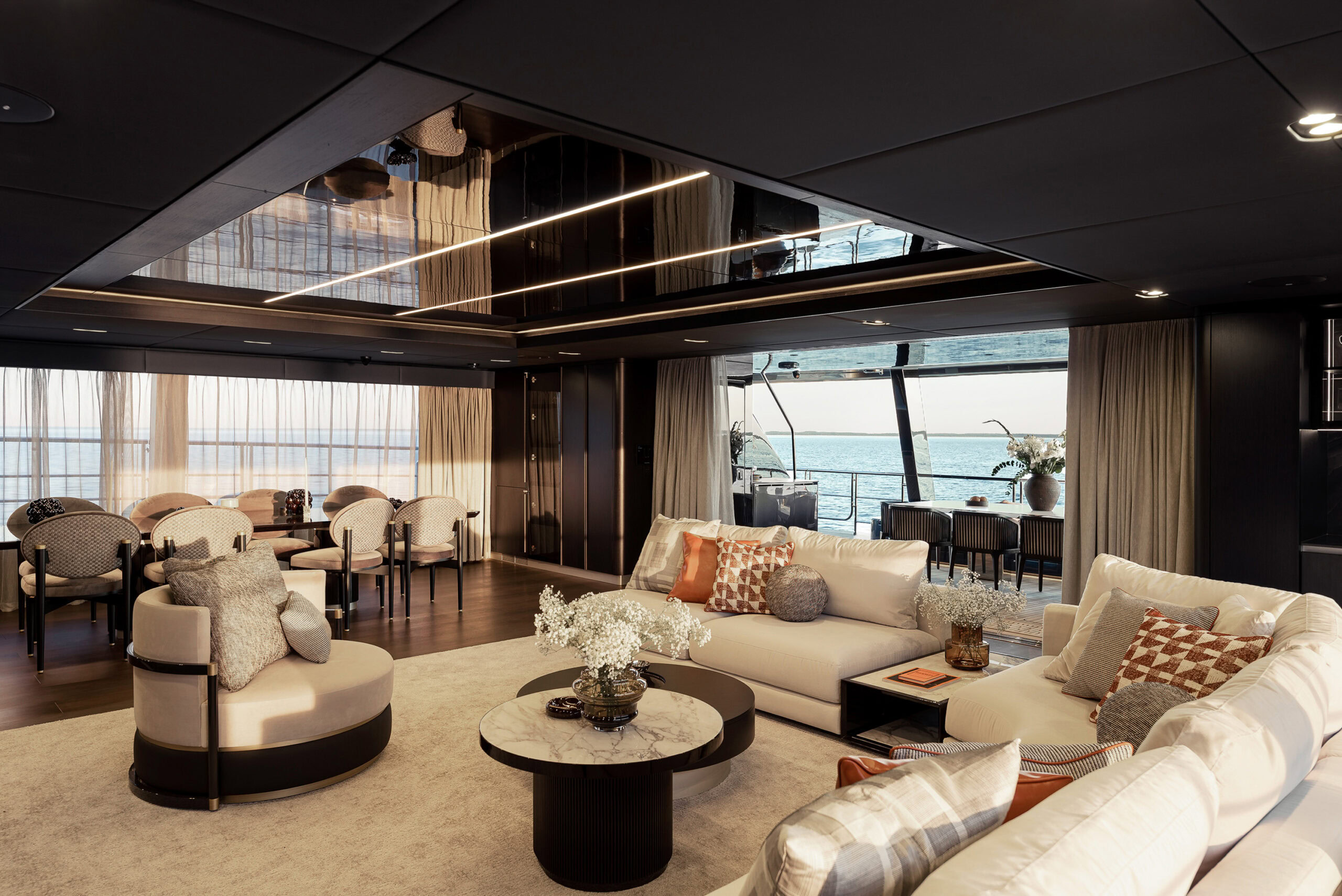
The Chinese-built Oceanwalker S60, priced from roughly $3.5 million, which debuted at last fall’s Fort Lauderdale International Boat Show, makes its case on sheer exterior volume. Its flybridge alone offers over 500 square feet of entertaining space, while below decks, every cabin boasts around seven feet of headroom.
The S60 is no slouch on speed either, hitting 22 knots on twin 600-hp Volvo turbo diesels, a respectable clip for a 60-footer. For those who demand more, Ireland’s Safehaven Marine offers a different order of magnitude altogether: the astonishing 70-foot T-2000 Voyager, powered by a pair of 2,000 hp MAN V12 diesels, can slice the roughest of chop at over 60 knots.
More than 20 builders are now feeding the ever-increasing demand for power catamarans. In addition to Aquila, Sunreef and Oceanwalker, major players include France’s Fountaine Pajot and Lagoon, Taiwan’s Horizon, South Africa’s Leopard and Two Oceans, China’s Iliad, Italy’s Silent-Yachts, and Bulgaria’s Omaya. Bluegame, part of the Italian Sanlorenzo Group, is pioneering the so-called “narrow-beam” power cat trend with its BGM75, as is France’s Prestige with its sleek M48.
“No, power catamarans will never replace monohulls going forward, but the split is certainly going to get a lot narrower. There are just too many benefits of two hulls,” added Aquila’s Raas.