Standing before a great work of art produces a particular kind of pleasure: a quickening of the pulse, a sense that something ancient and beautiful is communicating directly across centuries. Seeing, and wearing, a truly exceptional watch, is capable of exactly the same thing. Both are the work of human hands guided by obsession, precision, and a refusal to settle for the merely adequate. Over one particularly blustery weekend, we brought a pair of Vacheron Constantin Historiques 1921s to the Metropolitan Museum of Art.
The connection between Vacheron Constantin and the Met is rooted in a shared conviction that the highest forms of craft deserve preservation, study, and continuity. Vacheron Constantin has maintained a formal partnership with the Met since 2023, united by a shared devotion to preserving and celebrating the highest expressions of human craft. The collaboration’s Artisan Residency program sends master artisans to New York to immerse themselves in the museum’s collections and engage with its curators, before returning to Geneva to work alongside Vacheron’s own craftspeople. This October, those same artisans will come full circle, presenting the fruits of that exchange at the Met itself. The house also offers, in partnership with both the Met and the Louvre, a program called “Masterpiece on Your Wrist,” which extends an invitation to clients to commission a bespoke Les Cabinotiers timepiece bearing an enamel dial reproduction of a work from either institution’s permanent collection, a synthesis of watchmaking and art history that feels entirely inevitable.
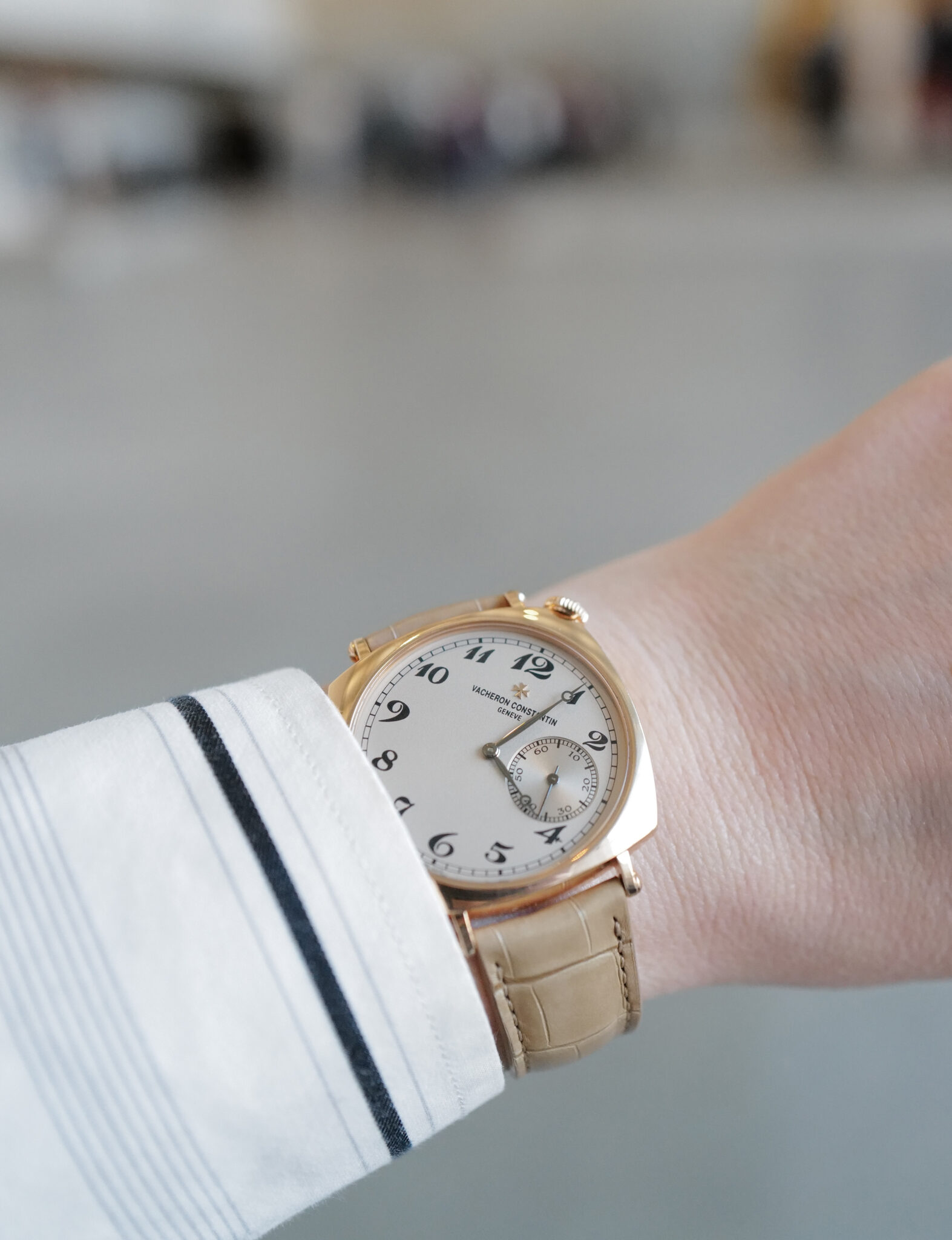
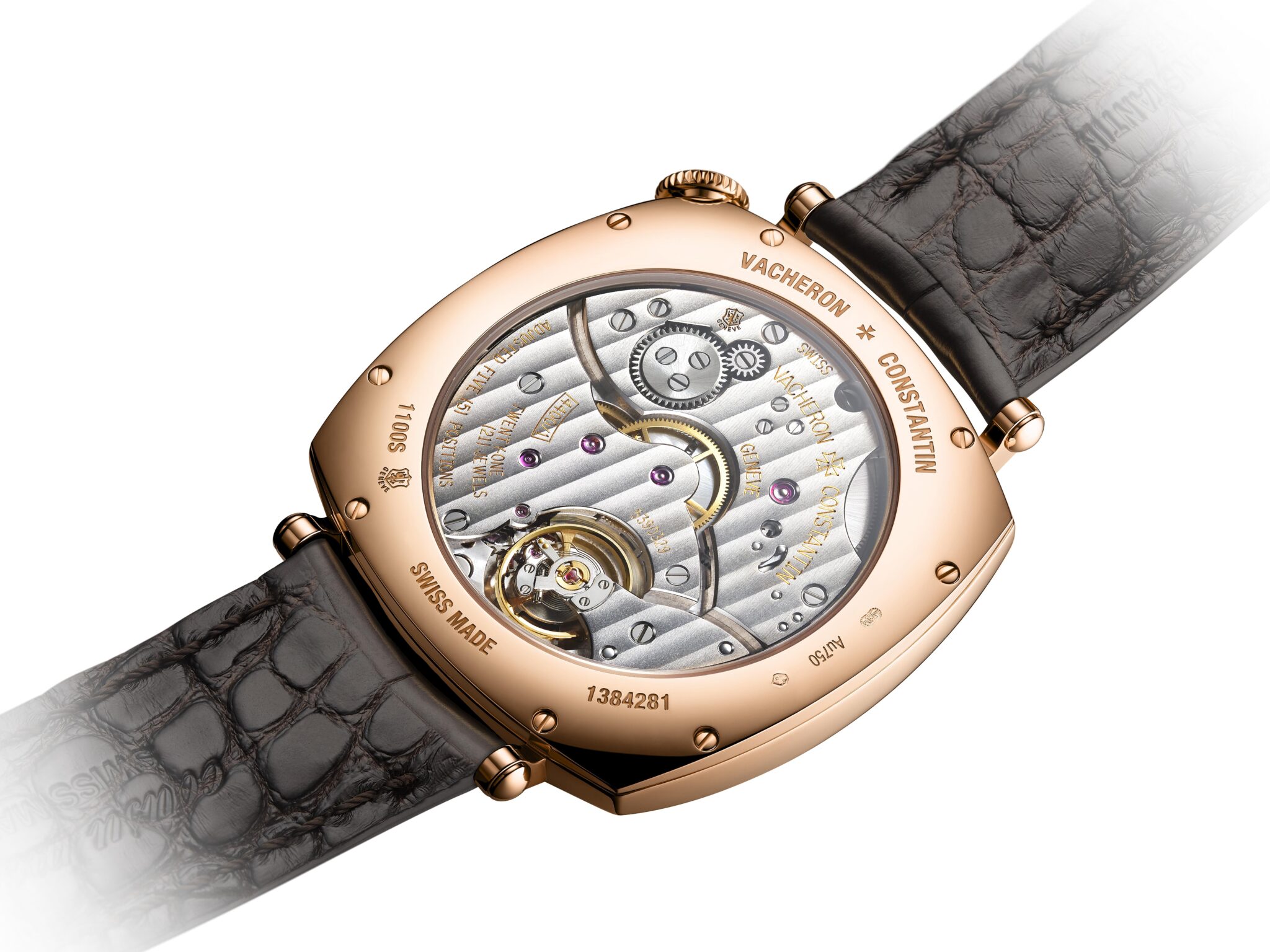
We chose the Historiques 1921 as our companions for the day, two versions, the 40mm and the 36.5mm, both in pink gold. The Historiques 1921 is among the most covetable models in the Vacheron stable, a contemporary reinterpretation of a design first introduced to the American market in 1921. The original was built for the motoring age, its dial tilted at a diagonal within a cushion case so that a driver could glance at the time without lifting a hand from the wheel, and the gesture reads just as elegantly today. The off-center crown, positioned boldly between 1 and 2 o’clock, and the small seconds nestled between 3 and 4, give the dial an almost cubist asymmetry that feels entirely at home in an institution devoted to the art of looking. The crisp white dials with their black painted Arabic numerals are a study in legibility, and the Calibre 4400 movement within, bearing the Hallmark of Geneva and finished with hand-bevelled edges and Côtes de Genève, offers a 65-hour power reserve, comfortably sufficient for even the most ambitious museum itinerary.
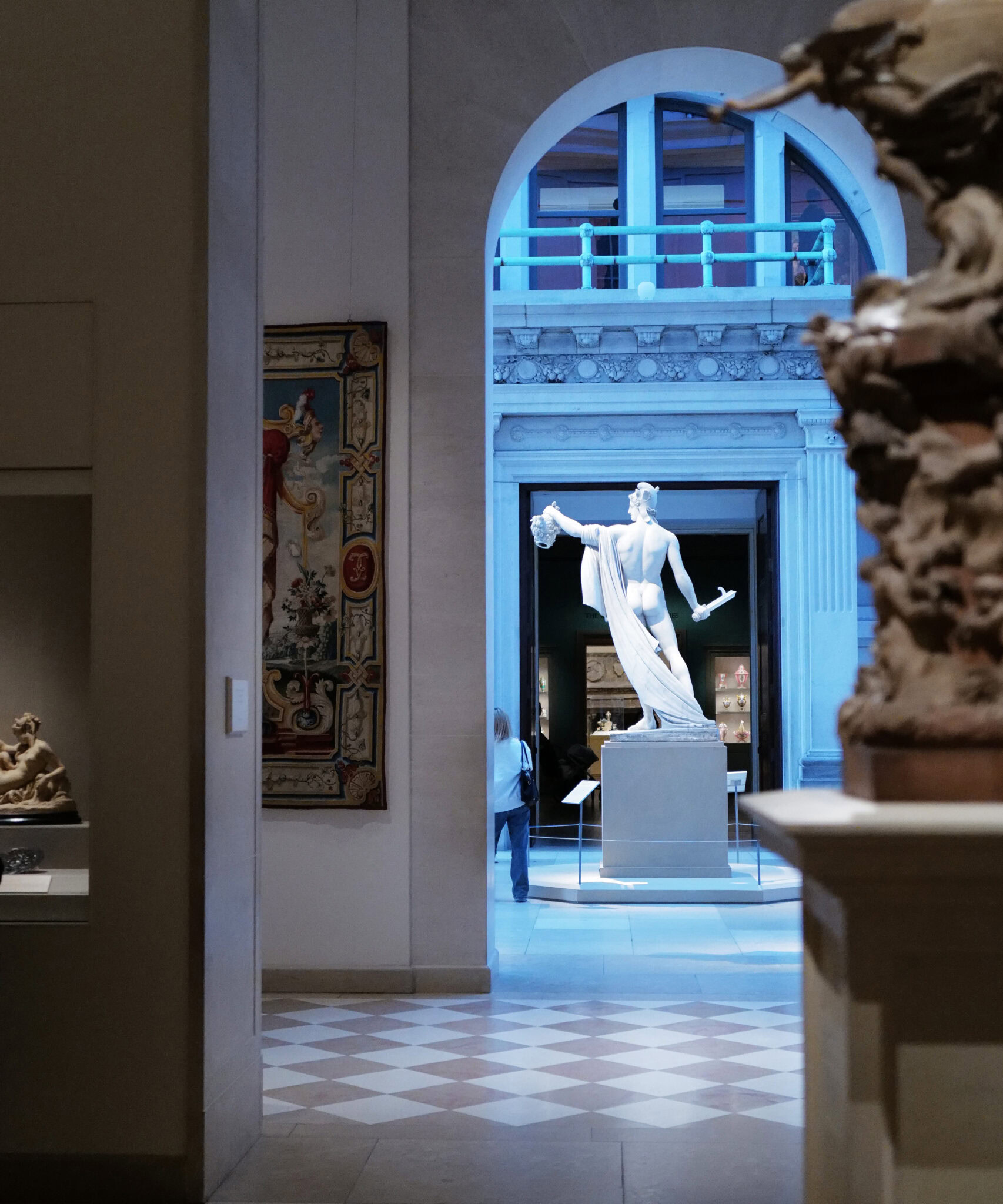
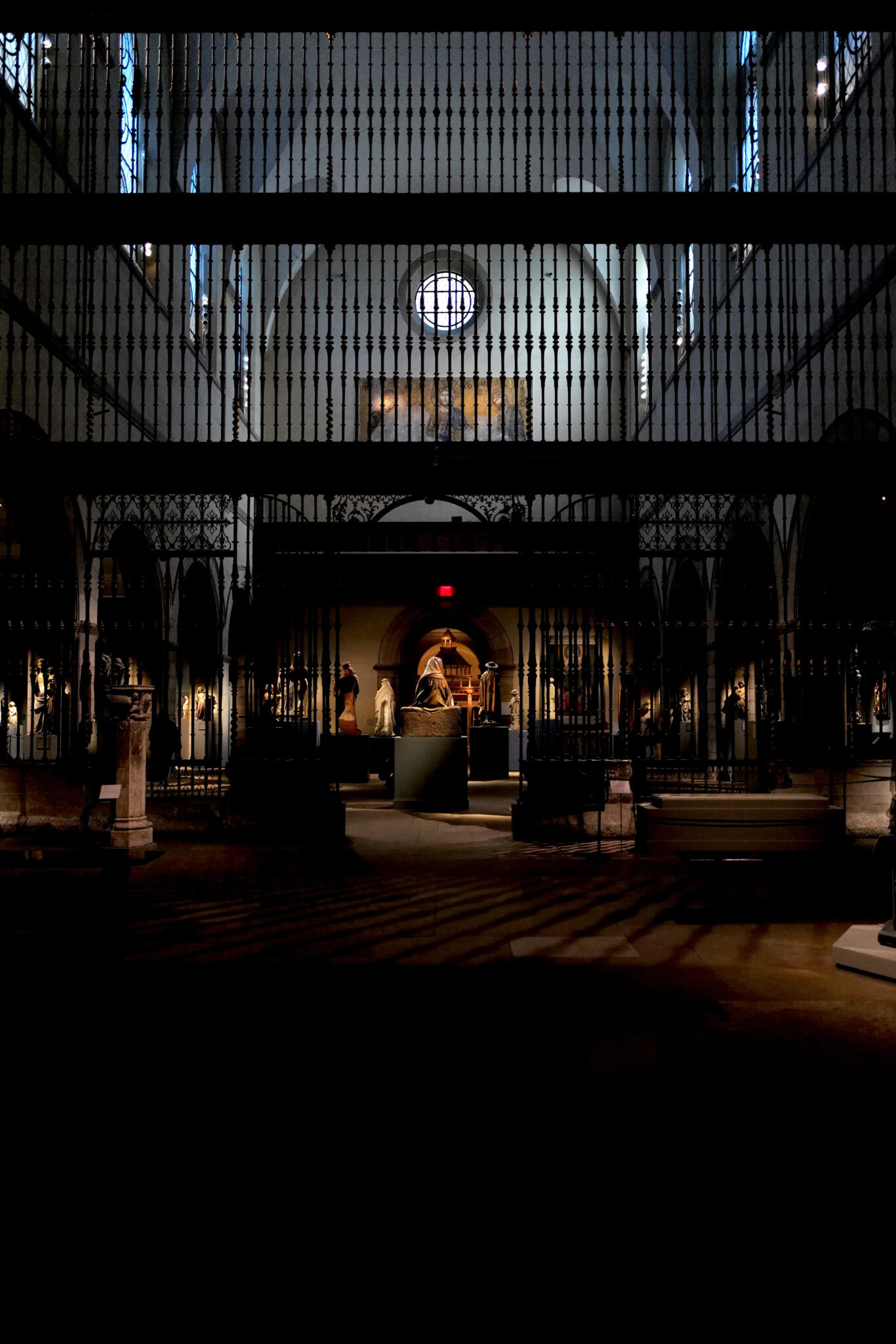
The Metropolitan itself is an institution that rewards patience, chartered in 1870 and occupying its current site along Fifth Avenue inside Central Park since 1880, expanding in every direction and across every decade since. It has accrued wings, courtyards, and additions from a remarkable roster of architects including Calvert Vaux, Richard Morris Hunt, McKim, Mead and White, and Kevin Roche. What is perhaps most remarkable is that the museum’s oldest facades were never demolished as the building grew; they were absorbed, reappearing as interior walls in spaces like the Petrie European Sculpture Court and the Lehman Wing, the past quite literally built into the present. The 1921, in its own way, operates by the same logic: a design that has never been abandoned, only refined, its original bones intact beneath a century of accumulated craft.
The 36.5mm iteration of the 1921 on my wrist and the 40mm version on my friend’s wrist both felt right at home as we explored the museum. We frequently stopped to admire the dials and contours as we moved through the spaces, watching as the light changed as it hit the dial in spaces with skylights, or remarking on its legibility in darker galleries. On the wrist, each wears comfortably, feeling substantial due to the weight of the pink gold, but also elegant due to their cushion cases and short lugs, and each slipped effortlessly under a cuff when discretion was called for.
The largest museum in New York, getting lost here is not a failure of navigation but the entire point. On the second floor alone, it’s possible to turn a corner into a Vermeer, then a Botticelli, then an El Greco, all within the span of a few unhurried minutes. The medieval galleries reward an equally slow approach, with their sculpture and jewel-toned stained glass. The Egyptian Wing delivers one of the museum’s most transporting moments, where the Temple of Dendur stands fully intact beneath a soaring glass wall that frames Central Park beyond. One of the most charming ways to spend an afternoon is slowing down, exploring art, and finding unexpected treasures at the Met.
It’s sometimes necessary to take a break during a long stint at a museum. Helpfully, there are a number of dining options at the Met, ranging from a casual takeaway cart to seated cafes. We chose to stop at the Balcony Lounge on the second floor, available to members of the museum at the Dual level and above, to enjoy a brief snack. While we sipped our absolutely delightful coffees, we could not resist taking a closer look at the movements visible through the sapphire casebacks. Even while taking a break from viewing art, we were still drawn to the artistry inherent in the skillful decorations present in the movement finishing. We felt thoroughly refreshed after admiring the Geneva striping and bevelled edges on the bridges, and carried on with our visit.
We also took in the current special exhibition, Seeing Silence: The Paintings of Helene Schjerfbeck, on view through April 5th. The Finnish painter is beloved throughout the Nordic world and almost entirely unknown elsewhere, a circumstance this exhibition, the first dedicated to her work in the United States, seems determined to correct. Nearly sixty paintings trace her career, and there is something unexpectedly resonant about seeing her work alongside the watches on our wrists. Schjerfbeck spent her career finding beauty and significance in the everyday, in portraits and domestic scenes. That sensibility correlates with the Historiques 1921, a watch whose origins are as prosaic as a morning commute, and whose craft has spent a century arguing that the everyday deserves to be done beautifully.
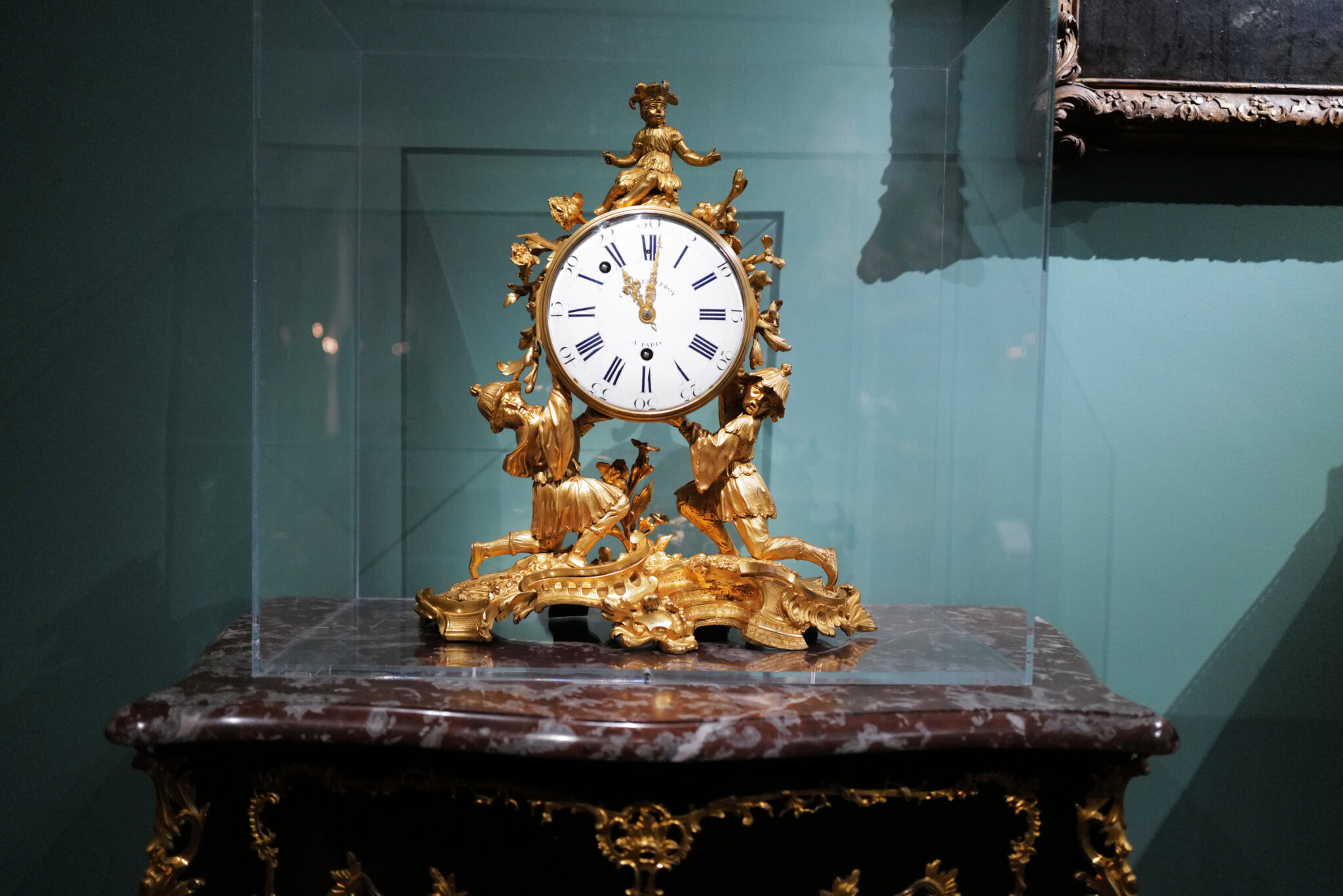
As devoted watch enthusiasts are wont to do, we could not resist checking our Vacherons against the museum’s remarkable collection of more than 350 clocks, many of them kept wound and ticking throughout the galleries, a small game that gave the afternoon an added frisson of timekeeping pleasure. The collection spans four centuries and includes a David Roentgen longcase clock that once displayed the time in the ten most important cities of the day, a Ferdinand Berthoud astronomical regulator standing nearly eight feet tall, and a seventeenth-century automaton clock depicting Urania, muse of astronomy — objects that put even the most serious wristwatch in useful perspective, and that make the hand-wound ritual of the 1921 feel like a direct, unbroken line to that same tradition.
The Met requires no special occasion and no particular companion. The museum has been showcasing human achievement at its highest level for more than a century, and the Historiques 1921 makes a quietly persuasive argument of its own — that beauty and craft, wherever they are found, deserve the same unhurried attention. There is no wrong way to spend a day in these galleries, but there are better and worse ways to mark the time while doing it, and the Historiques 1921, in either size, belongs firmly in the former category.