At the Designworks studio in California, the projects are forward-facing, but the conversations stretch decades. As the creative design company for the BMW Group, a new project, whether a car, electric wingsuit, or high-speed train, must arrive with clarity and conviction and age unapologetically.
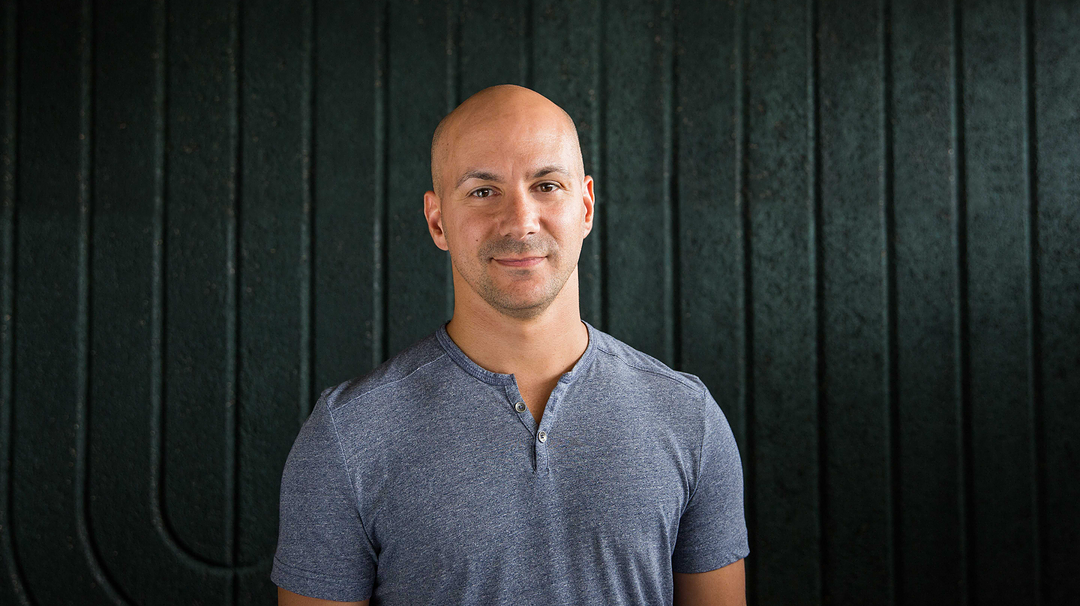
For Adrian van Hooydonk, head of BMW Group Design, those requirements are a perennial test. Trends accelerate, technology reinvents itself, the cultural mood now shifts faster than ever. For the self-proclaimed “architects of future,” Designworks’ moniker, that means both futureproofing and future-defining, starting with BMW vehicles.
A car sits in driveways, carries families, frames commutes and long-distance escapes. People will spend years inside it, maybe even pass it down. Van Hooydonk understands this tension.
On a recent visit to the Santa Monica studio to celebrate a half-century of innovation in the U.S., Crown & Caliber’s Editor-in-Chief Alexandra Cheney sat down with van Hooydonk to discuss the debut of Neue Klasse, cleaner design geometry, and time as the ultimate driver.
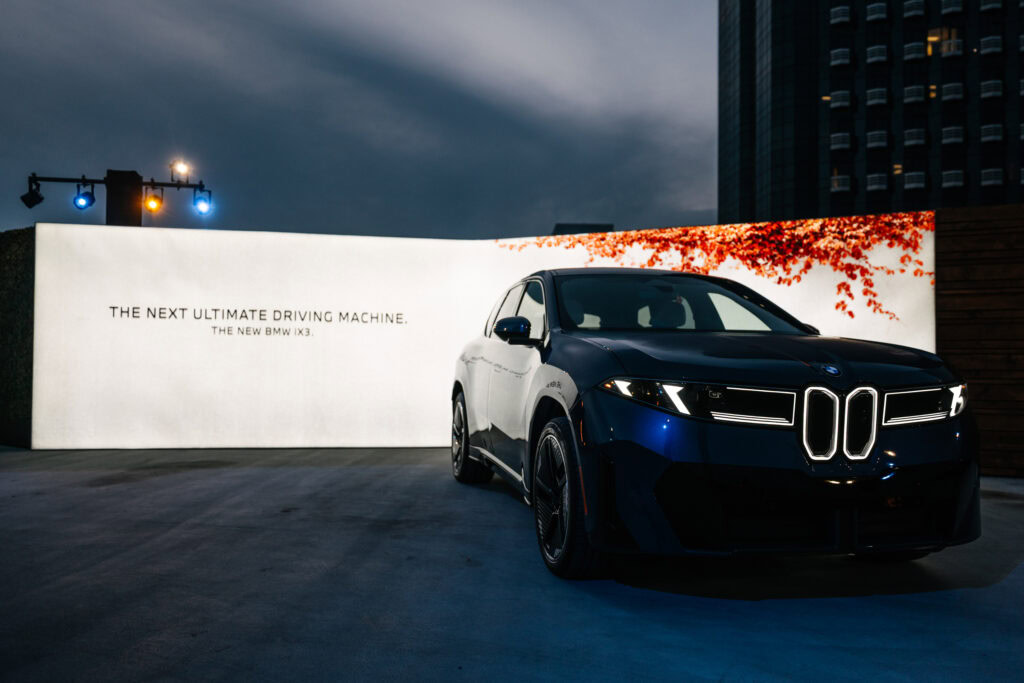
Crown & Caliber: As the head of BMW Group Design, your job is to direct the entire design language for all brands under the BMW Group, including BMW (cars and motorcycles), MINI, and Rolls-Royce. How does time and longevity factor that into the design decisions that you make?
Adrian van Hooydonk: Earlier today, I talked to a colleague of yours about what is luxury today. To a large extent, I would define it with time, because to many people, time is of the essence. People are very conscious about what they spend their time on, who they spend their time with, and what they spend their time in. When we do a car, we are very aware of this. I’m very aware that the time that people spend in our product needs to be well worth it.
C&C: What makes it ‘well worth it?’
AVH: The world is getting more and more loud. Getting into our car needs to be rewarding, and it needs to be relaxing. When people close the door behind them in their BMW, some of them want to go and drive fast and enjoy that. But for the vast majority of customers, they just want to have this alone time, and then they want the vehicle to respond to their inputs. They expect it to work really well.
C&C: You’re describing a very analog experience but the new BMW’s are anything but analog.
AVH: They also want to bring their digital life into it. I want to be able to do all of that. It’s about much more now than getting from A to B. So that’s one aspect of time.
C&C: What’s the other?
The other aspect that you hinted at is that the hardest part about doing our job is to create something that will resonate with the audience not only at the time that you launch it, which is right now for the Neue Klasse, but still many years after that. I think that’s the hardest part, and it’s getting harder because the zeitgeist is moving faster now.
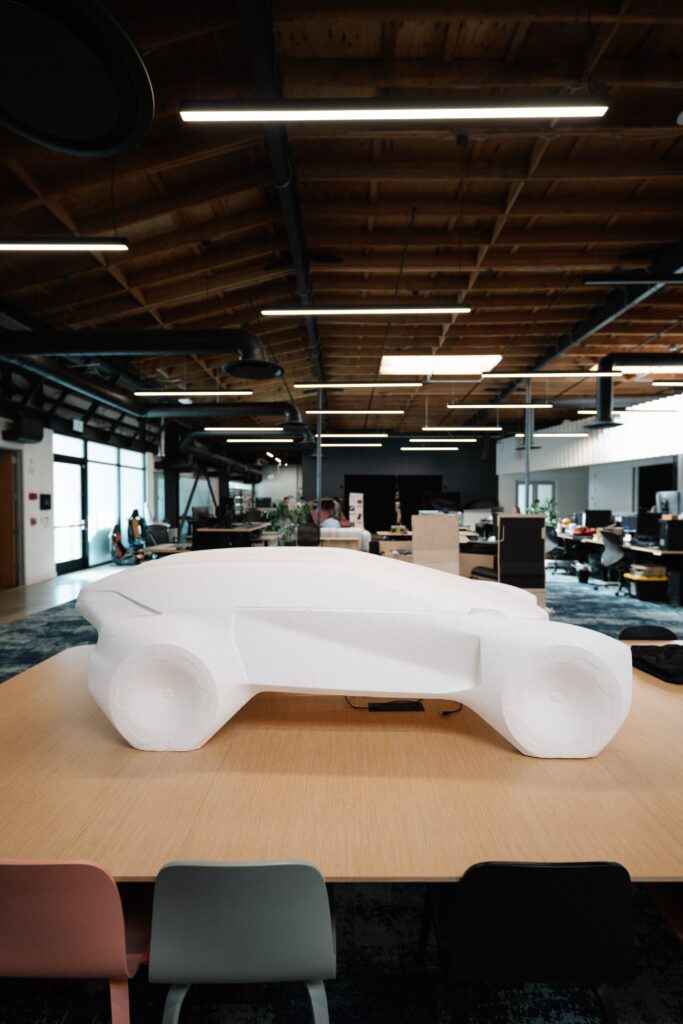
C&C: How do you respond to that acceleration?
AVH: The way we think we can tackle that is that in terms of geometry, the sort of the physical shape of the object. We are now entering an era where we’re going to do cleaner, less complicated design, which we believe will stand the test of time better, and actually for the customer, will hold its value for much longer. The contemporary aspect, or the zeitgeist aspect, you will find in the digital aspects of the car. There is this new type of display, panoramic vision in the bottom of the windscreen, sort of like a holographic display. You can configure it yourself, but it is not overpowering. It’s not in your face covering the whole dashboard. That’s how we try to make sure that the design that we’re doing is relevant when we launch it, and still for many years after.
C&C: I’m going to kind of turn that on its head and say, how do you define a timeless design? What makes something timeless?
AVH: I would say a strong character and not so complicated. That combination, which is hard because often, let’s say a simple shape is also something that you look at and then forget very quickly. The hardest thing is to do something that is not complex, but that people can remember, that has a character that is unmistakable. If I look at our design history in the 70s, I think BMW was quite good at that. A car like the 2002 is something that people still find strong in character, but when you look at it there’s not a lot of lines on it, so it’s not really complicated.
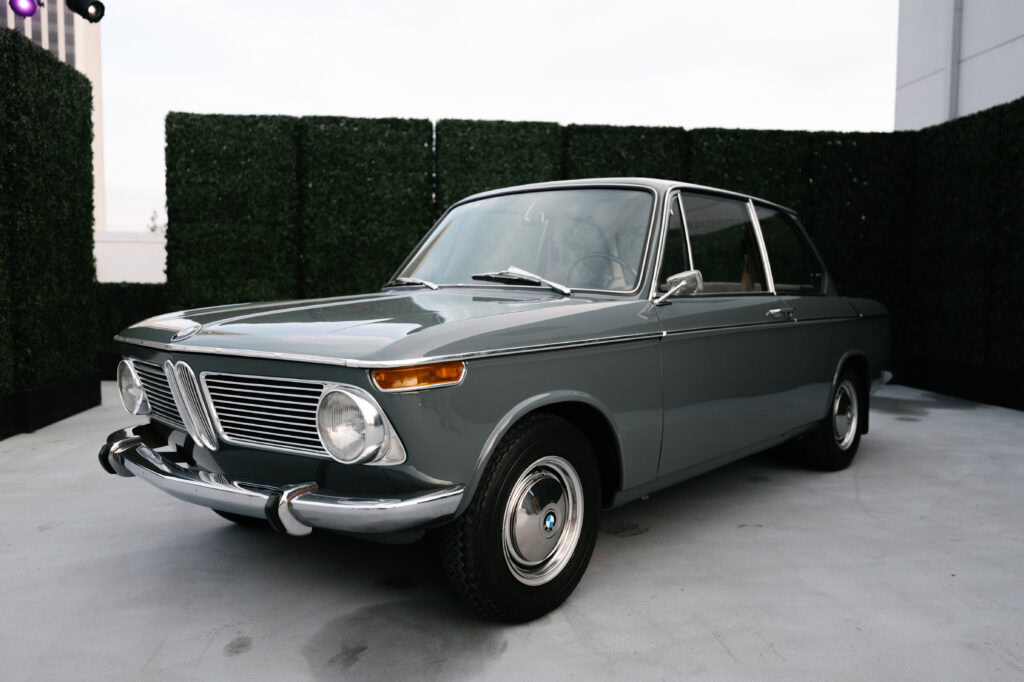
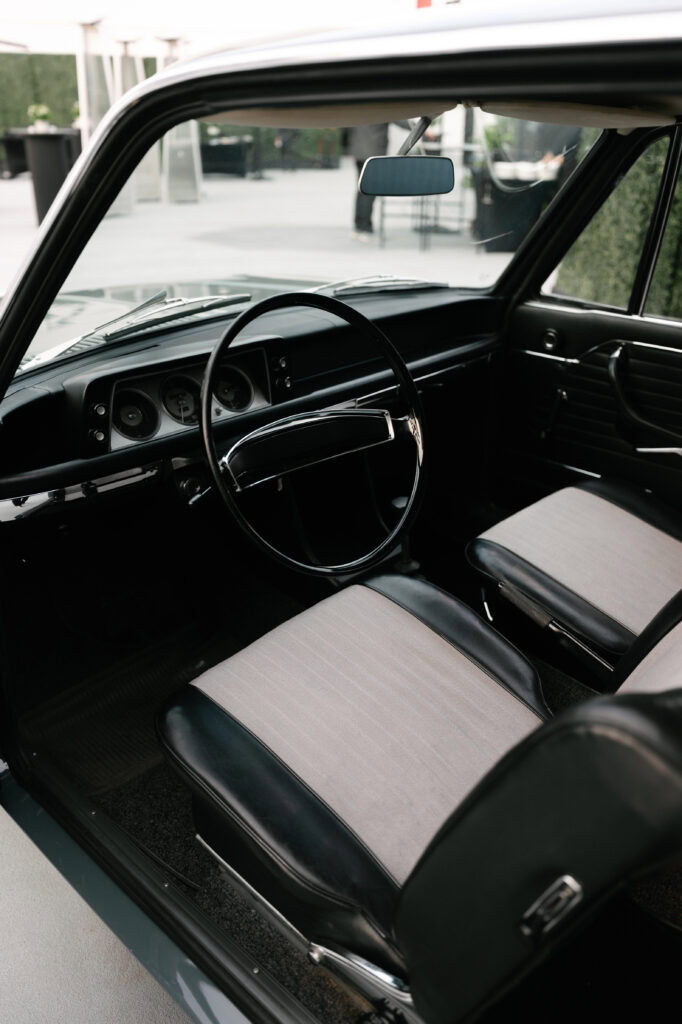
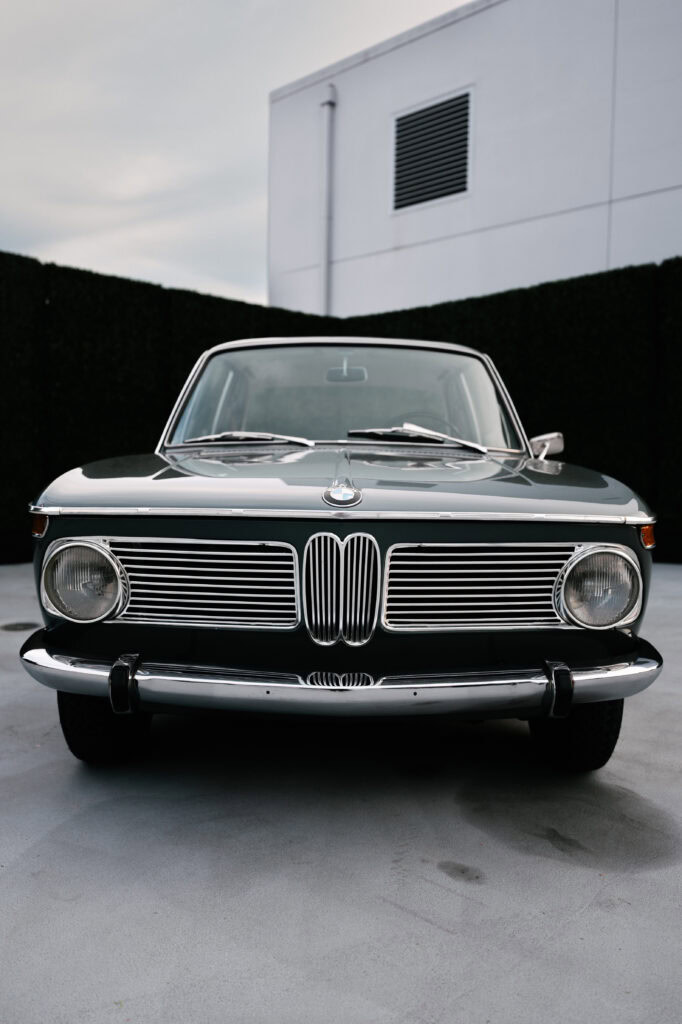
C&C: When did design at BMW get complicated?
AVH: Over time, things got more complicated. The whole world got more complicated. People started doing shapes that were super complex. And now, we can do all of that stuff, but should we? Should we continue to do that? That was what we ask ourselves. With Neue Klasse, I think we are now coming up with a design that is cleaner, simpler, but not sober, not cold. It is warm, it has a human quality to it, and it has a strong character.
C&C: Designworks as a studio has won many a competition within the larger group. How do you keep a group of “architects of future” inspired?
AVH: I don’t have to do it all in one day. That’s a process. I let the design teams fairly free. I give them a very open briefing. I don’t really tell them what to do, and I don’t like to tell them how to do it either, because I know how I was as a young designer, I didn’t want to be told very much. I let them be creative. You get a lot of different ideas out of all corners of the organization. Then you need to first take it for what it is, see what resonates with you on an emotional level, and what you think is going to stand the test of time, and then you begin to merge that. That’s a discussion that I not just have in my head; I might go crazy, but I have this with some of my design senior members or design directors. We begin to merge, the bottom-up creativity that comes from the team with what we think is going to be relevant in society.
I don’t really tell them what to do, and I don’t like to tell them how to do it either, because I know how I was as a young designer, I didn’t want to be told very much. I let them be creative.
Adrian Van Hooydonk
C&C: Designworks as a studio has won many a competition within the larger group. How do you keep a group of “architects of future” inspired?
AVH: Sometimes those are quite deep discussions about where we think the world is going to go, in the Chinese context, in the American context and European context. Then we see what are the underlying common global trends that we must reflect in our work and then match the design with that. Once the design becomes a little bit more tangible, and we get a little bit further along the way, we then look again at what we have at that point in time which is not maybe completely finished, and see, how can we adapt that to maybe a more local context, like us or China? Or do we need to adapt to it? Or could it work as is? The world, on the one hand, is much smaller due to technology and communication technology. On the other hand, the world is sort of drifting apart. Everybody wants to do their own thing, and they are proud of that. You must acknowledge that as a trend. We’re doing both things, figuring out what is going to be relevant globally, and trying to stay on top of what is going to be relevant locally. Then we incorporate and reflect both of these things in the design. It’s a big job. It keeps us busy.
This interview has been edited for length and clarity.