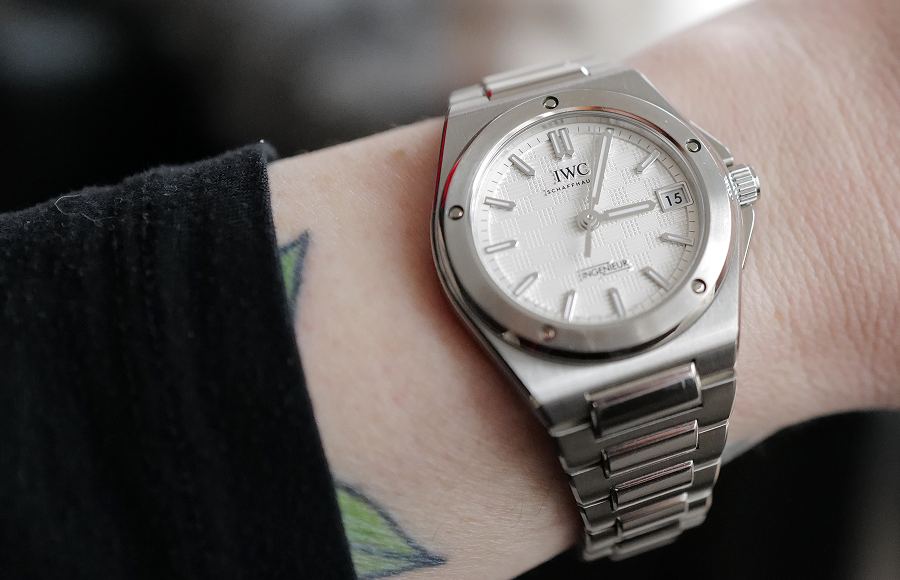
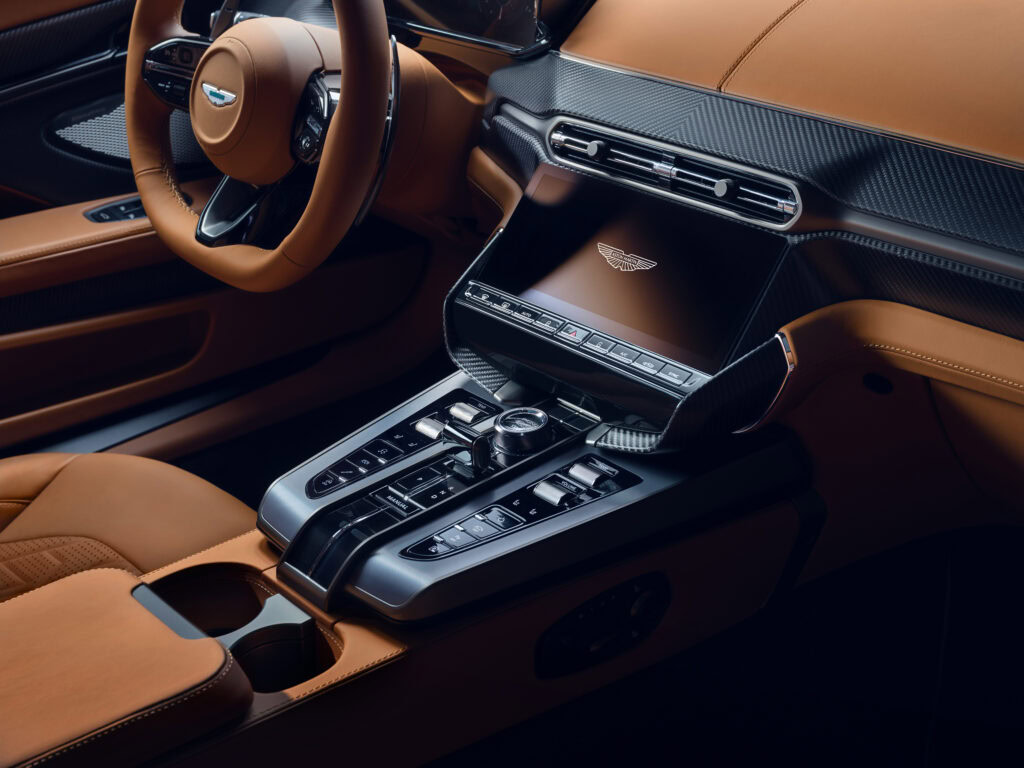
Open the door of a new Aston Martin and the polished wood veneer that once signaled old-world luxury has given way to something darker, lighter, and unmistakably technical: carbon fiber.
For Marek Reichman, Aston Martin’s chief creative officer, the shift is clear. Where wood once dominated the dashboard, around 90% of owners now ask for carbon fiber. “It’s because customers are increasingly getting the message about this once rare material,” he said, adding, “they see it in aviation, in Formula One, and now maybe in their skis or racket. It’s part of their everyday changing world. Through carbon fiber there’s an expression of luxury through performance.”
That idea, luxury expressed through performance, helps explain why a material developed roughly 60 years ago through the combined efforts of Japan’s Agency of Industrial Science and Technology and the British Ministry of Defence is now turning up far beyond aerospace and automotive engineering. For decades, carbon fiber was valued for what it could do: extraordinary strength at a fraction of the weight of steel or aluminum. Today, it’s valued just as much for what it suggests.
In the U.K., design studio Splinterworks produces Hamaca, a 44 gallon, fully lacquered hammock bath suspended tub priced at $50,000; a piece made possible only because carbon fiber can span such lengths without the bulk of traditional materials. The project began when a Formula One components manufacturer approached the studio about using its facilities during the off-season. The result looks sculptural, almost improbable.

“It’s a very specialist, challenging, effortful and so expensive material to work with, which alone makes it a luxury material now,” said Splinterworks’ marketing director Joanna Needham. “And while its association with high performance sports gives it a certain cool connotation, in a contemporary space it’s great to see contemporary material.”
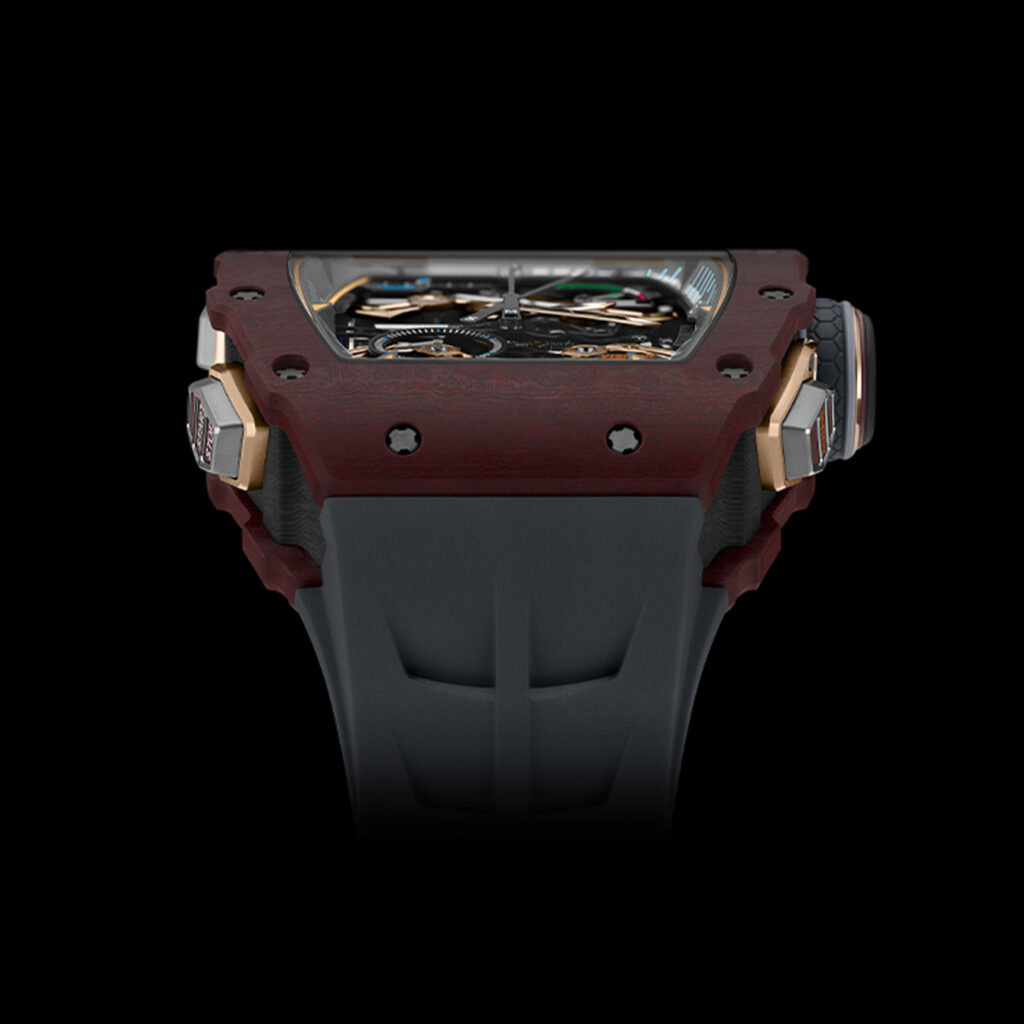
Watchmakers have also embraced that duality. Among luxury and high-end Swiss brands, carbon fiber has become a performance-driven material choice as much as a style-based one. Richard Mille builds cases from layered composites such as Carbon TPT, including the recently released RM 41-01 tourbillon soccer flyback chronograph, which uses Carbon TPT on the caseband. Hublot offers carbon-cased executions within the Big Bang and Spirit of Big Bang lines. Panerai uses its proprietary Carbotech carbon-fiber composite across Submersible and Luminor models. Tudor’s Black Bay Chrono “Carbon 25” features a full carbon-fiber case construction. TAG Heuer has produced Monaco variants engineered with forged carbon cases and components. Zenith manufactures carbon-forward Defy models, including the Defy Extreme Carbon. Ulysse Nardin uses carbon composites, notably Carbonium, in recent sport pieces like the Diver Net OPS / Diver X Skeleton OPS family.
Adrian Bosshard, CEO of Rado, notes that advanced materials such as carbon fiber as well as ceramic and titanium, change not only a watch’s weight and durability but also its aesthetic character.
“Customers are clearly now considering advanced materials [when it comes to choosing a watch] not just for rational reasons but emotional ones,” Bosshard said. “The specific look of these high-tech materials is part of their appeal, especially for younger customers.”
The same logic runs through fashion. Brands such as Vollebak and Thrudark weave carbon fibers into otherwise simple garments like T-shirts and outerwear, leaning on the material’s durability, rain repellency and resistance to sunlight. The garments may appear understated, but their appeal lies in the hidden engineering.
Elsewhere, the engineering is more visible. Rome-based Carbonikon, spun out of a company that manufactures components for the defence and supercar industries, makes handbags and briefcases from carbon fiber priced at around $3,000. They weigh between .88 lbs and 2.6 lbs, the weight of a can of soup or a thick hardcover book, when fully lined. They’re also bulletproof. Yet for founder Fabio Manieri, an aeronautical engineer, the attraction goes beyond resilience.
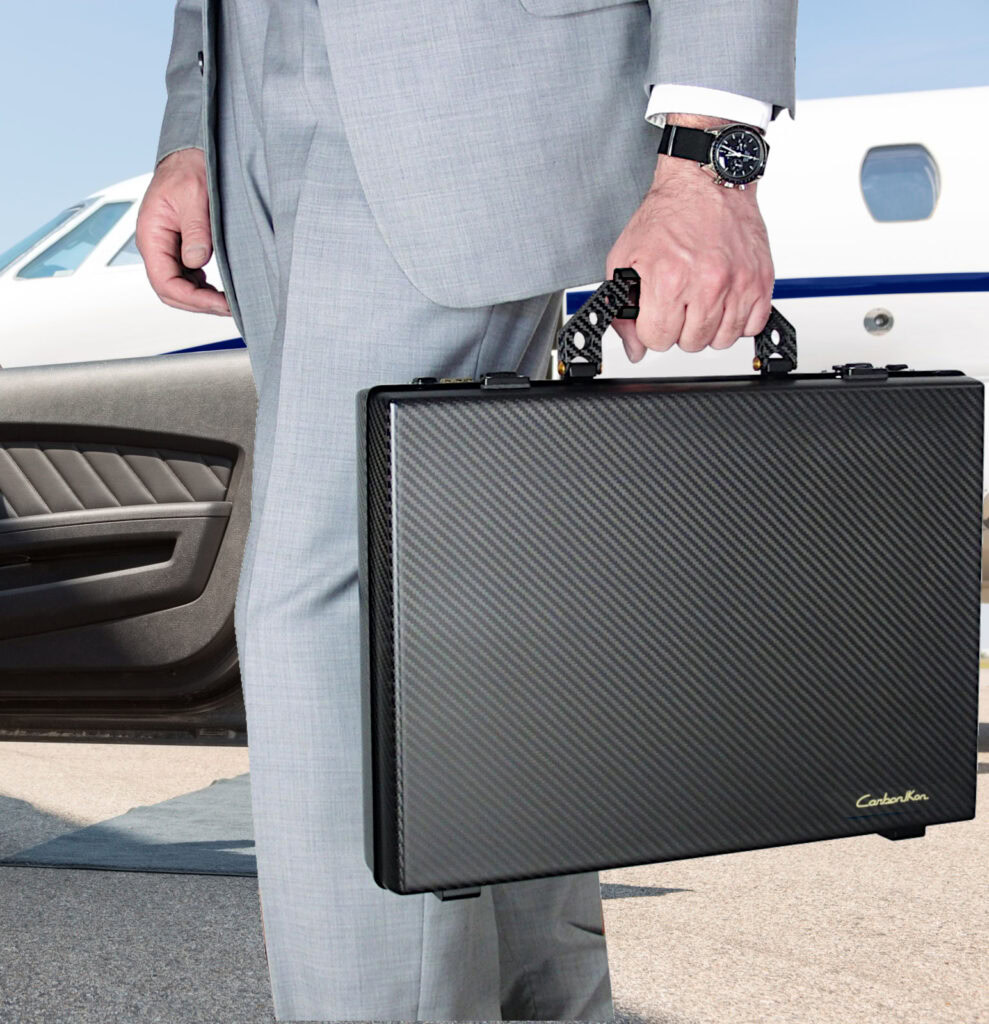
“Of course carbon fiber offers any product you have to carry an unrivalled resilience. But it also has this beautiful three-dimensionality and, with fibers carefully aligned – like the pin-stripes in a bespoke suit – and a mirror polish, a seamlessness to its look too,” he said, adding, “its beauty is a consequence of an expression of its technical nature.”
Not every experiment has landed smoothly. Italian luxury pen company Montegrappa introduced a carbon fiber pen in 1998. According to CEO Giuseppe Aquila, the market wasn’t ready.
“People are more educated about such advanced materials now, but then they just didn’t see the value in it, didn’t understand the craft required to finish carbon fiber to a luxury standard,” he said.
Aquila still believes traditional materials retain their authority. Precious metals, steel, resin, leather and wood carry centuries of cultural weight. “They have a tradition to them that still appeals deeply, whereas carbon fiber I think is a new but strong niche,” he said. “But those noble materials also had a head start. Maybe in one or two generations things will be very different.”
Carbon fiber occupies an interesting space. No longer confined to jets and race cars, not yet as culturally entrenched as gold or mahogany, it sits somewhere between laboratory and lifestyle. “Advanced materials further serve to make traditional analogue products feel part of the contemporary design conversation in the digital age,” said Rado’s Bosshard.