The bottles could break. The liquid could be bad. But the whiskey enthusiast has more than shown they are willing to take the risk.
Whiskey auctions are becoming one of the strongest growth categories in the spirits world, breaking records and attracting a growing number of connoisseurs. While overall consumption may be declining, collectors are proving they are willing to spend more than ever on rare, historic, and unattainable bottles.
Initial numbers for bottles at auction in 2025 exceeded expectations with the Distillers One of One Charity Auction in partnership with Sotheby’s breaking records for 30 lot estimates and taking in $3.8 million. The top estimate was approximately $147,000 for a single bottle of The Glenlivet Spira 60 year. The sale incited a tense bidding war which culminated in a booming round of applause at close of sale and sold for the staggering amount of just over $871,000. Other notable lots came from some of the most significant whisky houses including the Laphroig Capsule 40 year old and the Port Ellen Prism 46 year old 1978. Flavor and age matter, but they are not the only drivers of value.
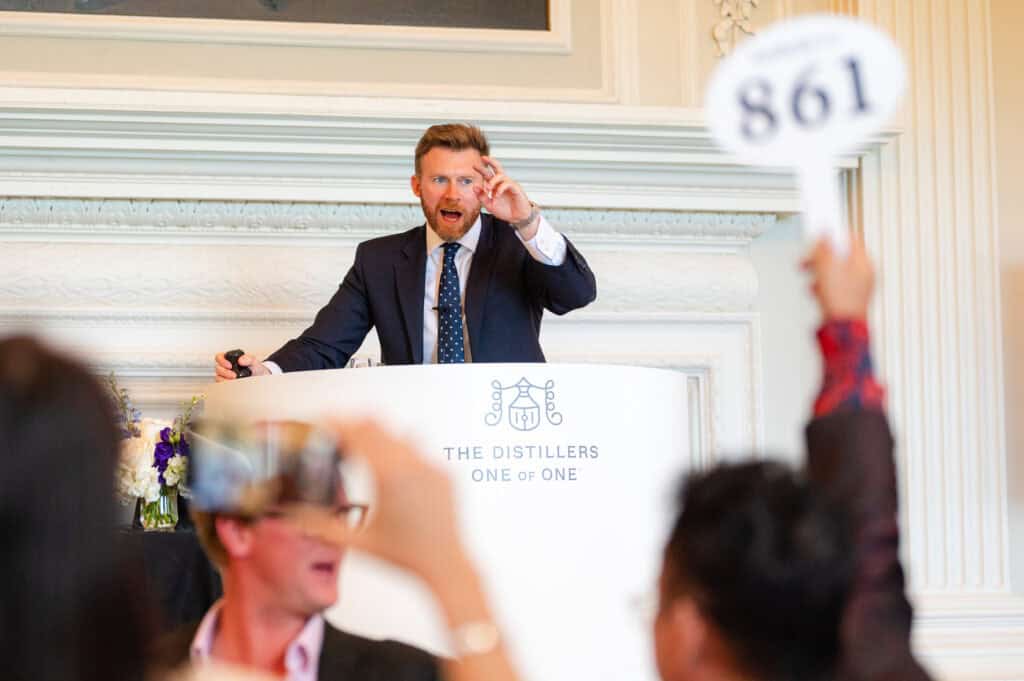
“The most important factor is demand,” explains Phil Mikhaylov, co-founder and CEO of Unicorn Auctions. “Is the bottle something collectors are actively seeking? If so, it’s usually a strong candidate for auction. The challenge is that demand can shift quickly based on cultural moments, distillery news, or simply renewed collector interest.”
That volatility has not slowed headline-grabbing sales. In 2024, Sotheby’s reported more than $114 million in whiskey auction sales, up sharply from $33 million in 2023. High-age-statement bottles are appearing at auction at unprecedented rates, with the United States ranking as the largest spender for the second year in a row. In that same year, Craft Irish Whiskey Co.’s collaborative seven-piece Fabergé set shattered records when it sold for $2.8 million. The previous record had been set just months earlier in November 2024, when The Macallan 1926 Adams sold at Sotheby’s for a little over $2.7 million.
American whiskey has yet to reach those heights, but momentum is building. A November 2025 sale at Unicorn Auctions saw a Very Very Old Fitzgerald “Blackhawk” 15-Year 121 proof bottle close at $77,100, totaling $96,000 with taxes and fees.
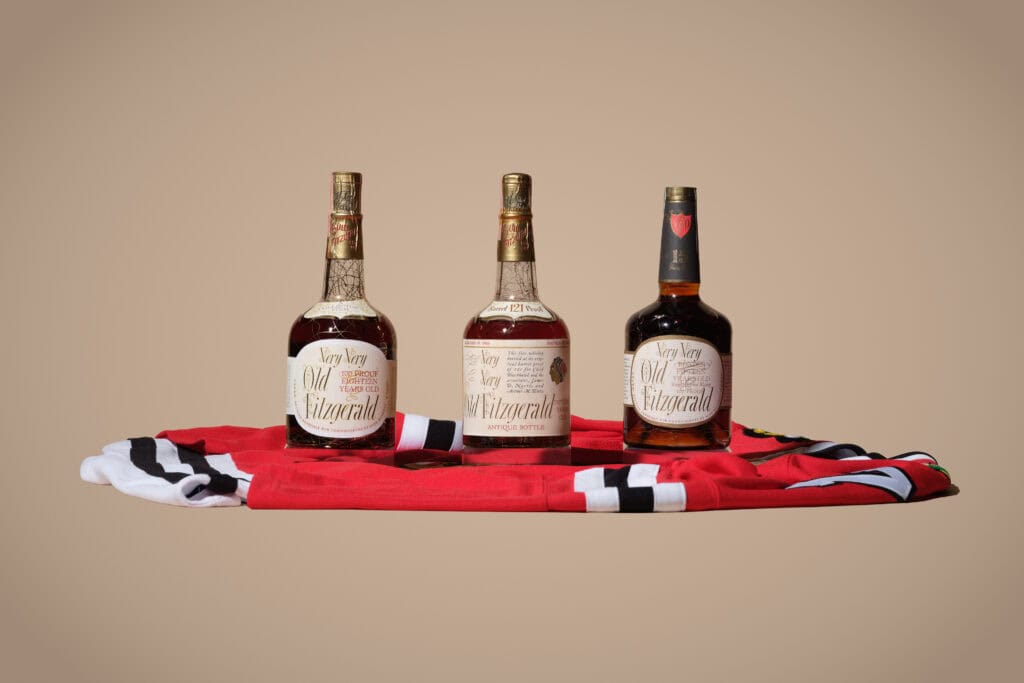
“[It’s the] rarest and most elusive in the Blackhawk trilogy,” says Mikhaylov. “The bottle is collector grade and untouched since the 1960’s, complete with its original box, bag, and tissue paper.”
Rarity is central to its appeal. The Blackhawk was never available to the public and represents one of the earliest examples of a friends-and-family bottling, produced exclusively for the Wirtz family, owners of the Chicago Blackhawks. What makes a whiskey desirable, however, varies by brand and era.
“For Old Fitzgerald, anything pre-1972 is especially sought after,” Mikhaylov notes. “That’s the year the original Stitzel-Weller company was sold, and many collectors view the whiskey from that era as the pinnacle of wheated bourbon. For other brands like Heaven Hill, many of the most avid collectors love the ‘Pre-Fire’ Heaven Hill products from before 1996 that destroyed 100,000-plus barrels in the fire.”
While today’s whiskey auctions feel like a modern phenomenon, the institutions behind them are anything but. Christie’s and Sotheby’s were founded in 1766 and 1744, respectively, yet the first official whiskey auction took place only in 1989, when Christie’s held a single-category whisky sale in Scotland. That event formalized the collectibles market and laid the groundwork for today’s global ecosystem, now populated by online platforms like Unicorn Auctions.
“An entire universe of defunct distilleries, idiosyncratic single casks, and long-neglected bottlings lies merely a hyperlink away,” says Ewan A. Morgan, Head of Whisky Outreach and National Luxury Ambassador for Diageo. “Whiskey auctions serve as a magnificent global conduit, unlocking portals once exclusively reserved for industry insiders or individuals residing within proximity to a superb purveyor of spirits.”
As demand increases, so does scrutiny. Auction houses invest heavily in staff training and handling protocols to protect their reputations and the fragile assets in their care. Vintage bottles, often referred to as “dusties,” require careful verification, and provenance is critical.
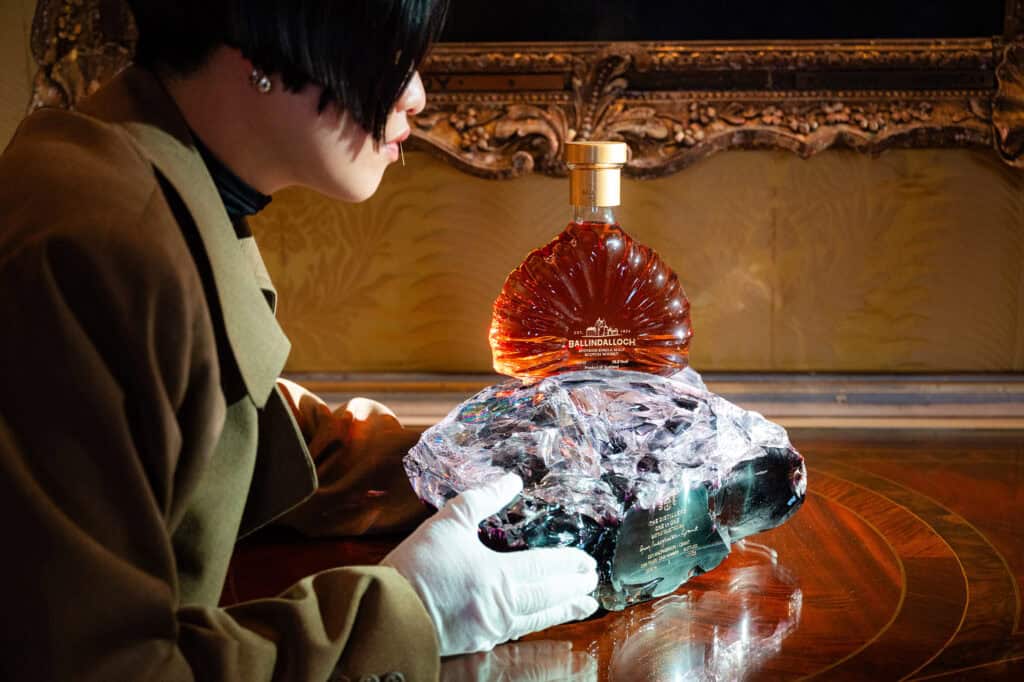
“One must assume the mantle of an investigator, meticulously scrutinizing fill levels, closure integrity, label condition, evidence of leakage or thermal degradation,” says Morgan. “Even rotating the bottle beneath a light source or assessing the, very real threat, of a decayed cork and the obligatory dreaded oxidation that goes along with it, thus rendering your hallowed and, quite possibly very expensive, purchase undrinkable.”
For online auction houses like Unicorn, photography becomes a key part of that trust equation. Staff are trained to photograph, open, and store rare bottles so they remain in the exact condition in which they arrived. Ultimately, however, the buyer assumes the final risk.
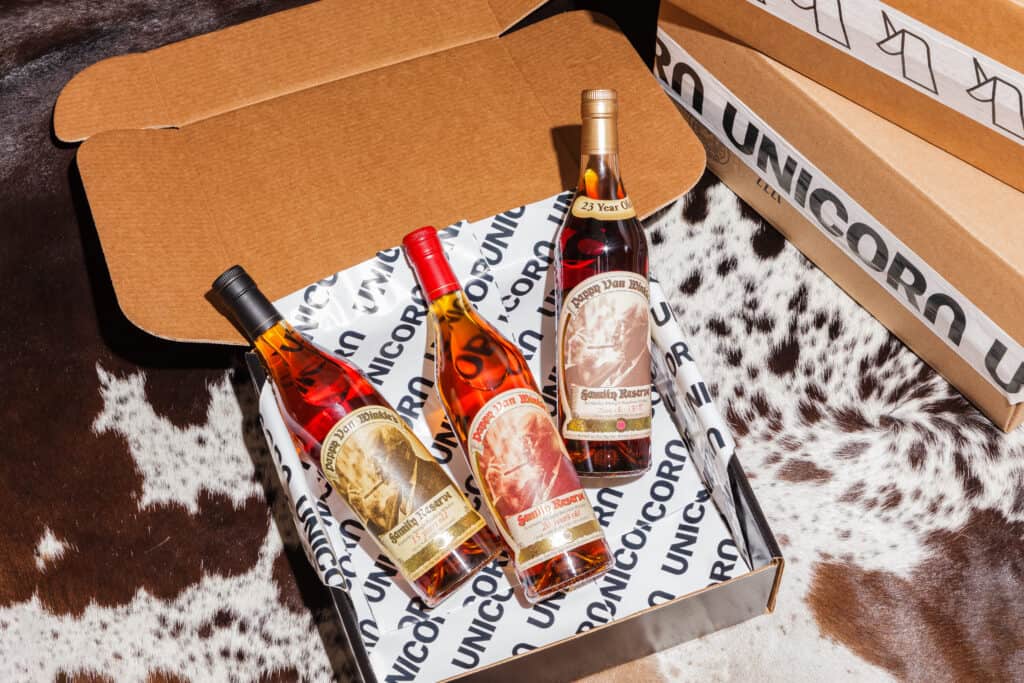
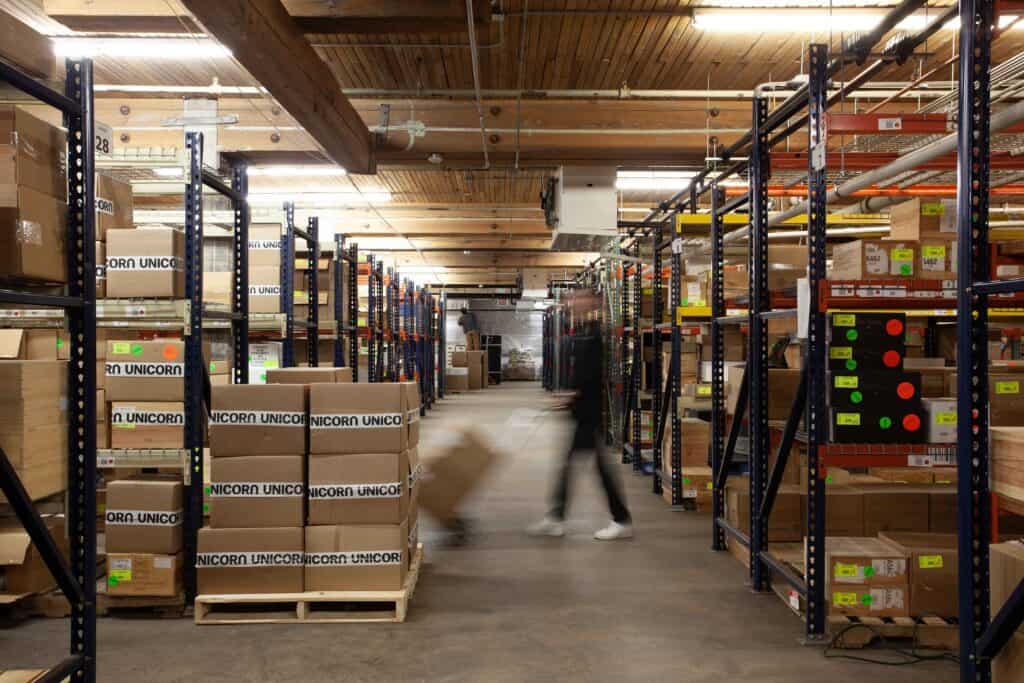
If the liquid turns out to be flawed, there is no recourse. And that uncertainty, more than anything, may be what keeps collectors coming back. At the end of the day, the gamble is part of the allure.