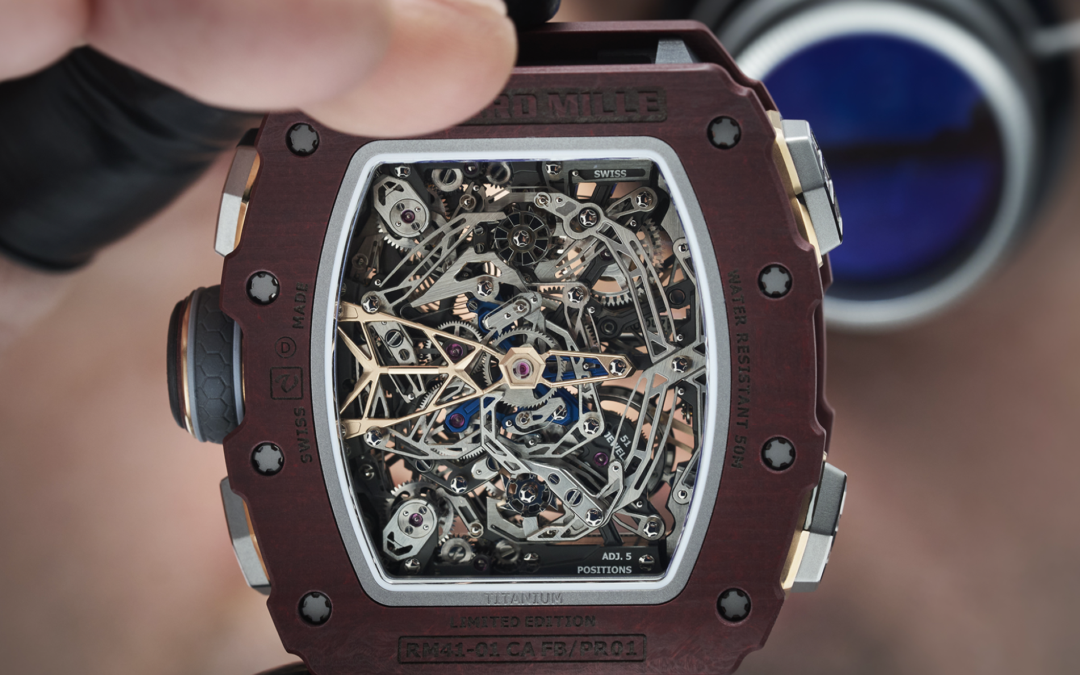
A watch dial is smaller than a postage stamp and expected to carry the full weight of a brand. The choice of a single letterform — its weight, its curve, the space around it — can make a watch feel like a tool, a jewel, or a piece of history. It is the most consequential design decision and yet most brands treat it as an afterthought. The flat-topped “4” and wide-aperture “A” of vintage dials were not accidents: they were engineered by specialist draftspeople to resist ink filling at miniature scale, a discipline that disappeared when pad printing gave way to digital production. Many brands filled the void with Arial.
“Watch typography is different to other types — on a dial it’s basically discrete symbols, so it’s more like micro architecture,” says typographer Tom Rickner, who has worked with Apple and Microsoft among other global brands. “Watch designers are not steeped in typography and brands are reluctant to look to external expertise — so we tend to see the same ideas over and over. Yet great typography can make a watch feel romantic, historic, scientific.”
That is beginning to change. Bespoke fonts are replacing off-the-shelf ones, with brands attending not just to the choice of letterform but to its size, weight, placement, contrast and colour. “The Swiss are often thought of as having a finely developed sense of graphic design and yet often that doesn’t follow through to watches – you find, say, a Patek Philippe using Arial, which is criminal in graphic design terms,” argues typographer Samuel Baker, who specialises in watches. “Watchmakers’ attention to detail on micro-engineering doesn’t always carry through to the visuals. But that is changing. As we all get more design and type-aware, so too is the industry.”
F. P. JOURNE
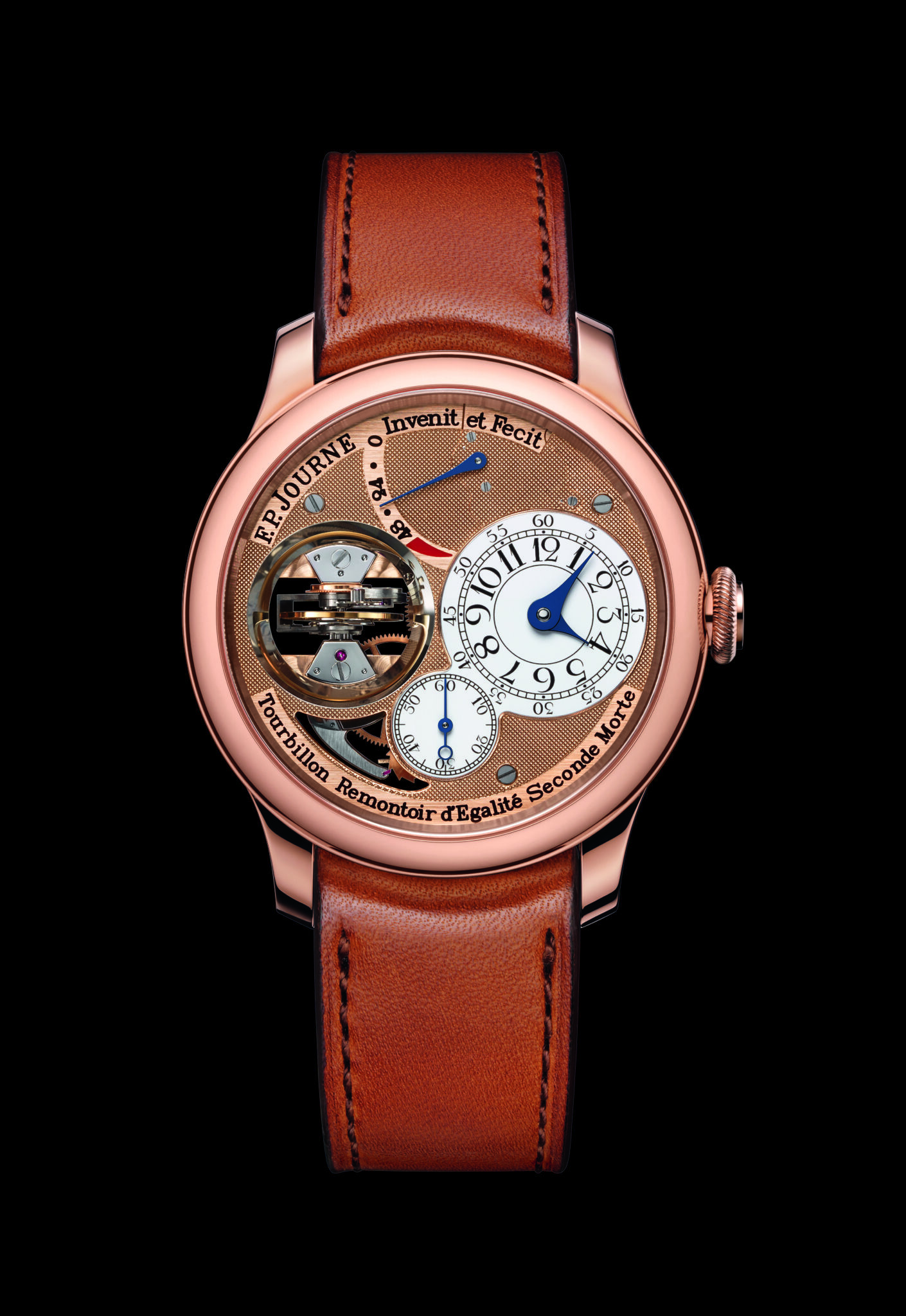

Master watchmaker François-Paul Journe’s pieces have become recognisable as much for their distinctive letterforms as their broader designs. If most dials carry a company name, Journe supplements his with the inscription ‘Invent et Fecit’, meaning ‘Invented and Made’, a phrase commonly found on 18th-century clocks, pocket watches and works of art to assert authorship: some 95% of components used in Journe’s watches are made in-house. François-Paul Journe reworked the period letterforms to better work on the smaller scale of a watch dial, and sometimes uses the same to describe the action of the watch on its dial: ‘Tourbillon Remonitor de’Egalite Seconde Morte’, for example.
ORIS


Oris is a company that, over the last decade, has made a concerted effort to transition from the use of standardised fonts to bespoke ones for each of its collections — Pro Pilot or Aquis, for instance — which are then used consistently for later additions to each collection. “Your own font makes your own watch more individualistic, especially with numerals, and the fact is that consumers are getting more and more design-aware, so you have to care about the smallest detail,” says Oris’s head of design Lukas Buhlmann. “It’s immense work to create an entire font for a collection but worth the investment.” Buhlmann notes that even the quantity of descriptive lines on a watch dial can affect a certain mood: more for sportier watches, less for dress watches.
VPC

Founder Thomas Van Straaten originally used an off-the-shelf font for the design of his first watch under the VPC brand but concluded the mid-century style he was seeking to emulate couldn’t be achieved this way. Typographer Samuel Baker subsequently designed a custom font, then a full upper-case set for use on packaging. Baker’s work extended to customising the kerning for every possible character combination, ensuring optically even spacing throughout. “Younger watch brands tend to be a particularly healthy space for dial typography,” says Baker. “They need to and want to differentiate themselves and so are inherently less conservative. They’re not weighed down by the baggage of heritage as legacy brands can be.”
PAULIN


Paulin is one of few watch brands that can claim to be built around typography, one of its co-founders, Imogen Ayres, being a typographer. “Of course dial legibility is important but we under-estimate how intuitive our understanding of a watch dial is, and that gives room for a more imaginative use of typography,” she argues. Among the company’s best-sellers are models devised in collaboration with external input: the Oh No, developed with the Californian font foundry, the dial of which is filled by outsized letterforms with a handwritten feel, and the Zapata, developed with graphic designer Crystal Zapata, in which the numerals are stretched and deliberately blurred. “The popularity of these models suggests that people want [bolder] typographic design – it immediately makes a watch stand out,” Ayres suggests.
ROLEX


David Silver, of London’s The Vintage Watch Company, notes that for some Rolex collectors the smallest variation in dial typography can make or break their interest: Rolex’s first Sea-Dweller model, for example, came with two lines of red text on the dial, as opposed to certain models of (now vintage) Submariner, which had only one — hence the former being dubbed the hallowed ‘double red’, the latter ‘single red’. “It pops on the dial and looks great but is really just a flex of watch knowledge,” Silver argues, “because all it does is situate a watch in a particular time.” It also distinguishes vintage from modern Rolex pieces, the latter far more consistent and rule-bound for the sake of brand identity. “But the impact of dial typography is under-appreciated,” Silver adds. “I hear big collectors disparage certain models from the big brands because the typography isn’t right. There’s not enough personality in it.”
BREGUET

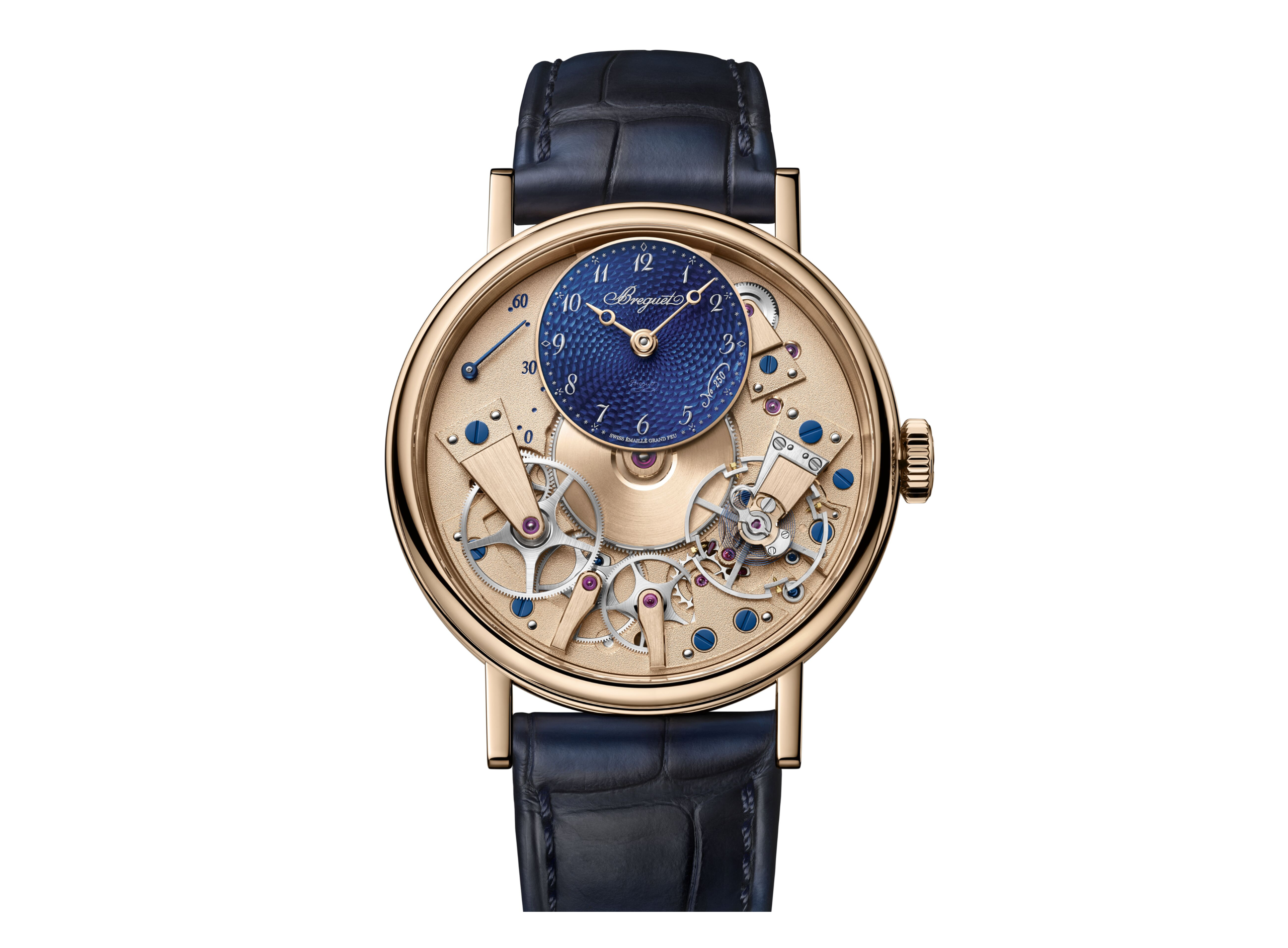

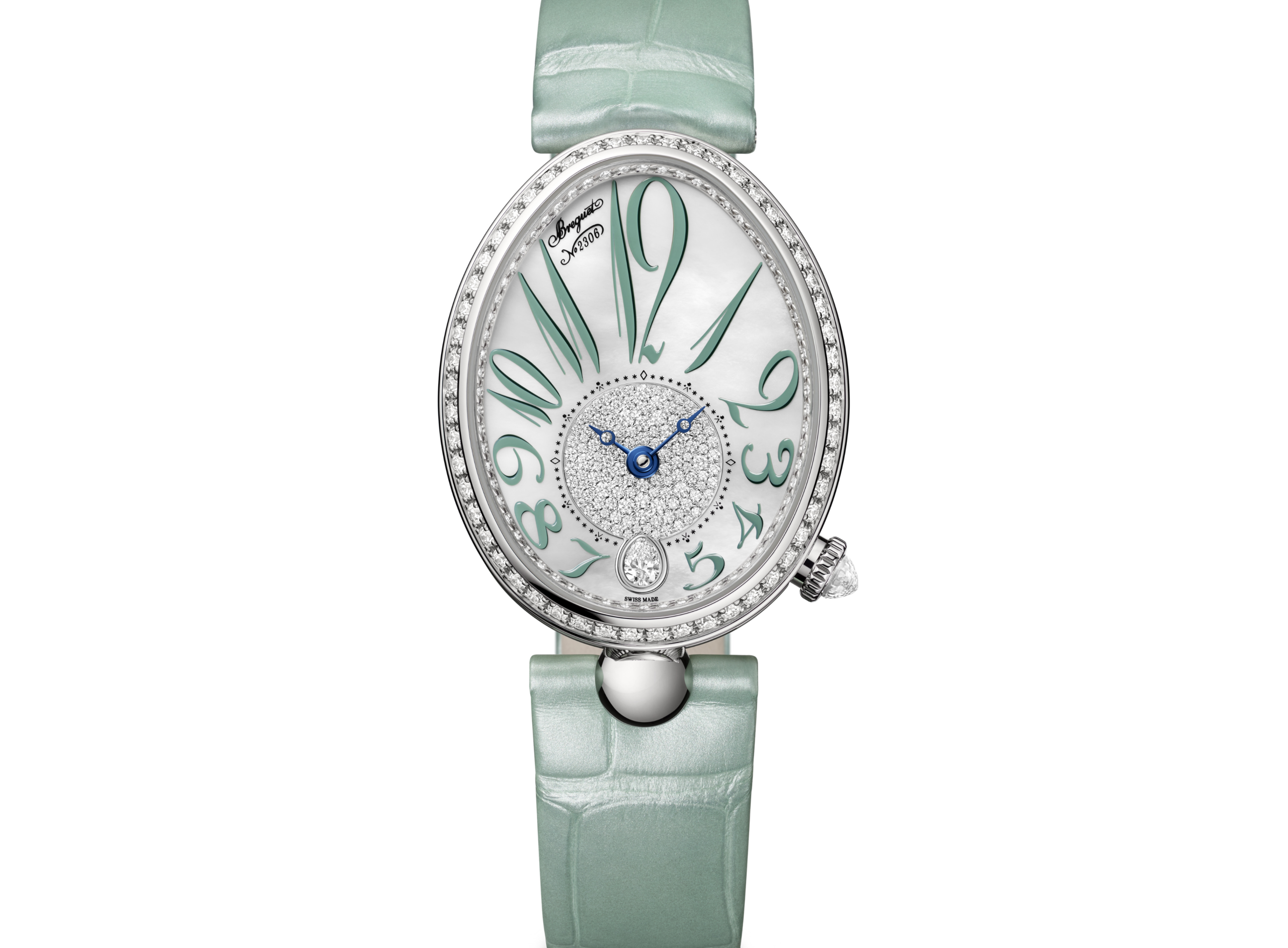
Breguet is likely the only watchmaker whose letterforms have become a recognised industry standard, with so-called ‘Breguet numerals’ used on many non-Breguet watches, notably prestige models from Patek Philippe. In 1783, the same year Abraham-Louis Breguet invented the gong-spring repeater mechanism and his distinctive hollowed ‘moon tip’ hands, he also designed the italicised, characteristically right-leaning Arabic numerals that bear his name. Their intention was to give his dials far greater legibility, certainly relative to the ornate Rococo fonts that were more commonplace at the time. Ironically, Breguet’s somewhat ornate numerals are today considered more in line with Neoclassical calligraphy — signifying classicism and tradition — with legibility now associated with more stark, sans-serif fonts.
RESSENCE


The fact that Ressence’s dial graphics are not printed onto but carved into the dial — then filled with paint and Luminova — initially defined the rounded shape of the letterforms: they literally followed the shape created by the milling bit (Leica would do the same for its cameras). That’s no longer required — laser engraving is now possible. “But what started out as a functional necessity has become part of our visual identity, and suits our watches’ design emphasis on circles,” says the brand’s founder Benoit Mintiens. Mintiens has since developed an entire letter set for use by Ressence. He stresses that it is cheaper to print a dial, of course. But that, on a bezel, for example, engraving counters wear through handling. “Making typography part of their design palette is still a missed opportunity for many watch brands,” Mintiens suggests.
ANORDAIN
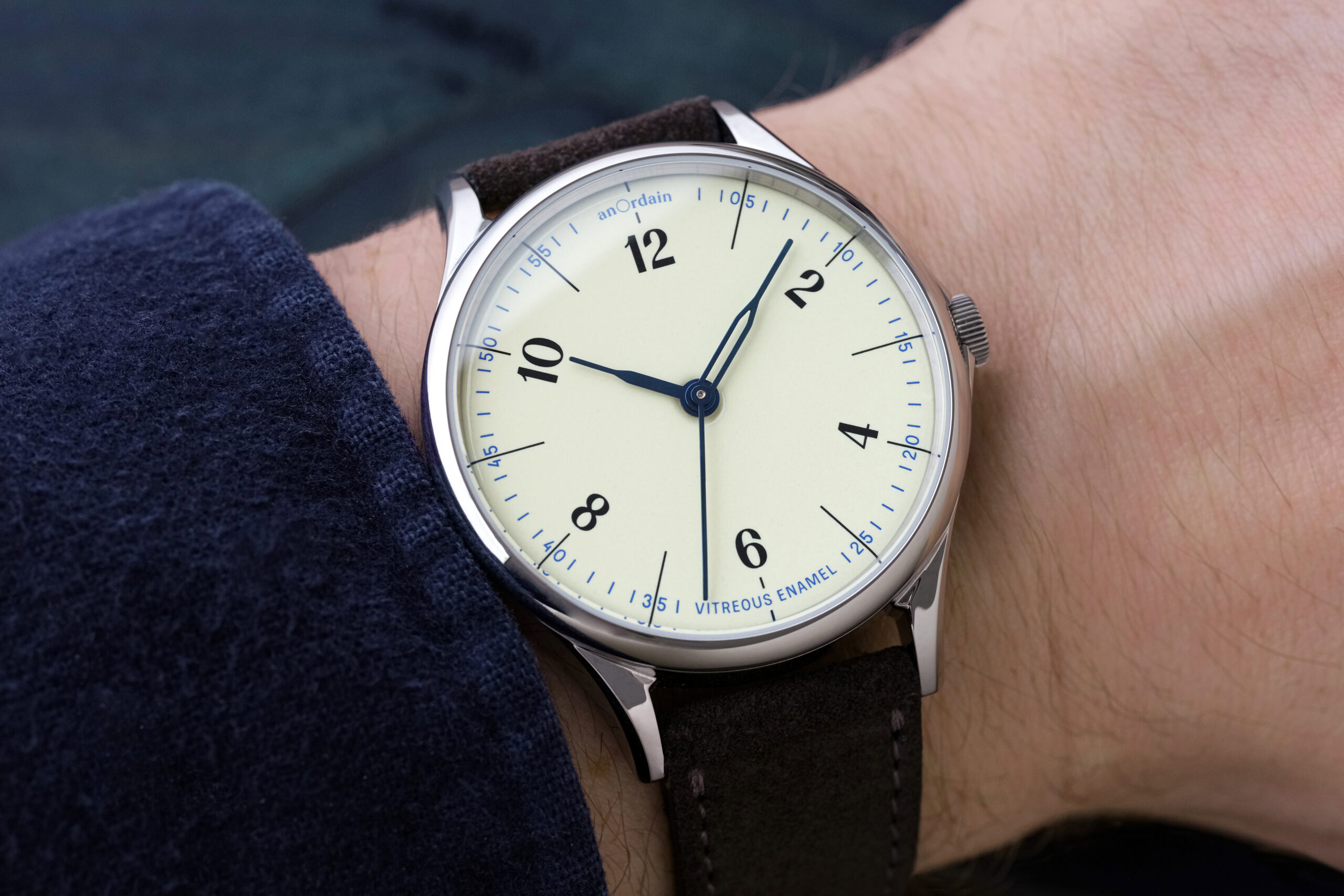


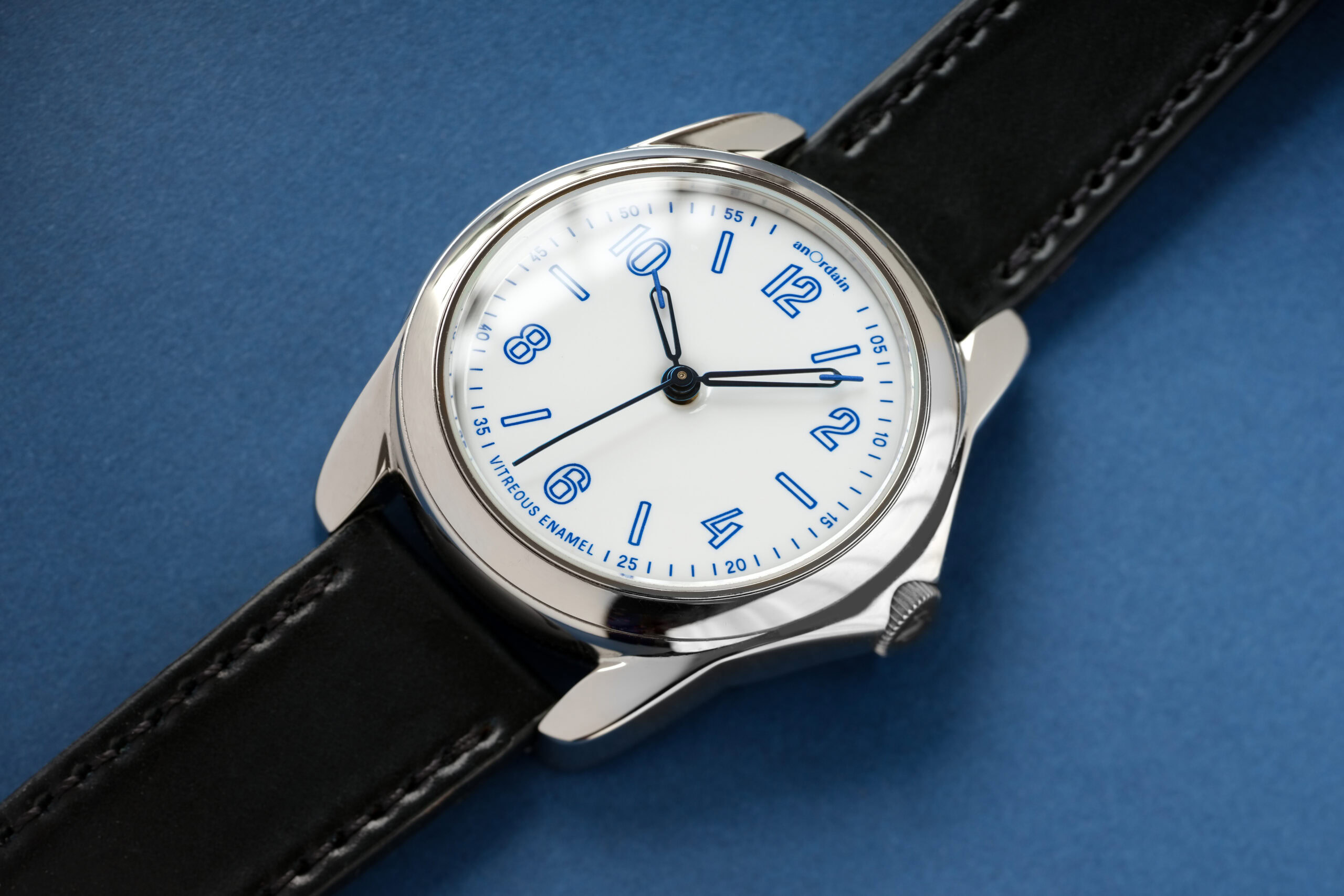
Typographic inspiration for a watch dial can come from unlikely places: for British brand Anordain, which specialises in enamel dials, it was vintage Ordnance Survey maps — which have been issued by the organisation of that name since 1791 as the official mapping authority for Great Britain. These maps used more decorative, serifed letterforms for major place names — cities, for example — with smaller details in a sans-serif; Anordain likewise uses the former for main numerals and the latter for those much smaller numerals on the minute track. Unusually, the two Anordain typefaces were developed before its first watches. In keeping with the map inspiration, their hands were inspired by vintage compass needles.