Most athletes participating across the 16 different sports/disciplines in the 2026 Winter Olympics shared one thing in common; they competed without a visible watch. Curlers were one of the exceptions.
Amidst all of the excitement of the games, with events that vary in intensity from creative figure skating to ski jumping to the biathlon, which involves skiing and shooting, everyone has a favorite winter sport to cheer. Every winter Olympics, one event seems to capture the attention and hearts of viewers: curling.
Why curling? Compared to many winter sports, it feels comparatively chill. The soundtrack is not wind noise or impact. It’s the occasional shout about where to sweep, followed by a long glide and a slow, suspenseful finish.
The appeal also seems to be that the sport feels within reach of a regular person. “I was really inspired by something I read that curling was one of those sports where, at the time, there wasn’t really a difference between ‘professional’ and ‘amateur’,” said Jonathan Coulton, a singer and songwriter who was inspired to write a song called “Curl” about the sport during the Torino Olympics in 2006. “I liked the idea that you could just be a person who did your thing, and then just added into that your preparation for a competition against the entire rest of the world.”
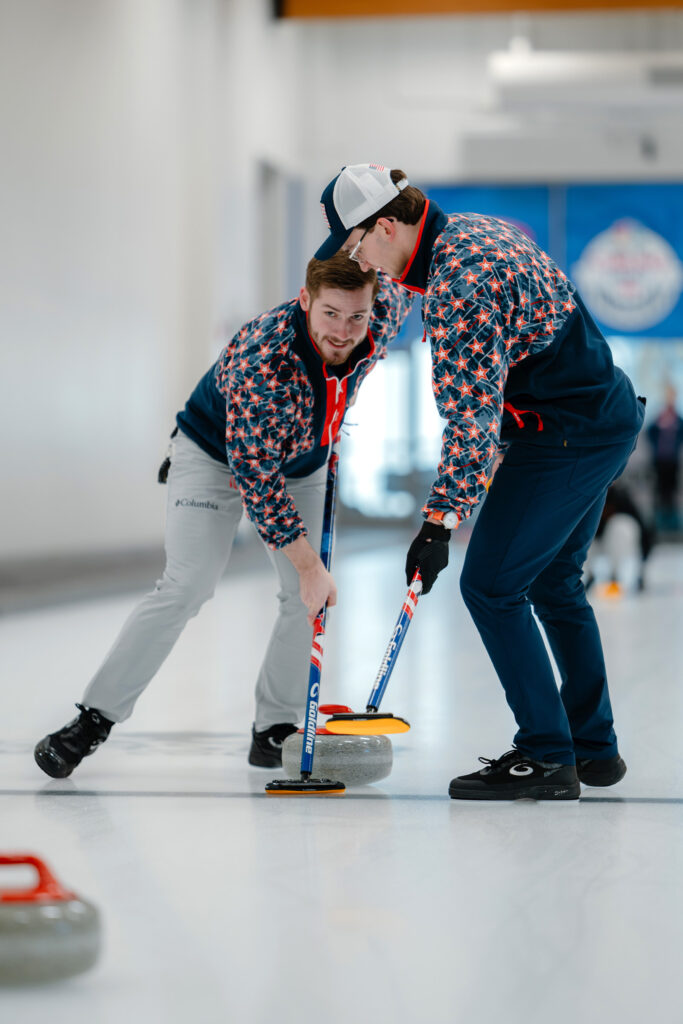
Before going further, the terminology matters. The “rock” is the granite stone used in curling. Ailsa Craig granite is a well-documented source material for stones. “Throwing” (delivering) the stone is the initial move, where the player drops into a deep lunge and releases the rock as it glides toward the “house,” the target area. Each team is comprised of four people. The “skip” is the captain and main strategist of the curling team. The lead, second, and third (also known as the vice-skip) switch between throwing the rock and sweeping. Sweeping reduces friction between the rock and the ice, allowing the rock to travel farther and subtly influence direction.
Curling relies on two forms of timing: game “thinking time,” which is used for the team to consider their strategy, and stone speed timing, which is involved with calculating rock velocity. Though curling teams have traditionally relied on stopwatches for timing, wristwatches can come in very handy during play.
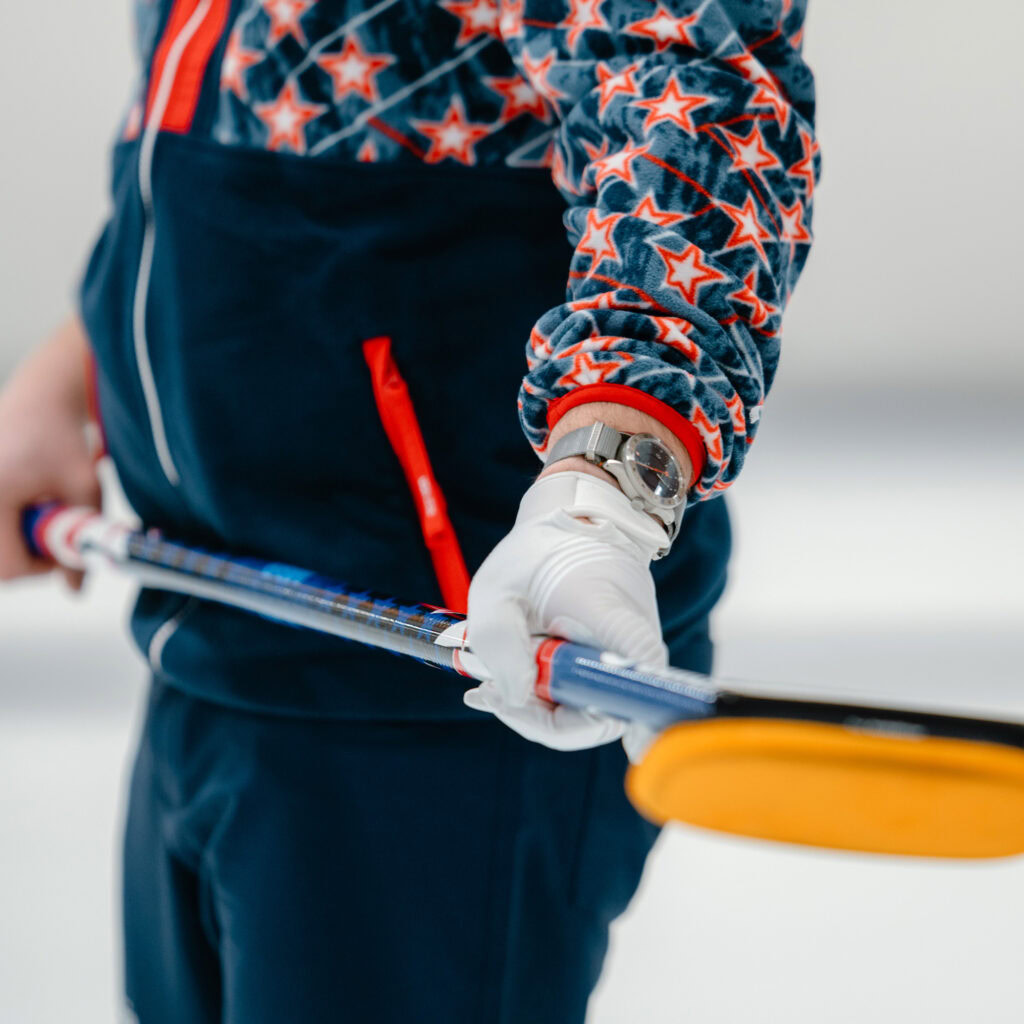
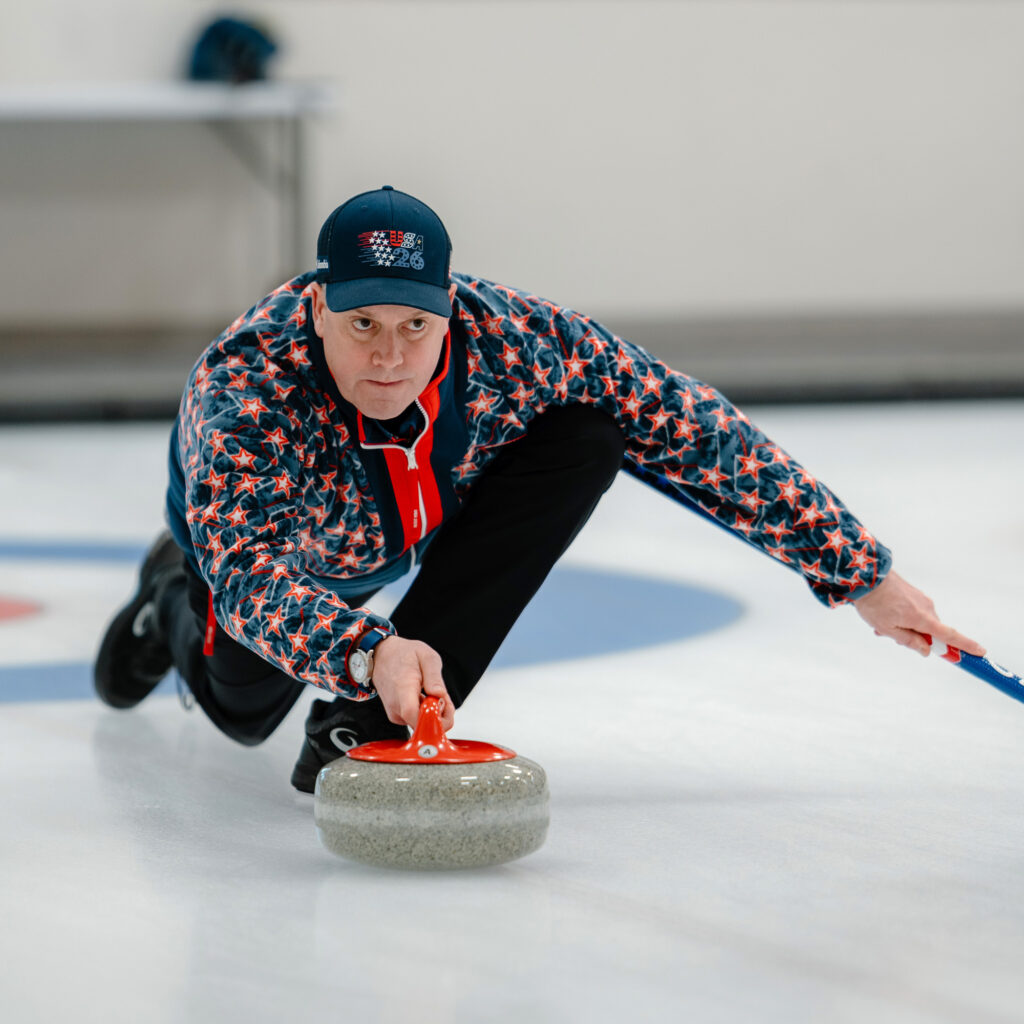
So how does curling tie into timekeeping, in a way that’s concrete and not just metaphor? One clear example sits in the Oak & Oscar story arc around U.S. men’s curling.
“Like many, I was mesmerized by curling during the 2018 PyeongChang Winter Olympics,” said Chase Fancher, founder of the U.S.-based watch brand Oak & Oscar. “I was hooked— so much so that I messaged the players on Instagram. I ended up chatting with Matt Hamilton, who was the second on Team Shuster. He explained some of the rules and strategies almost in real time.” This exchange eventually led to Fancher making a custom watch for the team’s coach, Phill Drobnick, after they won the gold medal.
Oak & Oscar later leaned into that connection publicly, including watch releases that incorporate a piece of curling stone in the caseback, and posts describing the U.S. men wearing Humboldt models during Olympic competition.
After that initial encounter, Oak & Oscar continued to have a relationship with the team, creating a limited edition with a real piece of curling stone on the caseback, and outfitting the U.S. men’s team with watches at the 2022 and 2026 Winter Olympics.
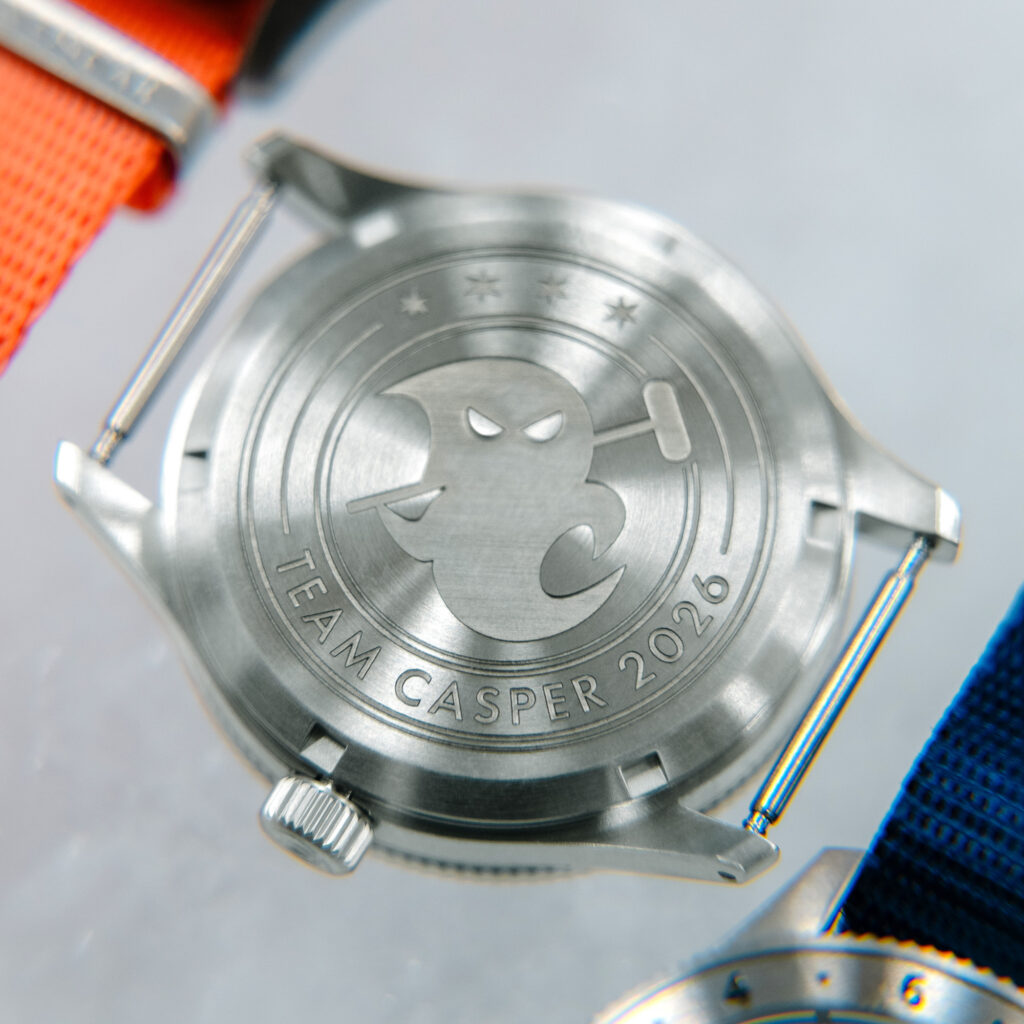
The players wear stock watches on their wrists during play, but some team members switch it up aesthetically. “Luc Violette, current member of Team Casper (the USA Curling Men’s National Team who finished 6th overall at the 2026 games), would often switch his strap up before each Olympic curling match. It was fun to see his personality out on the ice,” Fancher said.
According to Oak & Oscar, the U.S. men’s team wore the Humboldt GMT at the 2026 Games. “A good curling watch needs to be able to withstand cold temperatures and aggressive sweeping, and not get in the way. The players shouldn’t even know it’s on their wrist,” said Fancher. “They need to focus on hitting their targets, not adjusting their watches.”