Winter can bring about fond memories of frolicking in the flurries and building a snowman, sledding with friends and family, or cozying up by the fire after a day of skiing or snowboarding. Shoveling your driveway, commuting on unplowed roads or walking to school, uphill, both ways, in a blizzard? Less enjoyable.
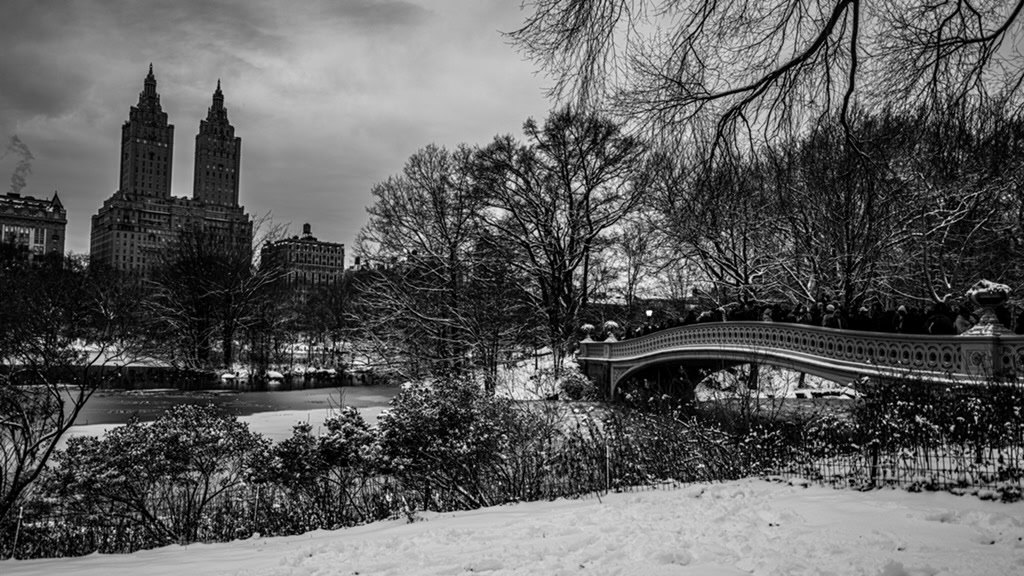
Last month’s Winter Storm Fern dropped 15 inches of snow across the five boroughs, including 11 inches in Central Park. There’s something magical about a snowstorm on a weekend in a big city; snow covers everything, and people take advantage of their days off to cross-country ski on city streets, sled and even snowboard in Central Park.

I decided to have my own version of a snow day; capitalizing on an urban winter wonderland seemed like a great idea. My watch of choice was a Grand Seiko SBGA211 Snowflake.
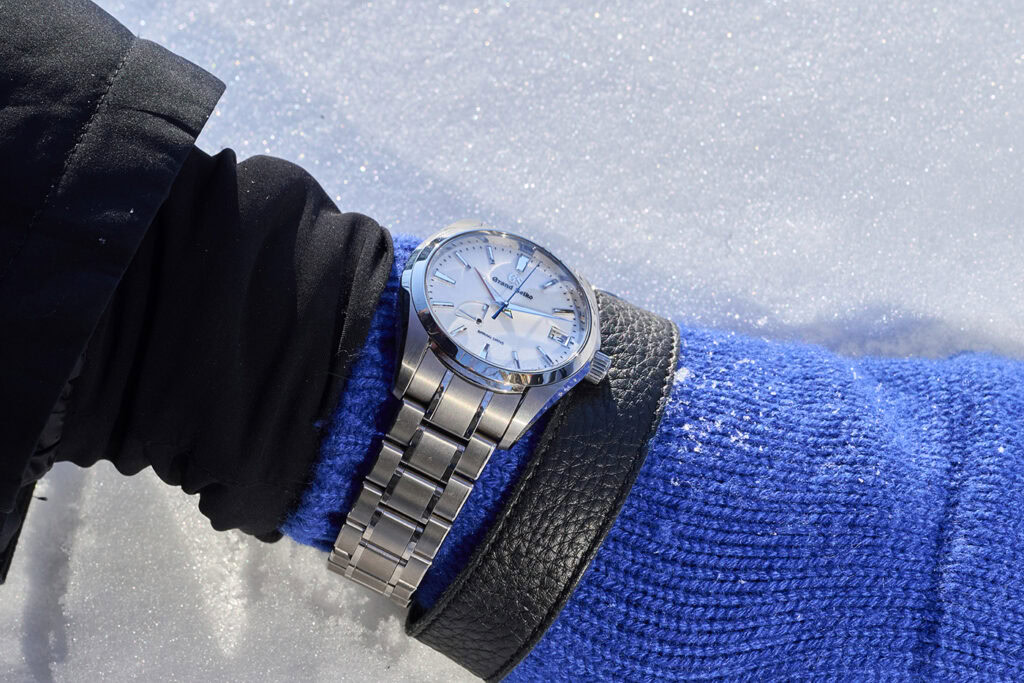
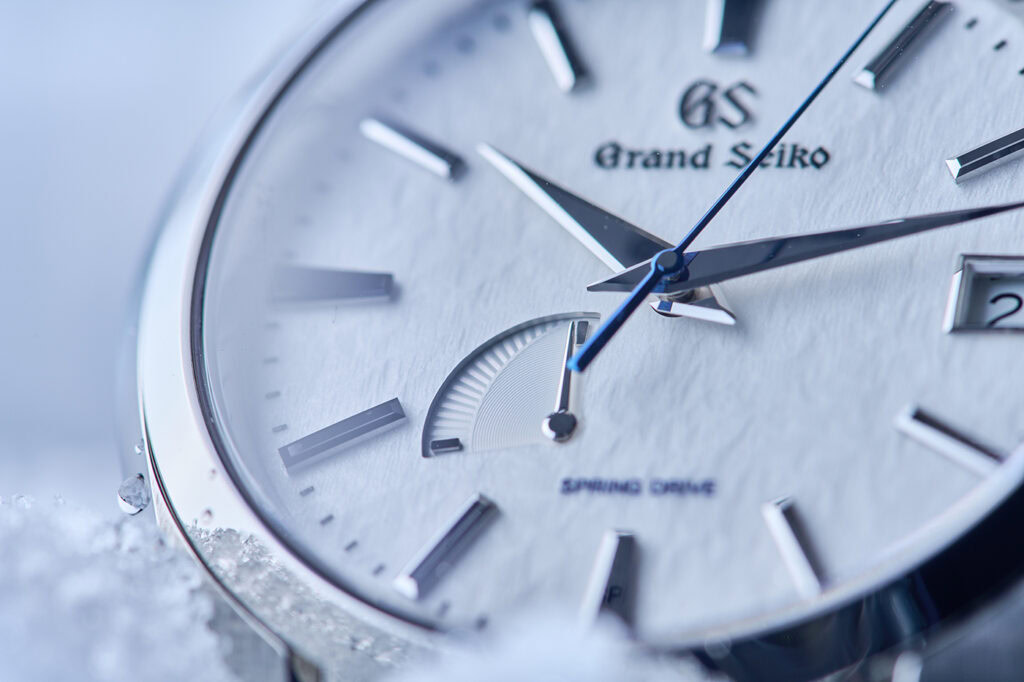
Grand Seiko is a watch brand that’s known for its dials that evoke seasons, micro-seasons, or sometimes, very specific moments in very specific locations. The Snowflake is one of the broader expressions of that concept, with a dial that’s meant to invoke the crisp white and subtle glimmer of freshly-fallen snow. The SBGA211 is part of Grand Seiko’s core collection, a modern classic among their references.
Wandering the city fully blanketed in fluffy white everywhere, before the freshly fallen snow gets… less beautiful due to traffic, commuting, and the daily grind, it’s an opportune time to adventure, take in the sights and explore a place I know well through a different lens, and with a snowy-dialed timepiece on the wrist.
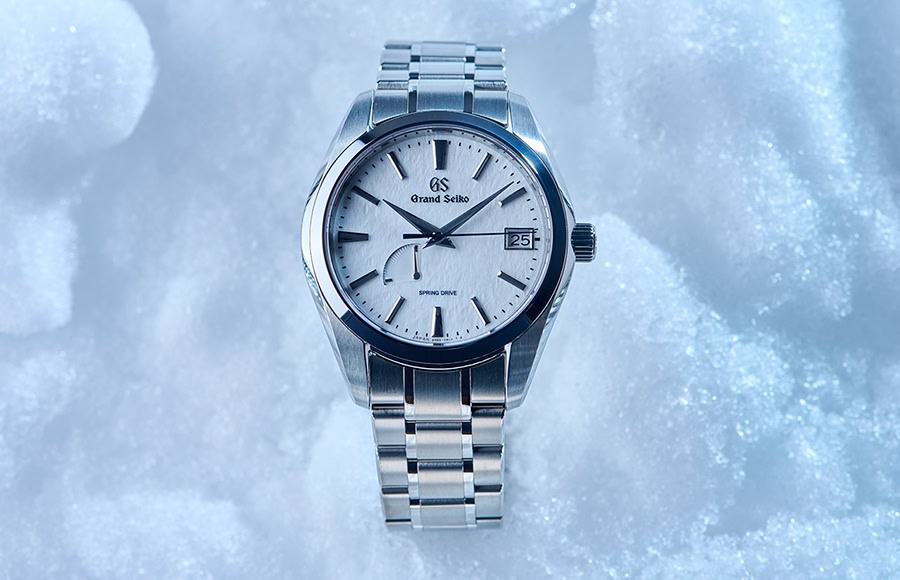
The softly shimmering snow-inspired dial isn’t the only thing mesmerizing about this model. Arguably more mesmerizing is the movement that powers this piece, Grand Seiko’s in-house Caliber 9R65, one of its Spring Drive movements.
And what is Spring Drive, exactly? Is it mechanical, quartz, or a secret third thing? Witchcraft, perhaps? It’s actually a pretty interesting innovation in modern watchmaking, which uses both a traditional spring-driven winding mechanism with a regulation system that allows for extraordinary timekeeping precision and a smoothly gliding sweeping seconds hand.
The mainspring provides power to a gear train, which powers a glide wheel that acts as a tiny electrical generator. The generator is part of the regulation system, which also contains an integrated circuit (IC) – sometimes referred to as the timekeeping “brain” of a quartz watch – and a crystal oscillator. The regulation system works by comparing the reference signal from the quartz oscillator with the rotation speed of the glide wheel, and if the glide wheel is spinning too fast, the IC will apply an electromagnetic brake to slow the glide wheel. That precise braking gets transmitted back through the gear train to the hands, resulting in that super smooth glide that makes the seconds hand so mesmerizing.
The TL;DR: it’s an automatic winding mechanical watch that’s regulated by a quartz system that doesn’t need a battery. Conclusion: sorcery.
While contemplating life, snow, and the possible existence of ghosts inside the Snowflake, I headed south to the Grand Seiko flagship boutique on Madison Avenue (the largest in the world), both to say hi to the wonderful team there and to let the Snowflake be amongst its siblings.
The 9R65 Spring Drive movement drives many references in Grand Seiko’s lineup, including the limited editions SBGA507, with a cool blue textured dial inspired by the color of the early evening sky over Japan’s Lake Suwa, and the SBGA493, with a bold, fiery dark red dial inspired by the forge used in making Japanese katana swords. Grand Seiko’s attention to detail in their dial finishing is readily apparent all over the boutique, and there’s a wealth of knowledge about the brand inside the store.
After a long amble in the snowy landscape, ahead of the 2,200 plows, 12,000 miles of shoveled sidewalk, and more than two million pounds of salt to come, I stopped into The Modern in midtown Manhattan for some apres-blizzard dinner to warm my body and a cocktail to warm my soul. One does need to thaw a bit, and the SBGA211 is just as apropos over a cocktail as it is throwing a snowball in the park. (I didn’t know it at the time, but that would be the first of nine straight days of Central Park temperatures remaining below 32 degrees.)
The Modern is next door to the Museum of Modern Art, a must-visit regardless of outdoor temperatures in New York City. The restaurant has two Michelin stars and a beautiful dining room overlooking the museum’s sculpture garden, especially pulchritudinous when covered in snow. For a slightly more casual vibe, their Bar Room offers an a-la-carte menu available at the elegant curved marble bar—always my preference– or at a table.

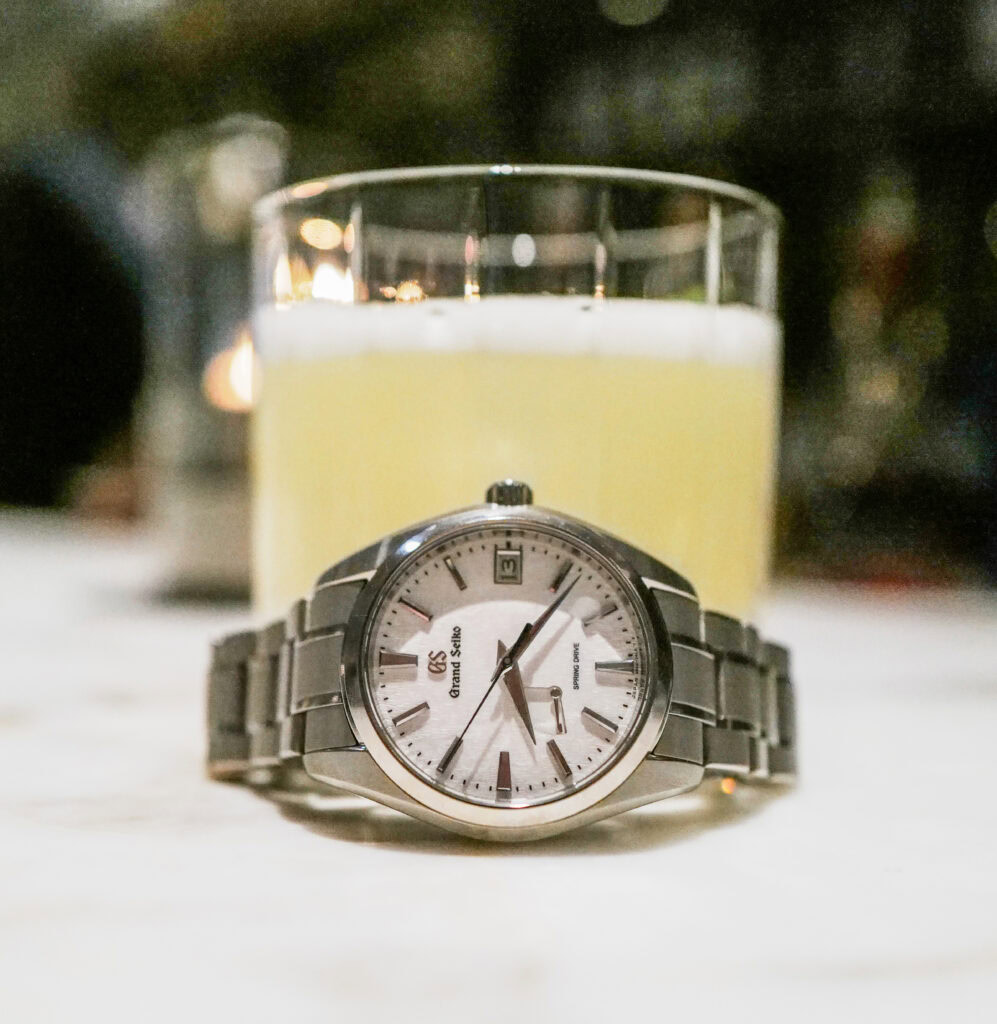
For dinner, I chose a seasonally appropriate and hearty confit of duck leg with endive and orange, which warmed me up immensely. The talented bar team whipped up a custom cocktail, a wintry take on a gin sour, highly recommended as a lovely way to wrap up a snow day.