The lasting contraction of the watch industry has been a series of unfortunate events. Swiss watch exports continue to fall, impacted by declines in the United States, Japan and Hong Kong, as reported by the Federation of the Swiss Watch industry. That’s not including the Far East, particularly China.
“The lockdowns and the consequences of the real estate and banking crisis in China have massively and negatively impacted the sales of luxury goods in greater China,” says Oliver R. Müller, founder of LuxeConsult, a consultancy for the watch industry.
Pair this with the tariffs announced last year on Swiss-made products, and it’s enough to send the industry into a frenzy. Although President Trump lowered the initial announced 39% tariff to 15%, the industry lingers in limbo. While demand remains uneven across global markets, and pricing strategies look unclear, this moment marks a turning point for an industry long defined by tradition and slow adaptation.
Watchmakers and maisons alike must confront not just cyclical slowdown, but a structural shift in how luxury is valued, priced, and consumed. The brands finding traction are not waiting for markets to recover but recalibrating around heritage-driven design, cultural relevance, and younger buyers whose relationship to watches is less about permanence and more about emotion, access, and resale. The question is no longer whether the luxury watch industry will change, but which players can evolve fast enough to survive the reset now underway.
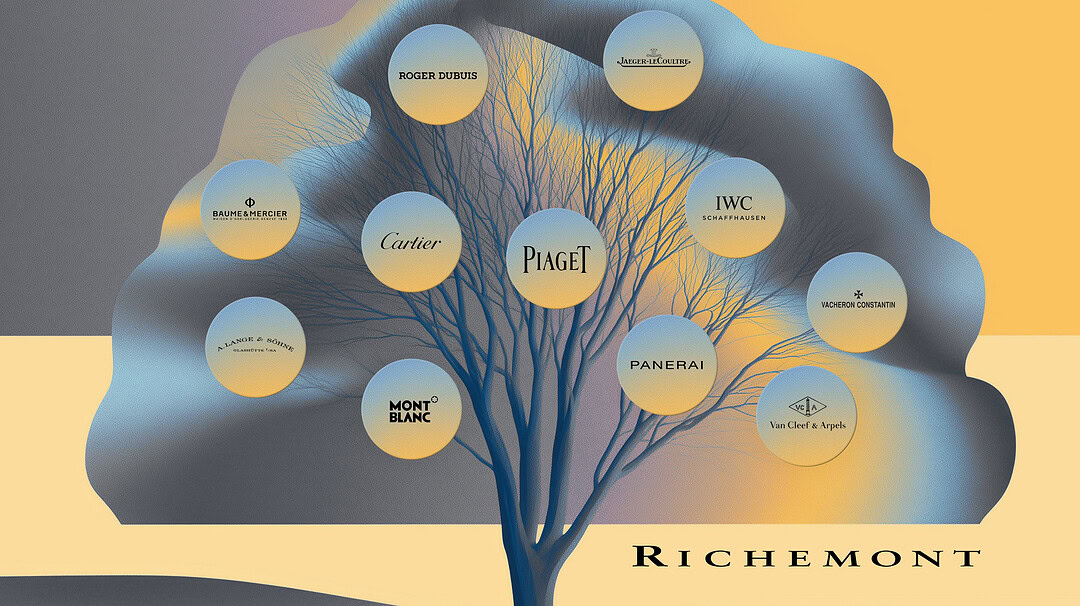
Small pockets of the watch industry are on an upward curve, and even reveal some unexpected opportunities. The market for pre-owned watches is booming. Pre-owned platform Subdial told Bloomberg their sales jumped by 160% at the end of April 2025, when the tariffs were initially announced. Several market reports, including the H1 2025 from Chrono24 and Fratello, a survey for the Richemont-owned second-hand retailer Watchfinder conducted by pollsters Opinium and the Deloitte Swiss Watch Industry Study all drew similar conclusions: Gen Z are the driving force.
“Gen Z has introduced faster, fashion-like cycles to a category long considered immune to rapid shifts,” according to the Chrono24 report. It continues: “Among Gen Z, [Cartier’s] share of total purchases has risen from 1.7% to 6.8% over seven years – four-fold increase lifting icons such as the Tank and the dressy Santos-Dumont in the secondary market. The report from Deloitte highlights that Gen Z values price and design when making the decision to purchase a vintage or preowned watch.
Müller explained that staying relevant with these younger demographics is challenging, but being “emotional, cultural, fashionable,” are all elements important to this group. Pierre-Yves Donzé, historian and author of The Business of Time, concurs. “It is not a surprise that many people love antique watches. If you like new models using old techniques, you must love the old products using these original techniques,” he said.
His statement rings true for the increased efforts by brands in releasing re-editions of models past like the Cartier Baignoire revival, or an announcement by Piaget at Watches & Wonders 2025 to revive the Sixties watch as well as the return of the Polo watch, a coveted piece in the pre-owned sector.
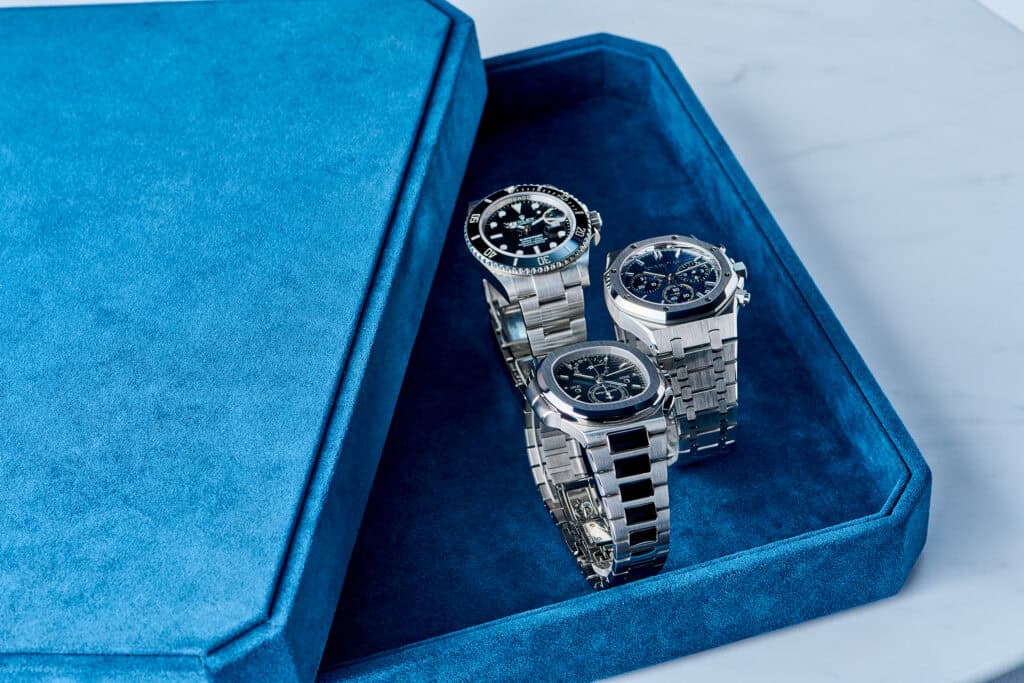
For the biggest players, it’s a whole other story. According to the State of Fashion – Luxury report by McKinsey & Company and BoF Insights, The Business of Fashion’s data and advisory team, the Big Three’s (Patek Philippe, Audemars Piguet, Rolex) production capacities are expected to continue to increase between now and 2029. Müller said these brands perform well because their designs speak to the vintage tastes of the younger generation, giving examples of Patek Philippe’s Nautilus, the Audemars Piguet Royal Oak and the Rolex Submariner.
“The most grail watches are watches which were designed back in [the] day,” said Müller. Rolex and Audemars Piguet are still flexing with the industry, which might be the attitude that has kept them frontrunners and is defying the current slowdown. Both brands launched certified pre-owned programmes with retailers, to capitalize off the interest in the secondary market, while still maintaining and controlling their brand image. The inability to adapt quickly has been the downfall of the Swiss industry in the past (see the quartz crisis). Some brands, however, are attempting to further shake things up.
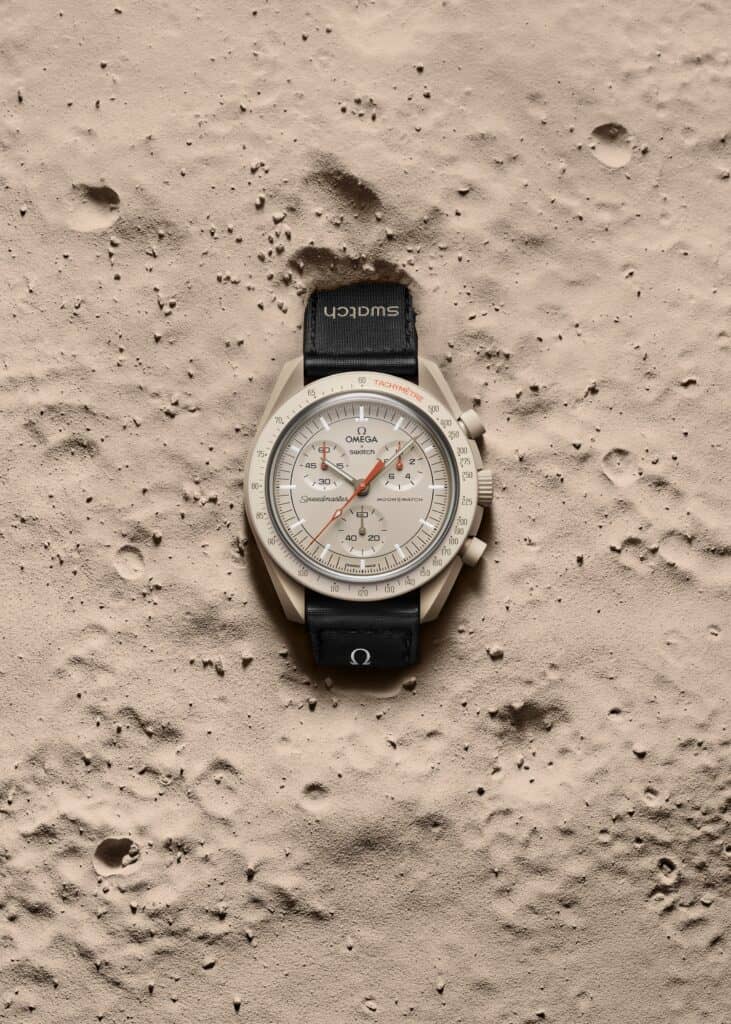
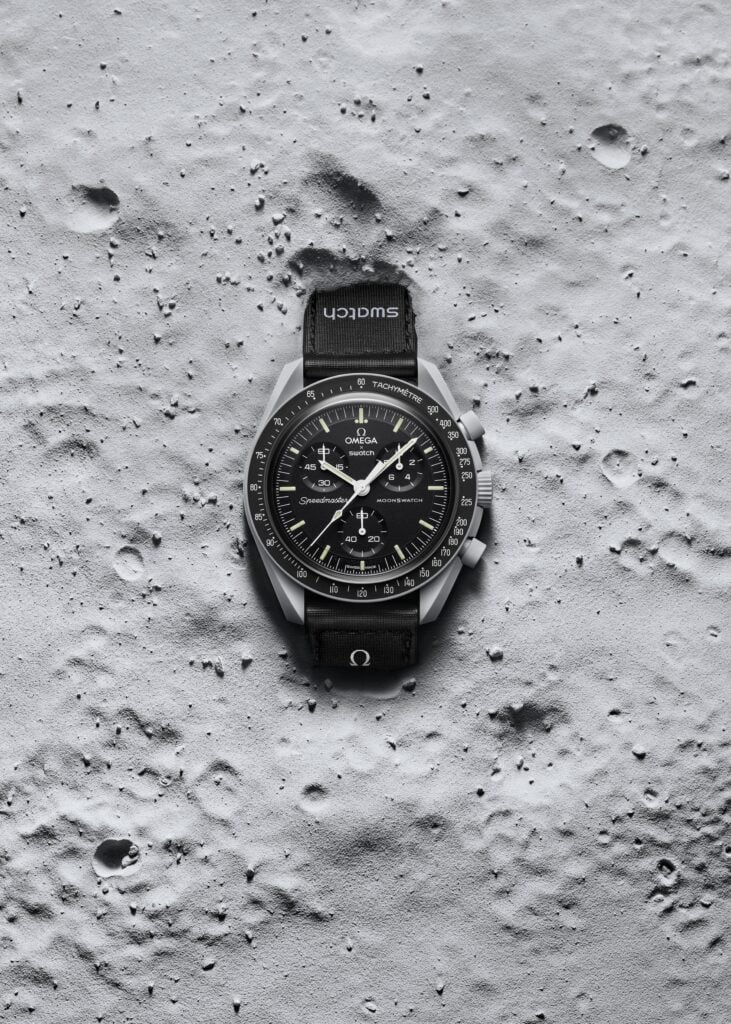
Behold the success of the Omega Moonswatch. Though Swiss watch exports began slowing down in 2023, these $260 watches have sold one million units annually since launching in 2022. “It shed light on an iconic watch made by OMEGA which younger demographics didn’t necessarily know,” Müller explained. Pair this with the sentiment towards price and design for the younger generations, the continued success of this accessory is justified.
Photos: IWC
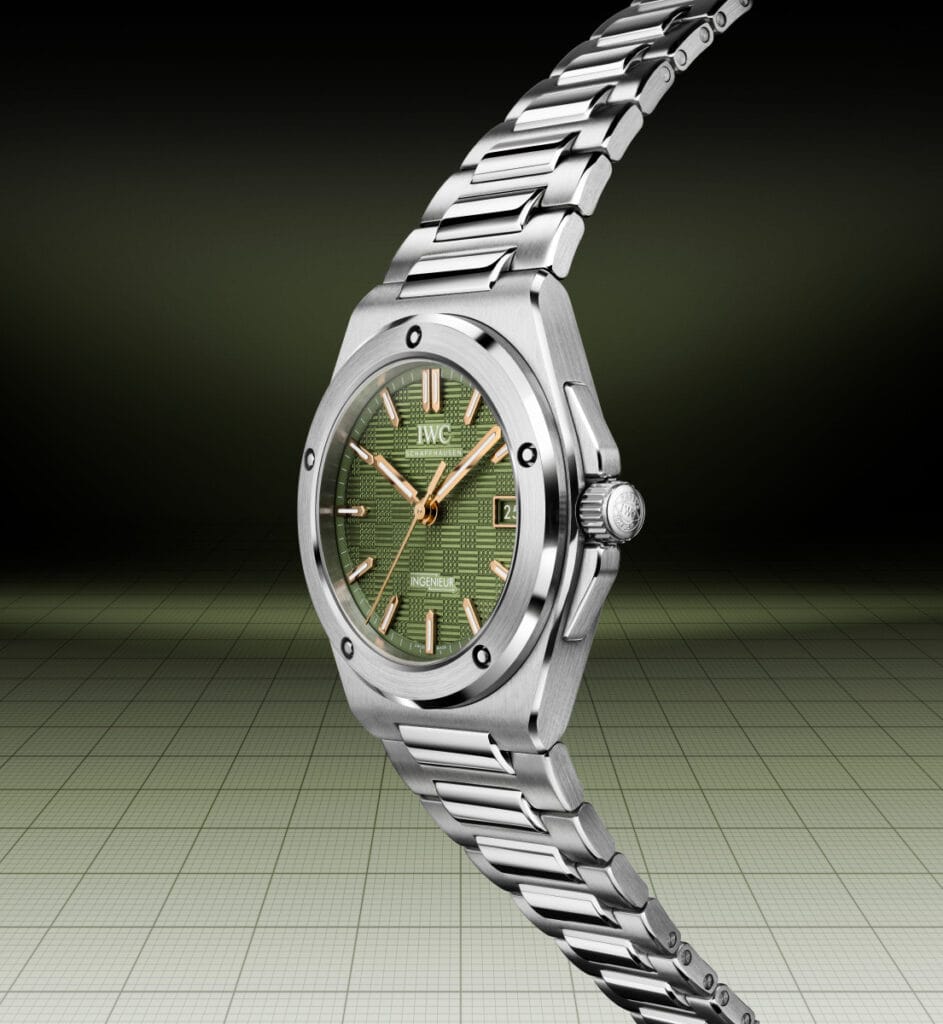
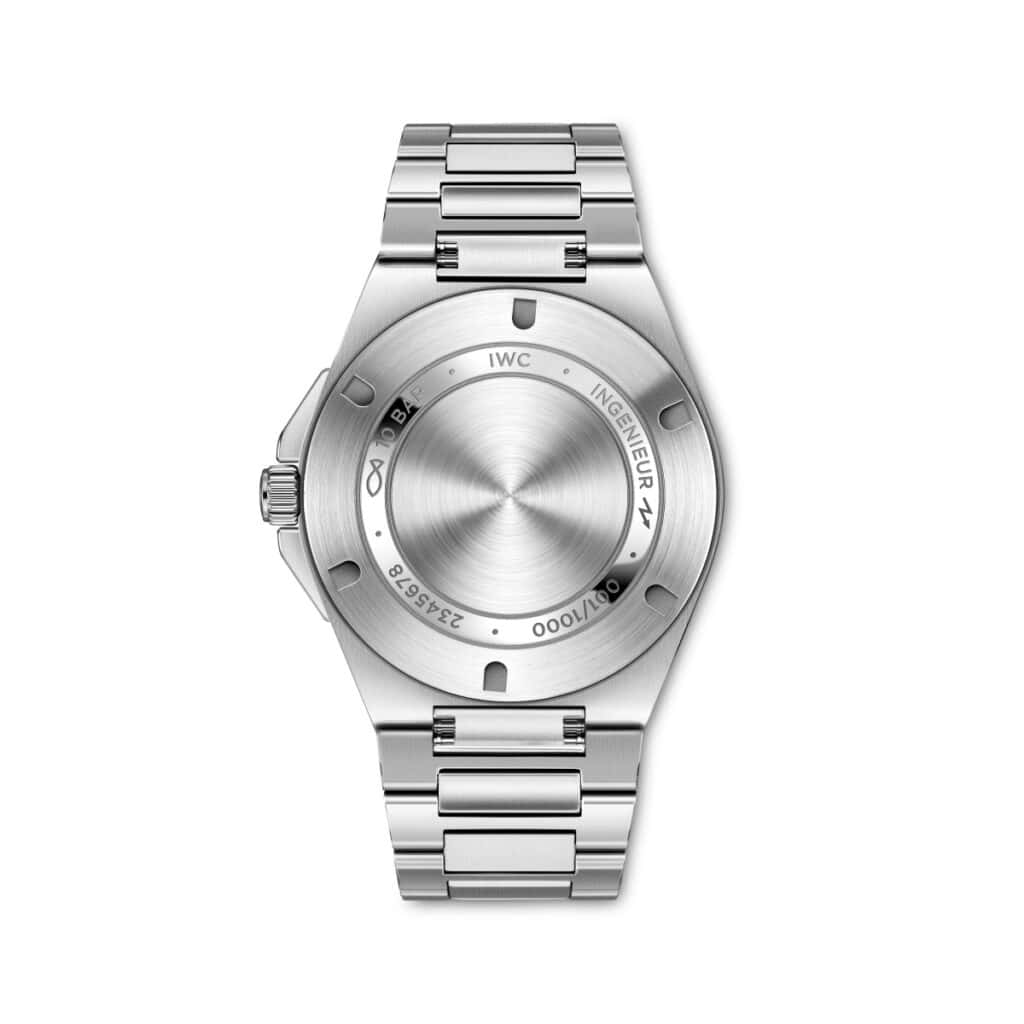
In a similar vein, IWC appeared as the main sponsor for the F1 movie starring Brad Pitt. The brand, like others, reported lowered sales and retail value in 2024 compared to 2023, however their cultural visibility has vastly improved since this partnership, with watch sightings on cast members, F1 drivers and multiple sponsored screenings with racing-adjacent events.
While collaboration and innovation can work to improve sales and contribute to brand awareness, brands cannot rely on this alone. As reflected, the Swiss industry was previously too late to change before the rest of the world, and was forced into evolution as a means to survival. Today, the industry faces more challenges than ever; the only way to survive is reinvention.