Visiting Bugatti HQ in Molsheim, France is always a treat, but this time there’s a feeling of change in the air. Until Mate Rimac’s new vision for Bugatti materializes in the form of the aptly named Tourbillon, which will feature a sonorous naturally aspirated 8.3-liter V16 coupled with three electric motors, my attention is trained on the last W16-powered Bugatti and current reigning fastest open-air production car, the Mistral.
The 168-year-old Château St. Jean and nearby orangerie still exude a timeless aura, but the showroom studio where cars are spec’d now feels a bit more practical, features a full-size Tourbillon prototype and an engine block display of the upcoming V16. Within the atelier, production activity is abuzz on various Mistrals and Bolides, the track-only model which more closely resembles a fever dream of a fantastical racecar than it does something built by mere mortals.
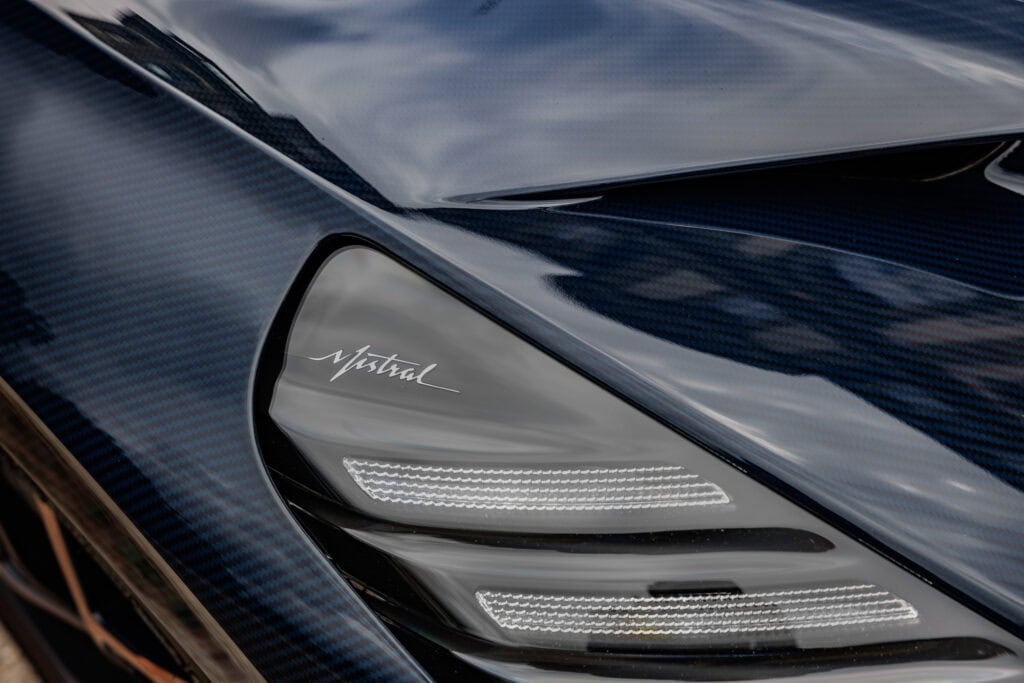
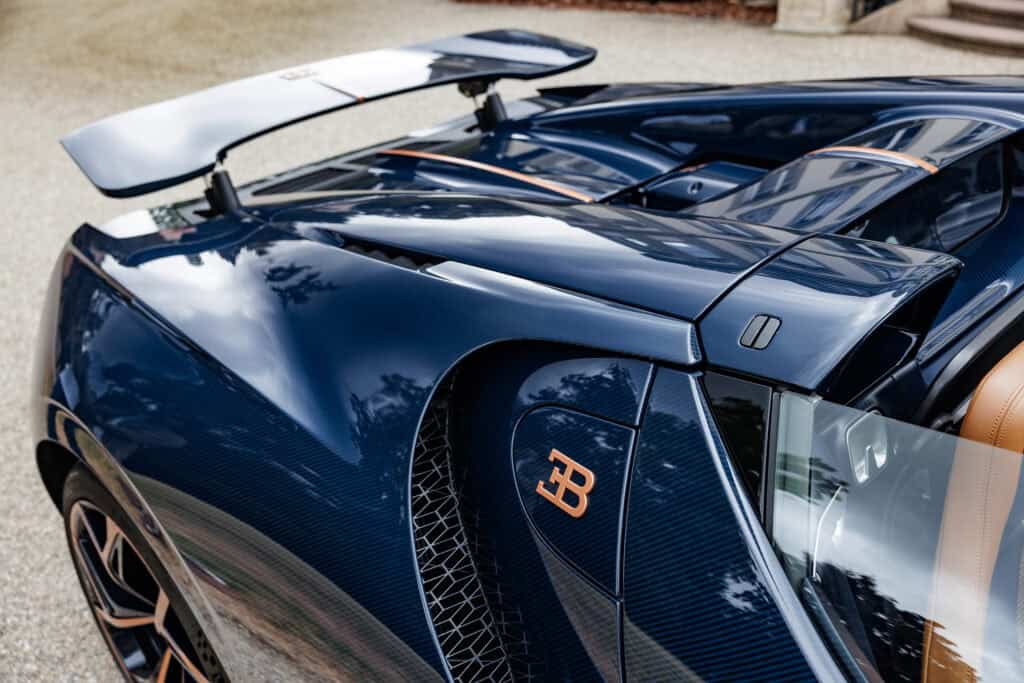
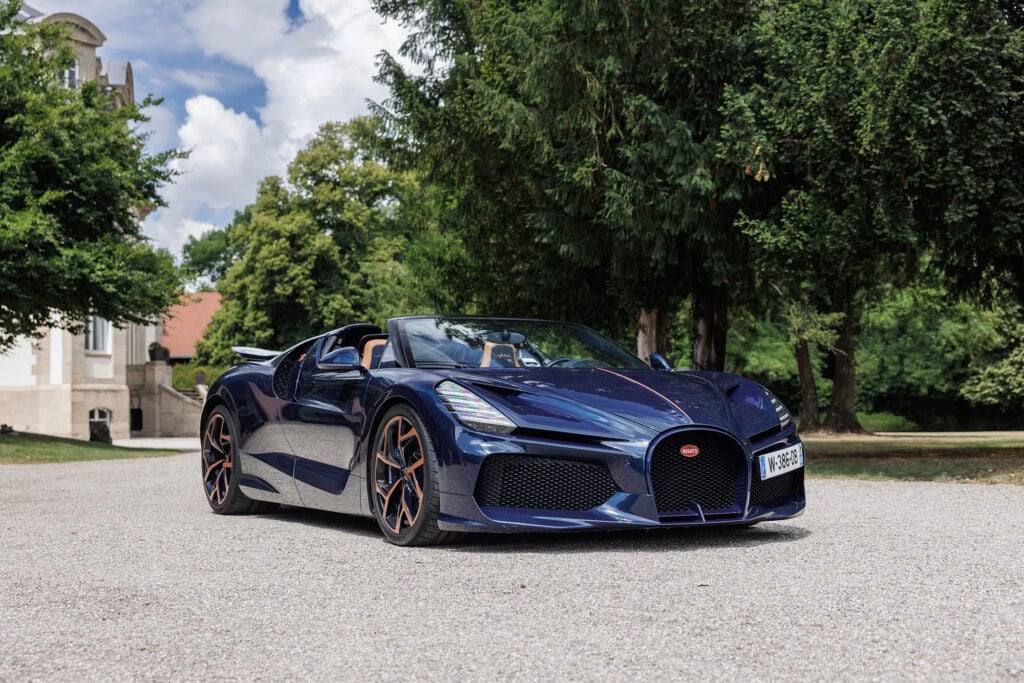
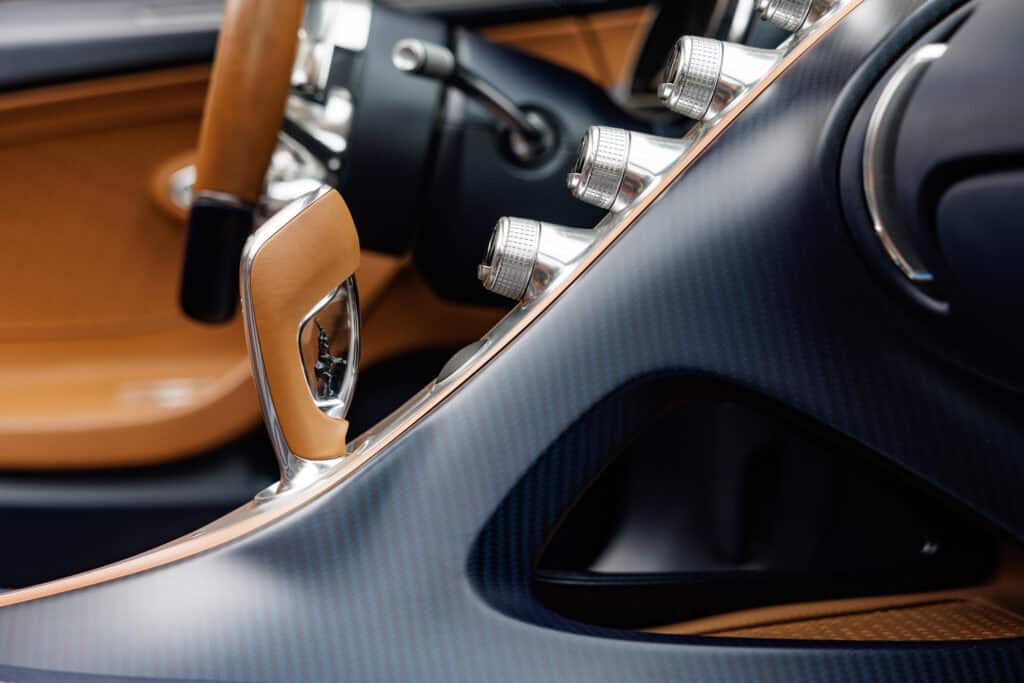
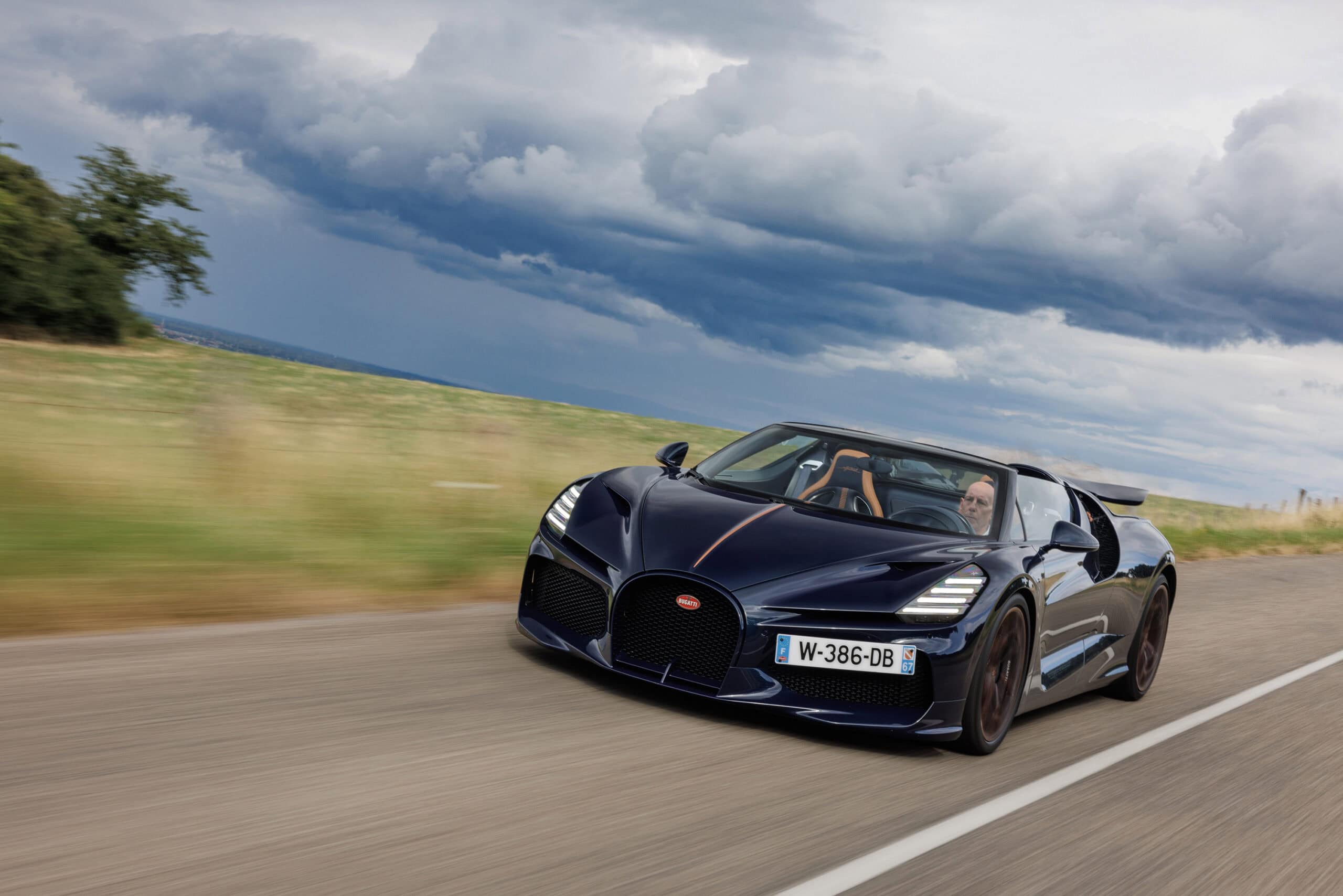
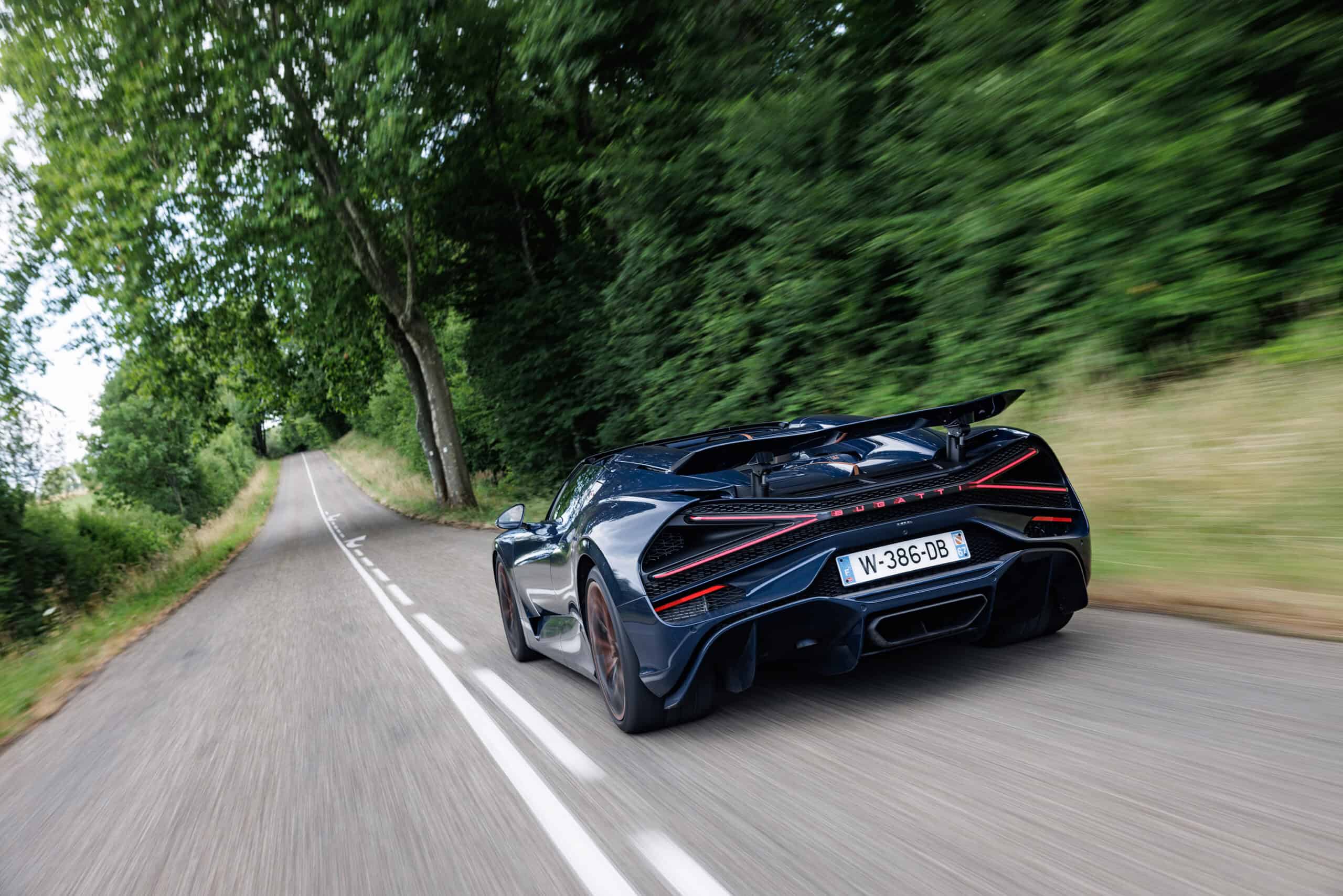
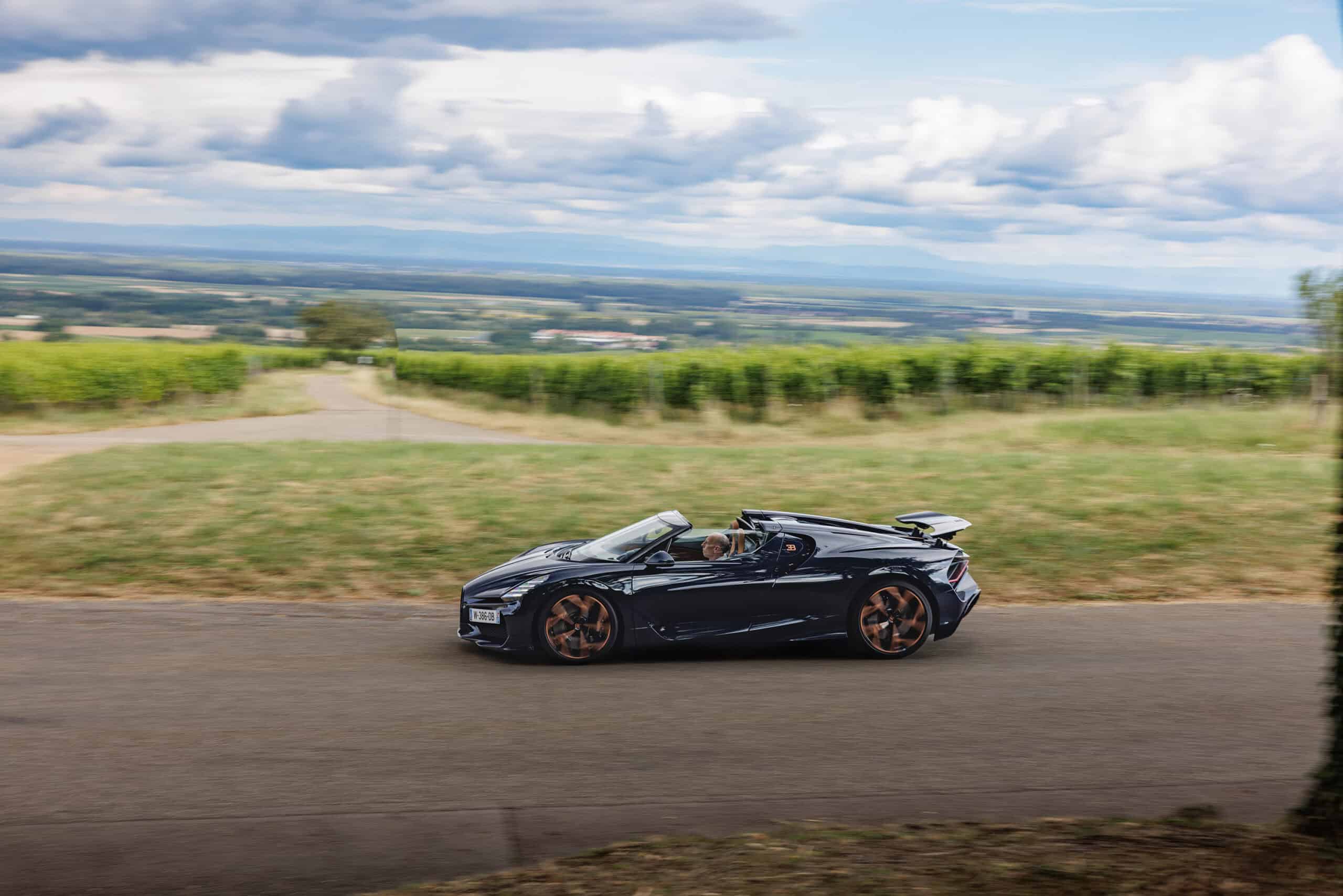
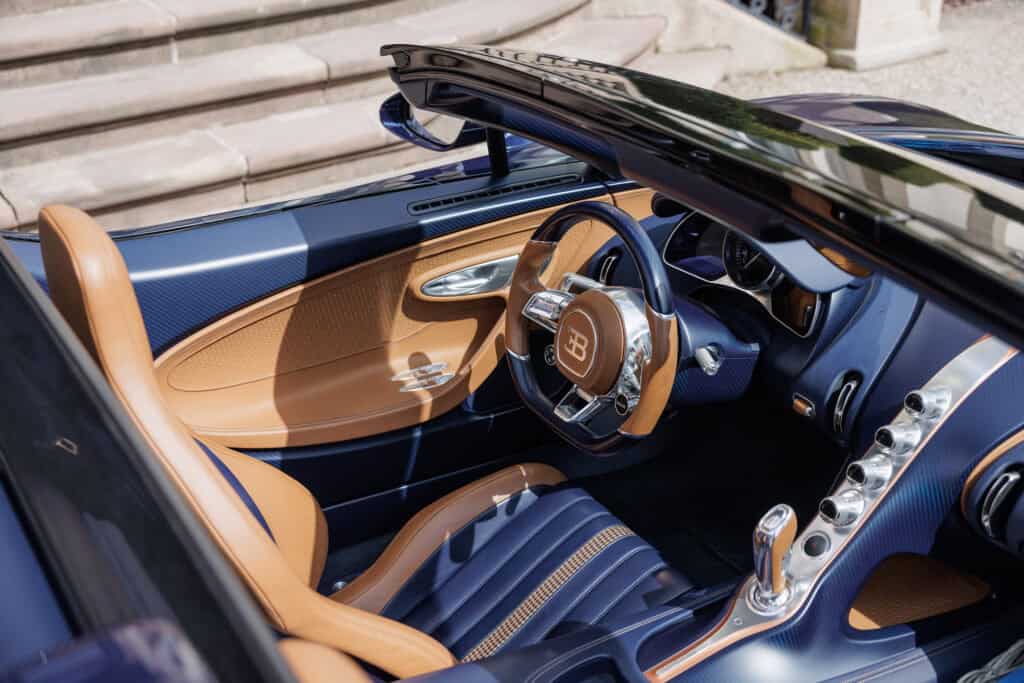
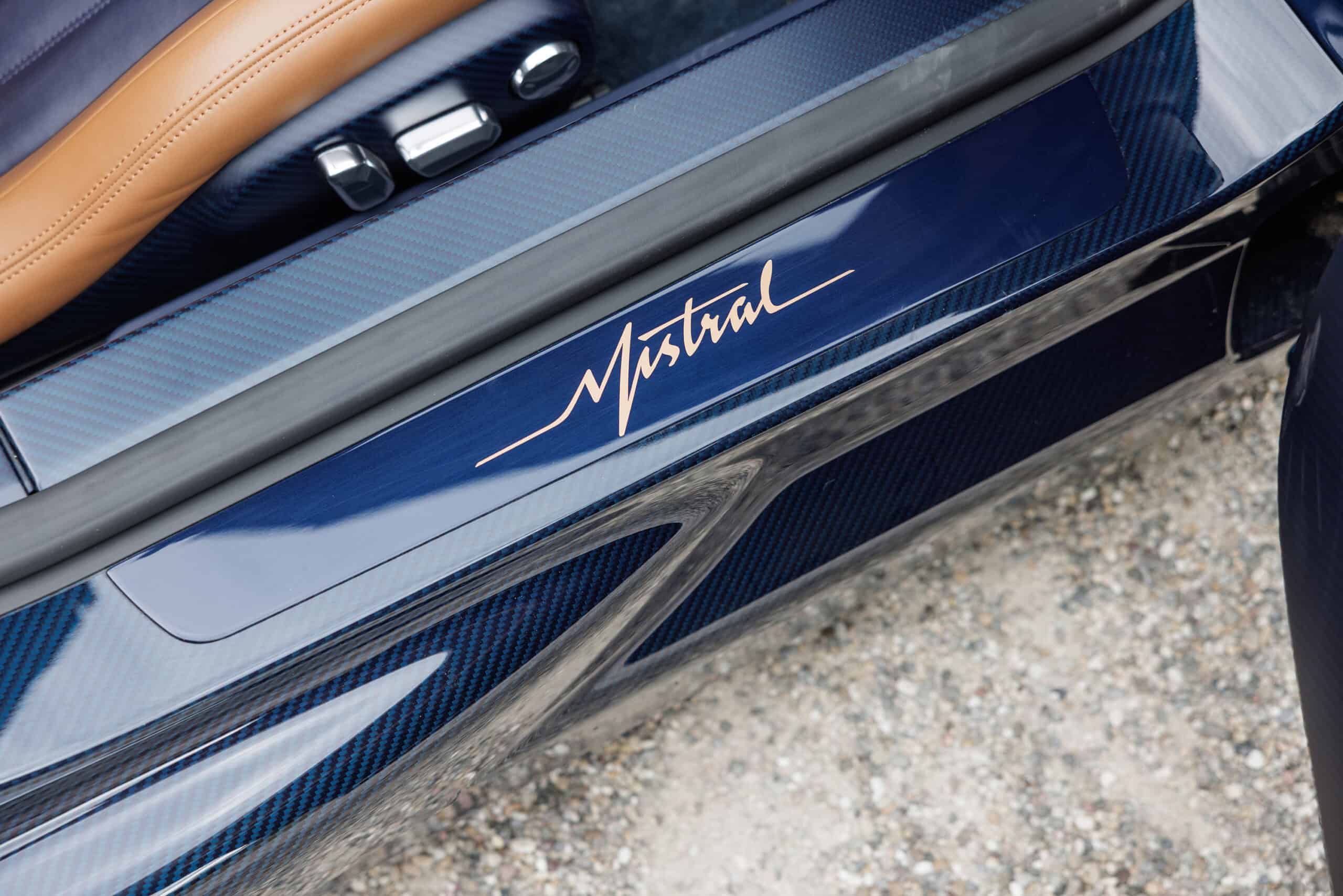
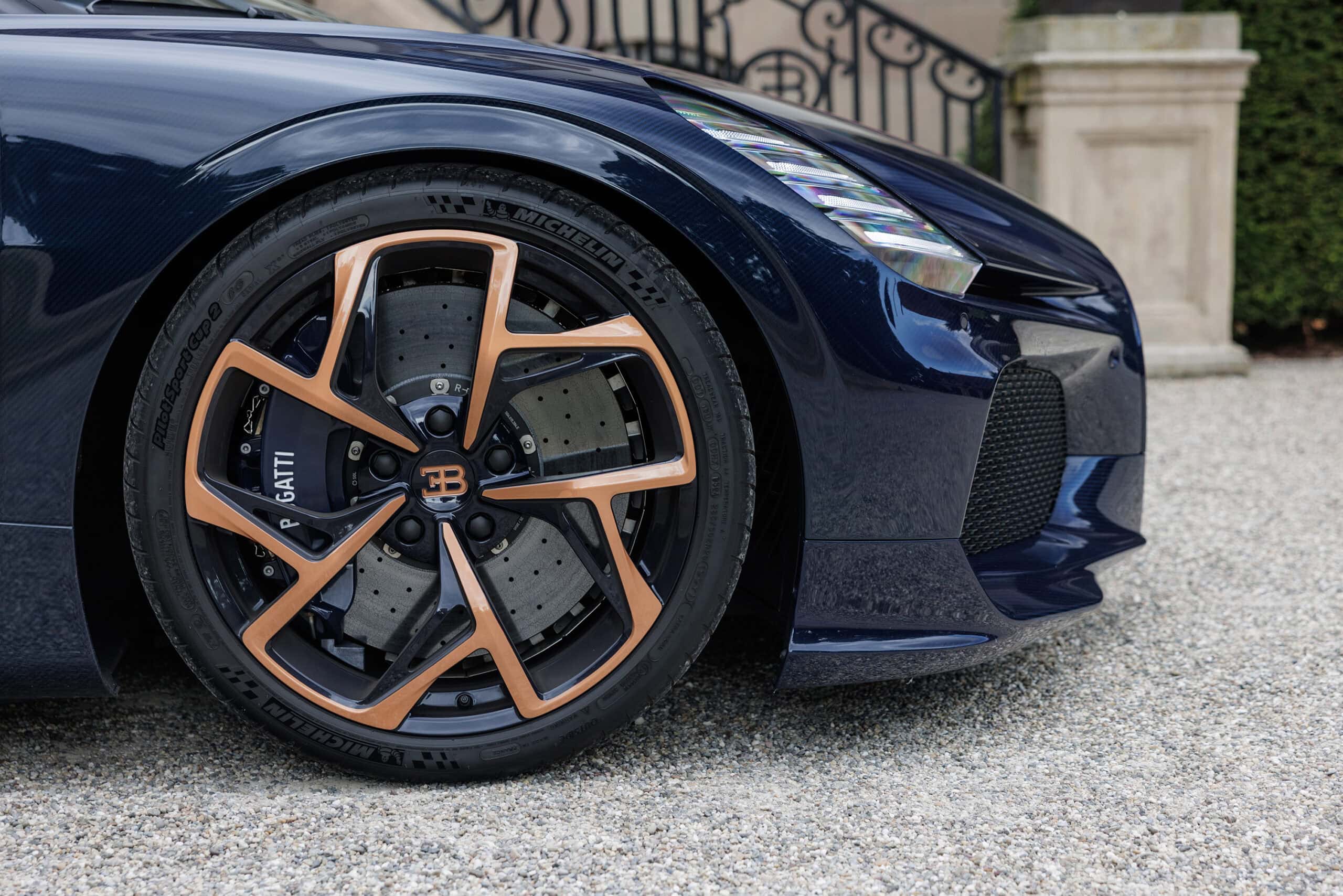
After a brief walkaround of the property, I’m led to my Mistral for the afternoon, a stunning example finished in an azure carbon fiber weave whose seam and pattern alignments are as precise as a Savile Row shoulder seam. Inside, the peerless materials and touchpoints make its astronomic price tag actually seem rather down to earth. Between the fine metal polish of the cool-to-touch controls, the delicately knurled surfaces, and the copious supple hides that line so many surfaces, Mistral presents as more subtly contemporary than overtly ostentatious.
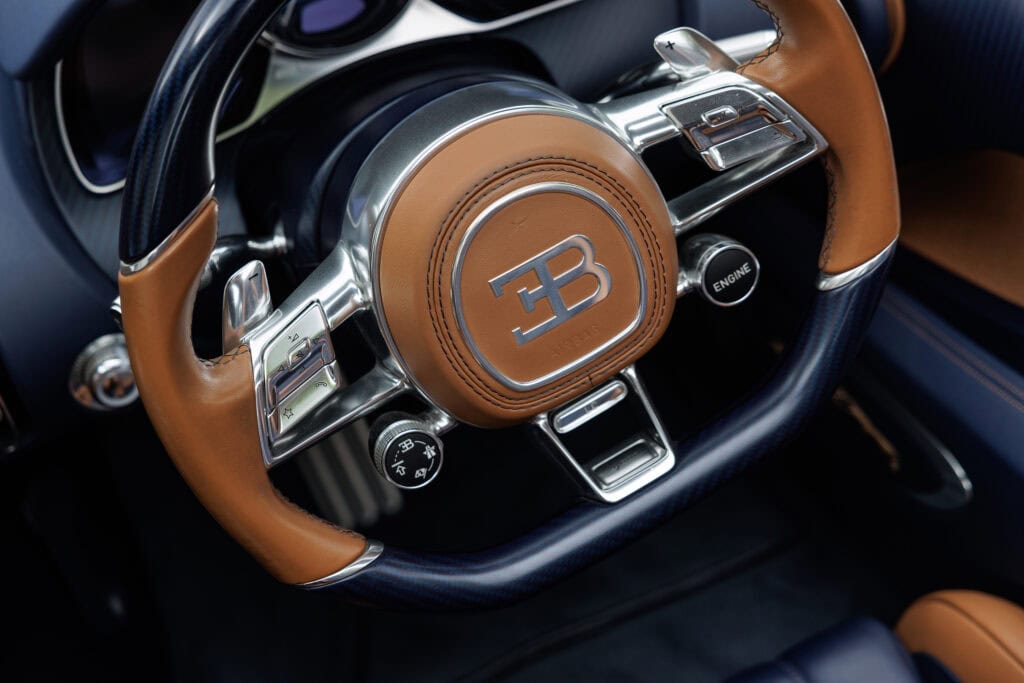
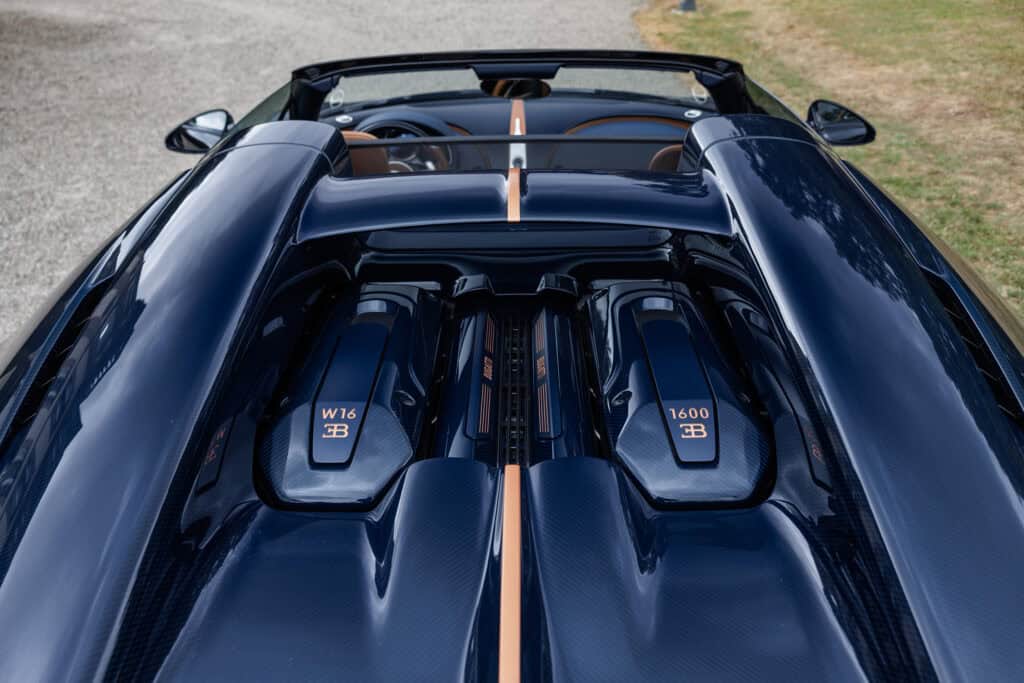
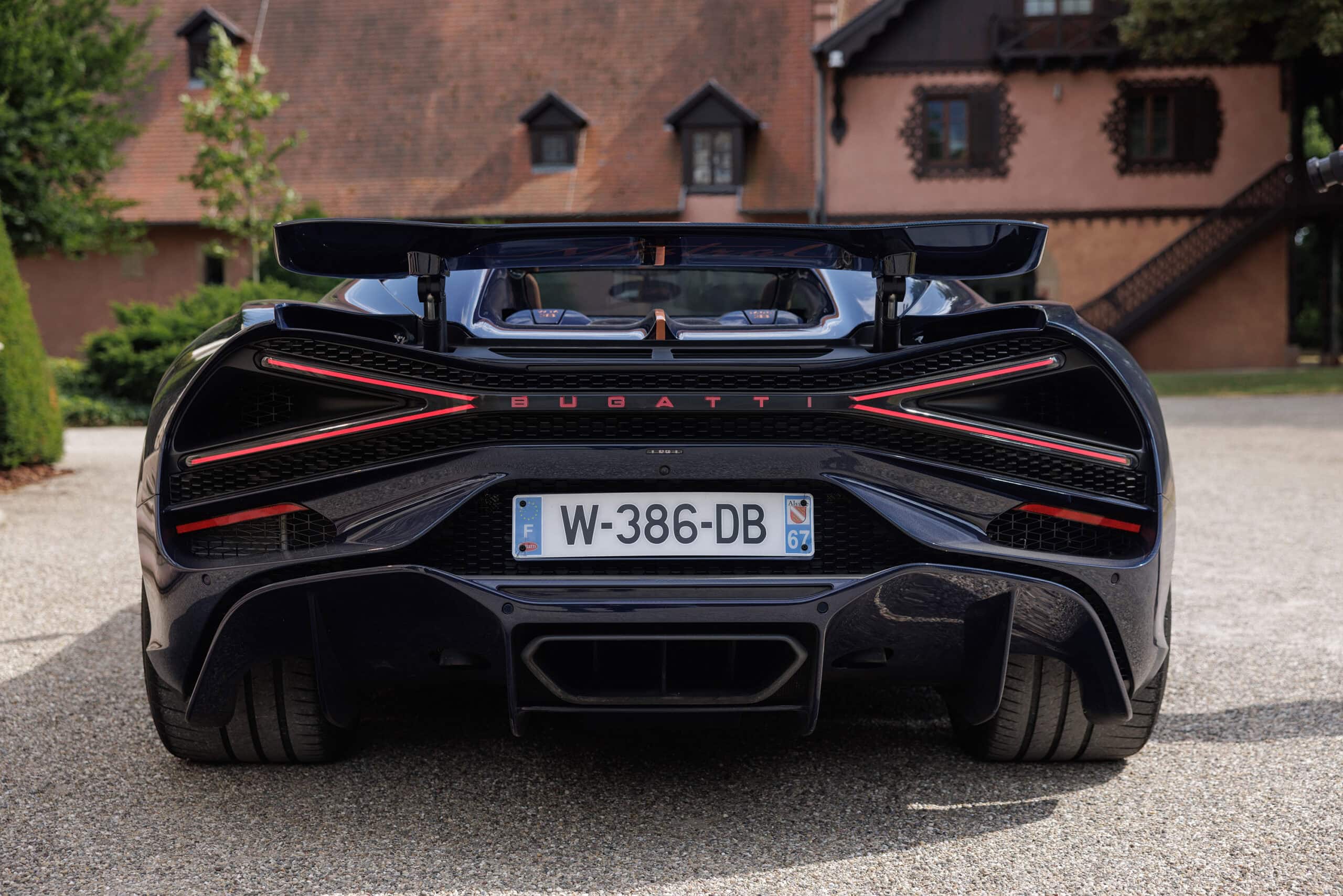
Named after the northwesterly wind that blows through southern France, this roadster packs the same 1,578 horsepower W16 found in the Chiron Super Sport 300+. In the flesh, the Mistral comes across as more taut, tucked, and charismatic than the übersmooth Chiron. Considering its removable top is only an emergency option for keeping out inclement weather, I’m relieved the forecast of rain is diminishing ahead of my drive.
The Mistral’s al fresco cabin offers a flood of natural light and infinite headroom. Joining me for my drive was test driver and brand ambassador Bruno Spengler, who was recently appointed as a Bugatti Pilote Officiel. The affable, Alsatian-born driver showed me around the vehicle before we set out for a test drive. The Mistral feels smooth and effortless departing from the factory and onto public roads. But when civilization falls away and we enter a more rural stretch, he opens it up a bit and the Bugatti whooshes ahead with gobsmacking alacrity.
Swapping seats and settling in behind the steering wheel, I’m reminded of Bugatti’s particular peculiarities: the counterintuitive shifter action, the central binnacle housing four knurled knobs, and the otherwise sparse expanse of leather hides accented by matte carbon fiber. The right pedal is among the most evocative controls in any vehicle, as it summons positively haunting amounts of power which whisk this roadster forward with shocking speed.
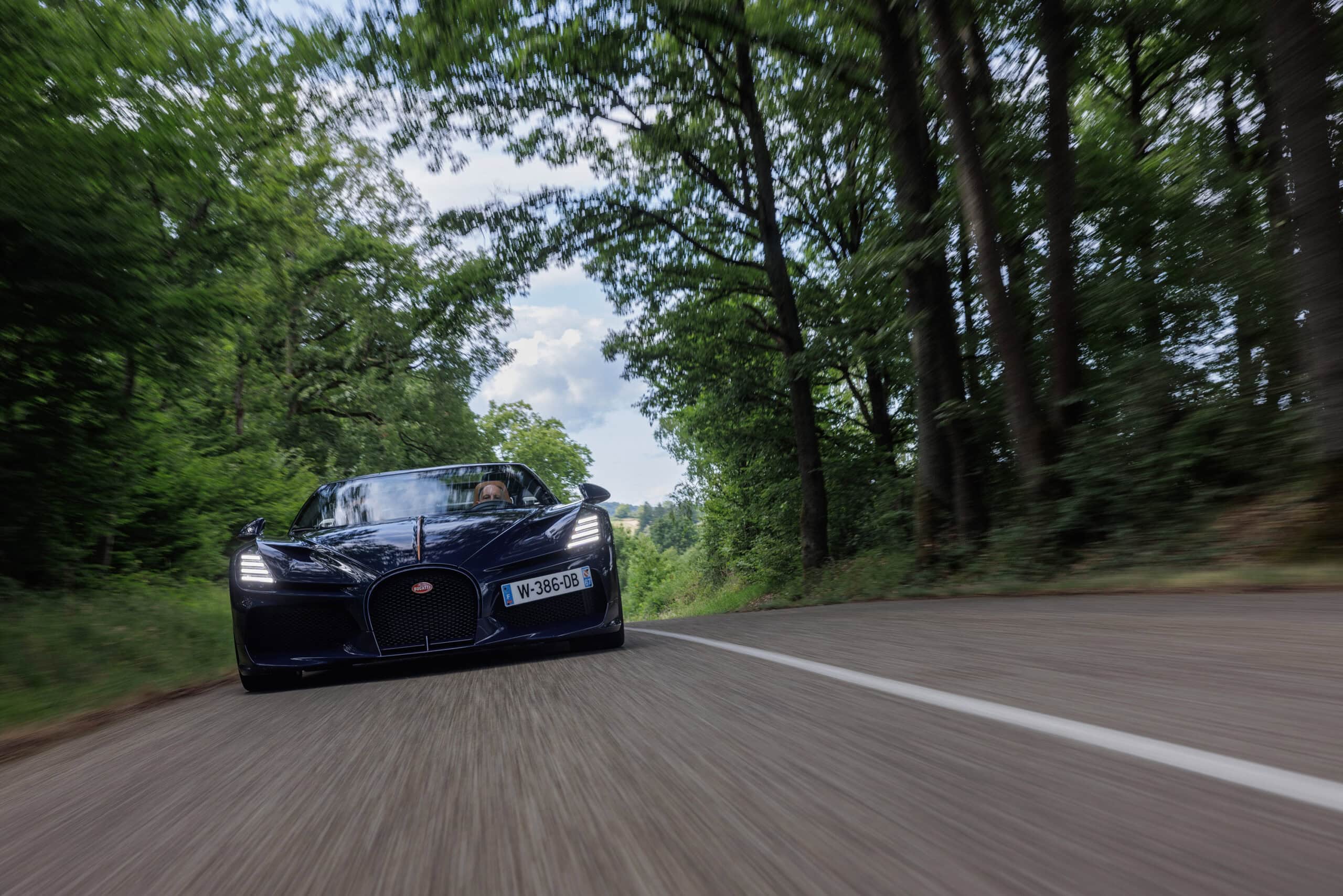
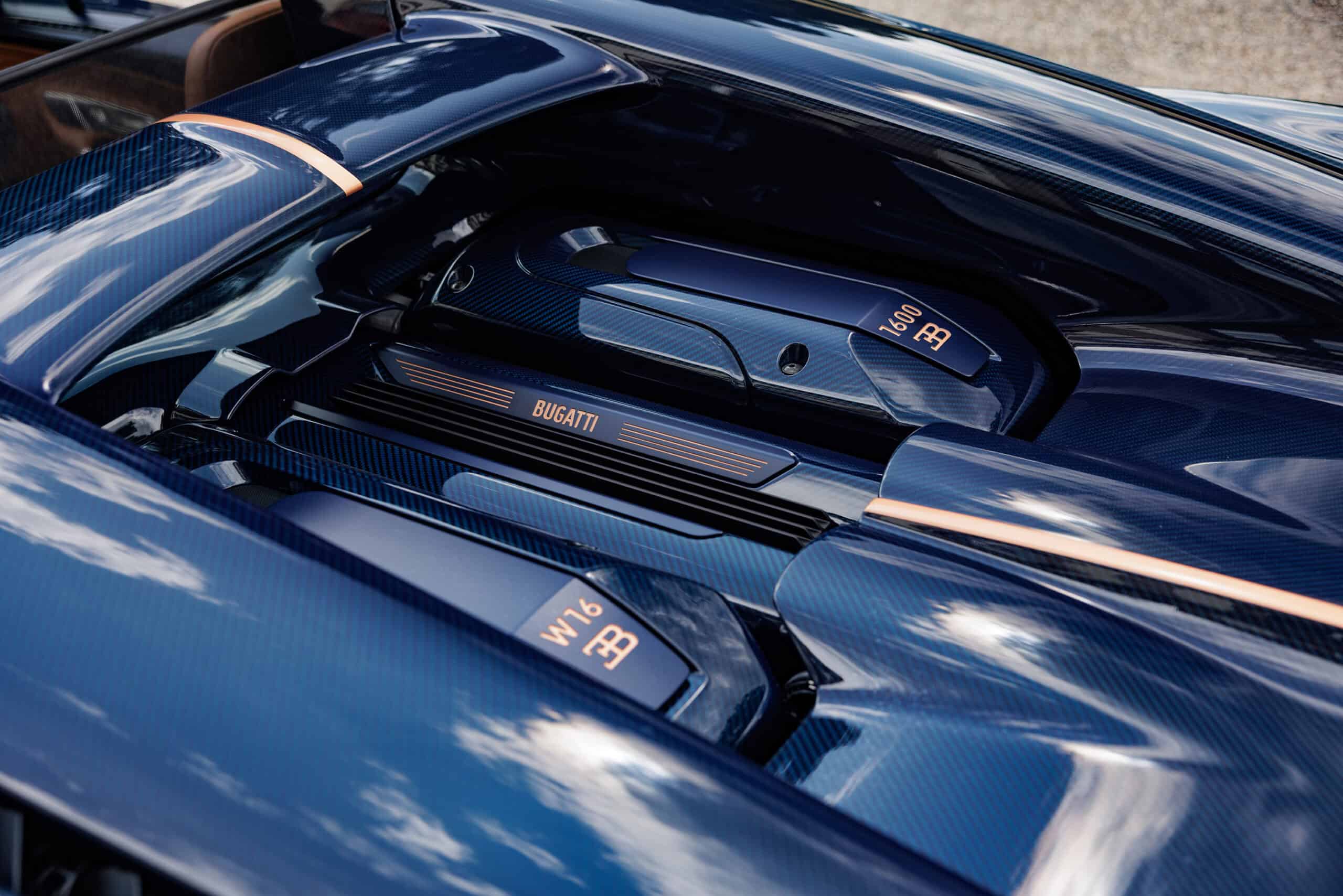
The Mistral cockpit is delightfully lacking in digital displays, showcasing instead a massive analog speedometer that goes to 500 kph flanked by two multifunction screens. The time can be displayed digitally, though a more elaborate horological expression can be found in partner brand Jacob and Co.’s million dollar rose gold Bugatti Chiron Tourbillon. Regardless, the star of the show here is arguably the quad turbocharged W16, which is in the twilight of its existence and one of 99 sold out examples which will close out the Chiron era.
That this car exists at all is the result of one man’s singular obsession with mechanical extremity. Ferdinand Piëch was a man of breathtaking ambition. By the time he passed in 2019, the Austrian-born magnate and engineering whiz had spearheaded the fearsome Porsche 917 race car, championed Quattro technology which propelled Audi into relevance, transformed Volkswagen from a has been to an industry leader, and infused the VW Group with ultraluxury nameplates including Bentley, Bugatti, Ducati, and Lamborghini.
The crown jewel of his five-decade career was the Bugatti Veyron, his moonshot masterpiece that mashed up old world craftsmanship with hypercar performance. At its heart was the W16 engine, a hulking lump of his conception boasting the dubious distinction of starting life as an even more complicated 18-cylinder design. The analogies to high horology are easy to make. Like a tourbillon movement, Piëch’s creation wore its complexity with pride, featuring 16 cylinders, 64 valves, four turbochargers, 10 radiators, and exotic materials throughout. The result yielded unprecedented performance — 1,001 horsepower, 0 to 60 mph in 2.4 seconds, and a top speed of 253 mph.
Today, Bugatti is being reshaped by a very different kind of wunderkind. The Chiron era ends with the Mistral, not only marking the conclusion of the W16 platform, but also the transition of stewardship to Mate Rimac. The 37-year-old Croatian whose eponymous EV startup and supplier work for manufacturers enabled him to acquire a 55% stake in the French marque, forming Bugatti Rimac.
Despite his EV-focused career, Rimac has an appreciation for all things mechanical, including wristwatches. “An Apple watch can do everything better than a mechanical watch, and do more,” he told Motor Trend in 2024. “But nobody will pay $200,000 for an Apple watch. People want mechanical craftsmanship.”
Though Bugatti has aligned itself with Parmigiani Fleurier and Jacob and Co., the upcoming Tourbillon deepens that horological relationship through a new partnership with Swiss manufacturer Concepto. Its crystal glass and aluminum center console incorporates an intricate assembly of 600 moving titanium, sapphire, and ruby parts, mimicking a mechanical watch movement within a structure of roughly 4,000 components. Bugatti Individualization Expert Alexandra Tavares describes the challenge of translating analog information into an automotive context while remaining compliant with regulations. Watchmakers themselves are now assembling these clusters.
If the Mistral is a farewell, the Tourbillon is a manifesto. While Bugatti has and always will be defined by ultra-high performance, next-level craftsmanship, and unparalleled exclusivity, its next chapter will place more emphasis than ever on mechanical intricacy and levels of customization to the instrument cluster that enable it to take on whatever form the client desires.
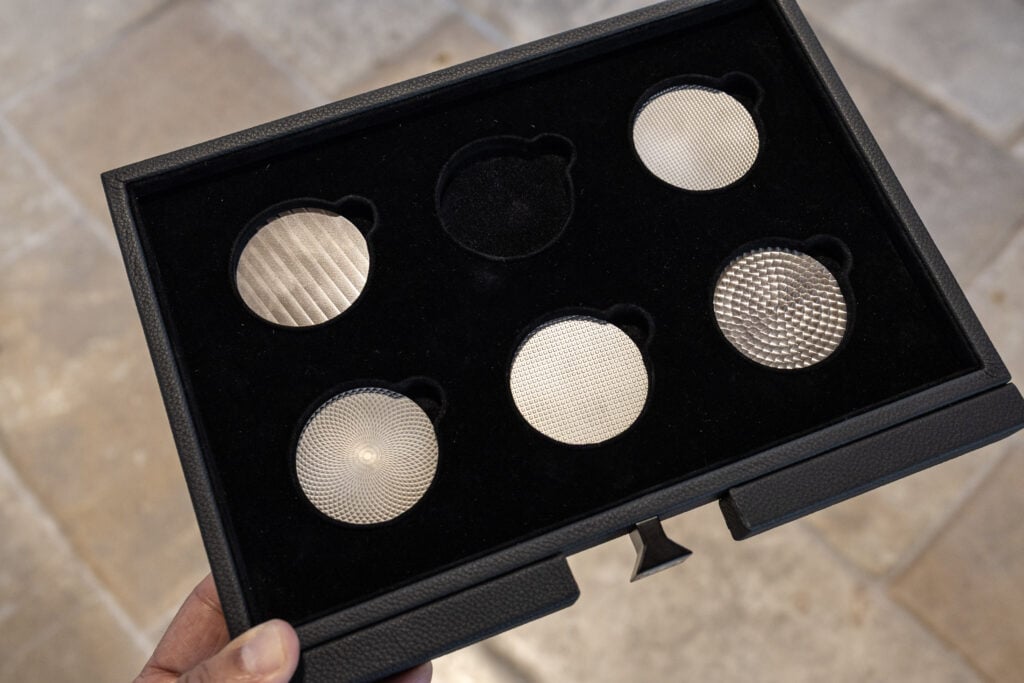
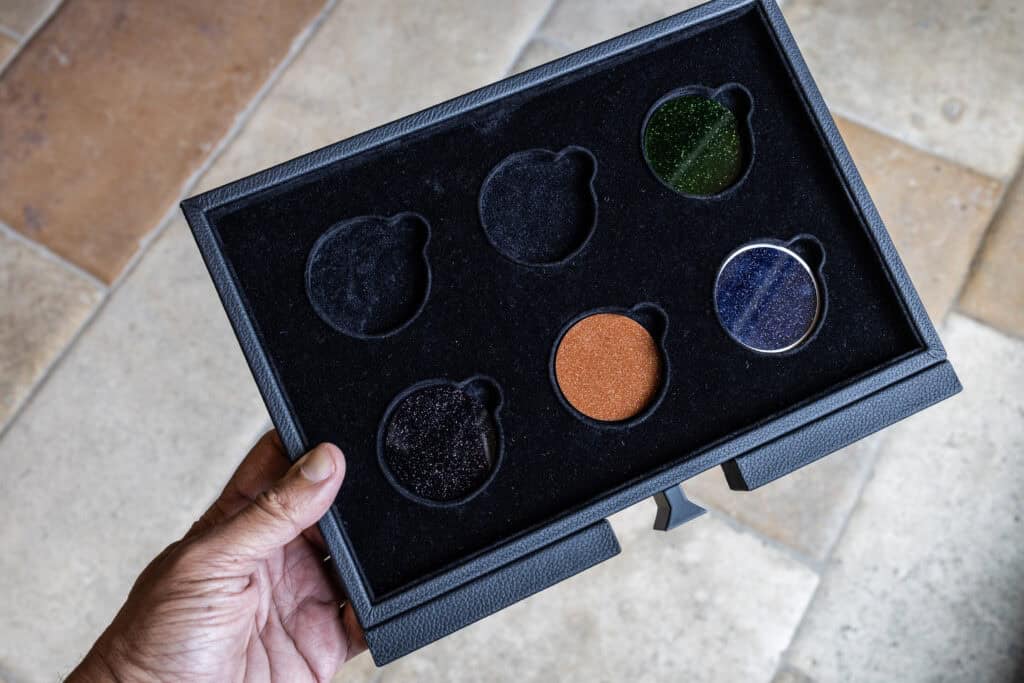
“If the customer has a watch they love, we can do the exact same thing on a cluster. They can match the watch in terms of color or texture,” Tavares said while sharing material swatches that include Perlage and Côtes de Genève finishes. “If you want to cover the cluster in diamonds or carbon, or you want a special texture you’ll be able to get it,” she added, suggesting that the gap between high-end timepieces and cars is about to become as narrow as it’s ever been.